


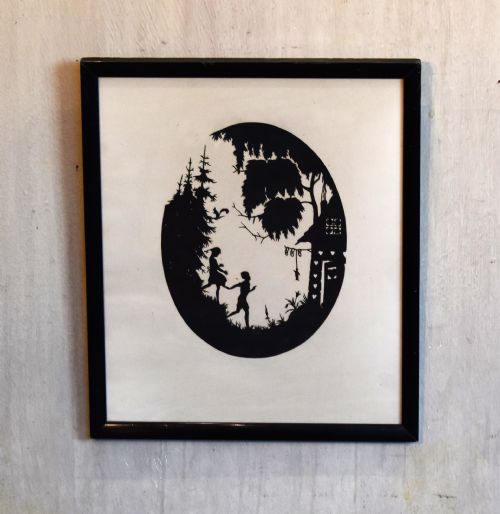


Vintage Paper Profile Cut
A vintage paper profile cut captures a crisp likeness in stark monochrome, offering a direct window into nineteenth-century life.
Vintage Paper Profile Cut
A vintage paper profile cut takes the form of a silhouette portrait, capturing human likenesses in sharp monochrome against a contrasting background. These works emerge primarily from the nineteenth century, encompassing Georgian, Regency, William IV, and Victorian periods.
Folk art interpretations also appear alongside more formal academic portraiture, reflecting the varied social strata of the sitters. Framed art pieces from this genre range from single bust portraits to full-length studies involving animals and narrative scenes.
Materials and Construction
Makers cut these profiles directly from dark paper using scissors or small blades, mounting the resulting black image onto a lighter backing sheet. Watercolour and ink were sometimes applied by hand to add delicate highlights to collars, hair, and lace.
Finished profiles were typically housed beneath protective glass within wooden frames, frequently utilising maple or embellished with gold leaf and gilt accents. The combination of paper, glass, and wood ensured the fragile cut-outs survived decades of domestic display.
Vintage Paper Profile Cut Retail Price Guide 2026
Typical asking prices for vintage paper profile cut among the pieces listed under this phrase on Sellingantiques today, from the lower quarter to the upper quarter. They describe what is for sale here now, not the wider market.
Listings feature works spanning the nineteenth century, incorporating folk art alongside Regency and Victorian portraiture.
Factors of Quality
The precision of the cutting separates superior examples from simpler works, distinguishing confident handling from hesitant scissor work. Skilled practitioners captured complex details like lace, hair ribbons, and facial expressions entirely through negative space and clean edges.
The composition and inclusion of secondary elements elevate certain pieces, particularly those featuring full-length figures, animals, or multiple sitters. Original framing, especially period maple wood or gilt mouldings, also contributes significantly to the integrity of the object.
Bateman·Augustin Edouart·Alfred Darbyshire
The Vintage Paper Profile Cut Glossary
- Silhouette
- A portrait represented as a solid shape of a single colour, usually black, showing the profile of a subject. This method relies purely on outline rather than internal perspective or shading.
- Regency
- An English period spanning the early nineteenth century defined by classical elegance and restraint in decorative arts. Pieces from this era often display refined proportions and delicate detailing.
- Folk Art
- Artistic work created from a cultural tradition rather than academic training, reflecting community aesthetics. These items frequently possess a charming directness and lack formal academic perspective.
- Gilt
- A thin layer of gold or gold-like material applied to surfaces such as wooden picture frames. This finish enhances the visual weight and decorative appeal of the display housing.
Vintage Paper Profile Cut: Frequently Asked Questions
What is a paper profile cut?
A paper profile cut is a hand-scissored silhouette portrait mounted on a contrasting background, designed to record a person's likeness in sharp outline.
These works were popular before the widespread adoption of photography, serving as an accessible and immediate form of personal record.
How do I date a silhouette?
Dating relies on the costume of the sitter, the framing materials, and stylistic cues characteristic of periods like the Regency or Victorian eras.
Paper stock, backing materials, and any accompanying handwritten inscriptions on the reverse also provide chronological clues.
Are these works hand-cut?
Most antique profiles were executed by hand using specialised scissors or small blades to snip the paper freehand from observation.
Some makers utilised mechanical aids like the physiogtrace, but the finer pieces on show display the dexterity of individual practitioners.
How should I display them?
Silhouettes require protection from direct sunlight to prevent the fragile paper and any watercolour pigments from fading over time.
Displaying them away from moisture in stable indoor environments ensures the original glass, maple frames, and backing boards remain preserved.