


Vintage Painted Vanity Table
A vintage painted vanity table brings character and a personal surface to a bedroom, drawing on diverse stylistic revivals across the decades.
Vintage Painted Vanity Table
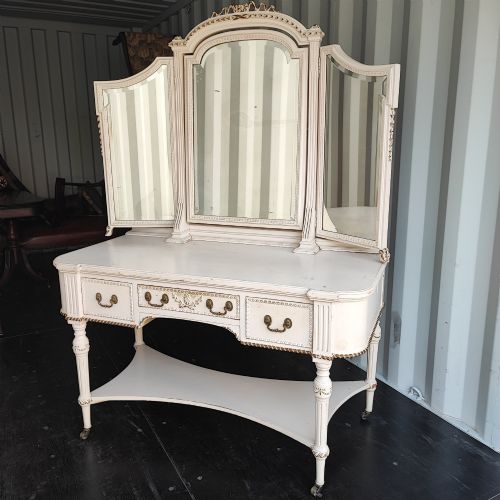
A vintage painted vanity table serves as a dedicated dressing space, encompassing forms such as dressing tables, writing desks, and mirrored toiletry stands. These pieces appear across multiple periods, notably the Victorian era and the 1930s Art Deco movement.
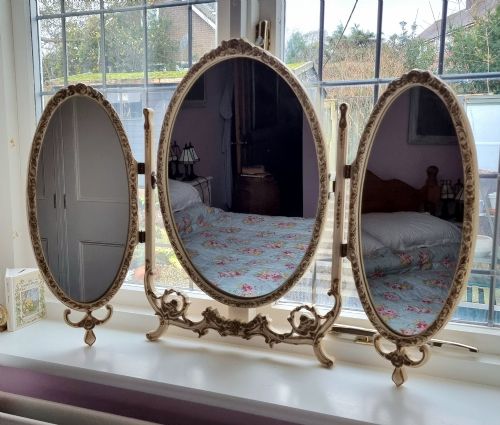
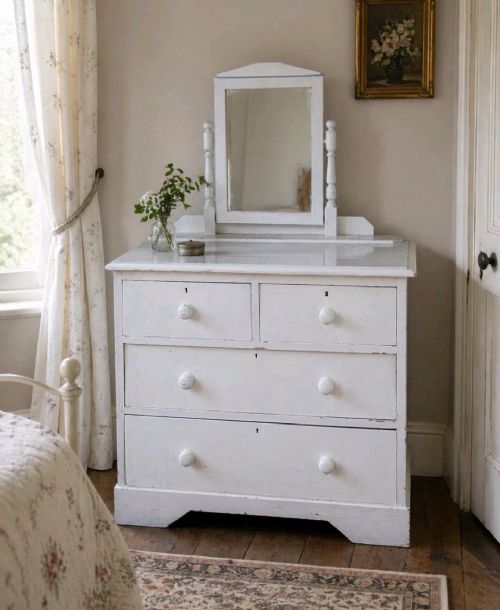
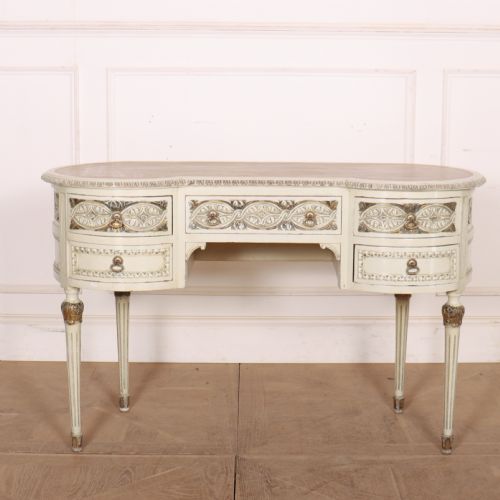
The selection ranges from French Rococo and Louis XVI styles to English pine country furniture and Swedish painted designs. Buyers frequently encounter dressing tables paired with triple mirrors or kidney-shaped writing desks.
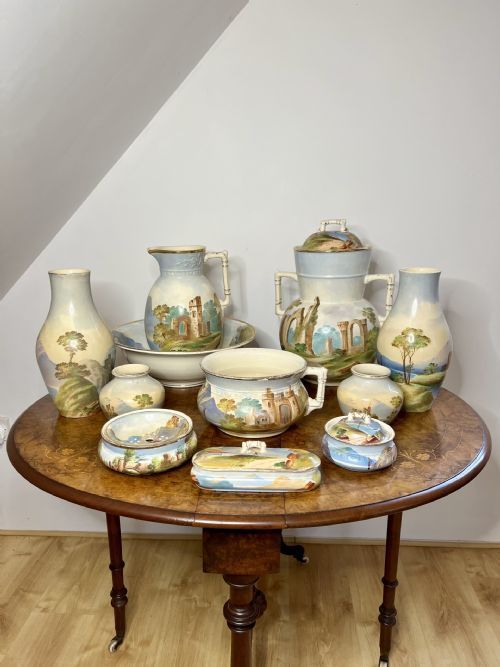
Associated items like boudoir stools, washstands, and decorative powder bowls complement the primary furniture forms. Each piece reflects distinct regional tastes spanning the nineteenth and twentieth centuries.
Materials and construction methods
Construction relies heavily on traditional timber substrates including pine, mahogany, satinwood, and oak. Artisans applied surface finishes utilising paint, lacquer, and scumble glaze to achieve decorative visual effects.
Hardware details incorporate brass embellishments, glass mirrors, and forged iron elements. Marble tops and leather inserts appear on specific desk and washstand variants for durability and surface contrast.
Ceramic powder bowls from the 1930s occasionally wait quietly inside dressing room suites, ready to hold stray hairpins.
Distinctions in quality and execution
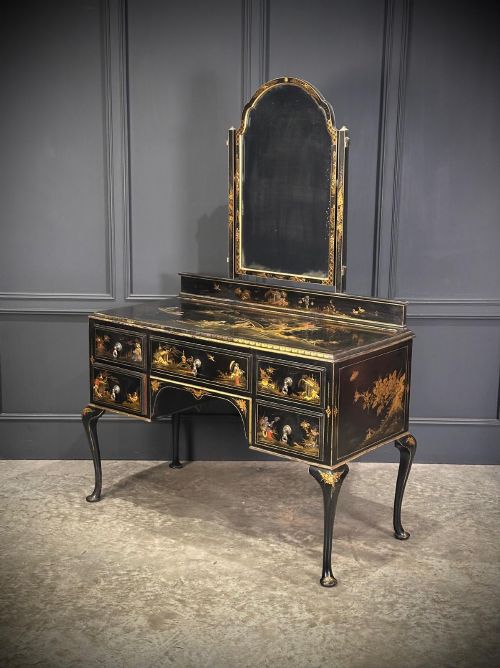
Quality rests upon the integrity of the original paintwork and decorative surface treatments rather than simple age. Pieces retaining untouched period paint or specialised chinoiserie lacquer stand apart from later repainted examples.
Structural refinement shows in the execution of carved details, brass mounts, and the integration of matching components like triple mirrors or tailored stools. Finer construction utilises dense hardwoods and precise joinery.
Rowley Gallery·Maples of London and Paris
The Vintage Painted Vanity Table Glossary
- Scumble glaze
- A translucent paint layer manipulated with tools to imitate wood grain or create mottled patterns. It appears frequently on nineteenth-century pine furniture.
- Kidney shape
- A curved desk or table contour designed to wrap comfortably around the user. This form is common in late Victorian and Art Deco pieces.
- Chinoiserie
- European decorative style imitating Chinese artistic motifs and lacquer techniques. It defines several distinctive twentieth-century dressing tables.
- Low boy
- A small English table featuring drawers, commonly used for dressing or writing during earlier periods. It sits low on relatively slender legs.
- Toilet mirror
- An adjustable looking glass mounted on a small stand or box base for tabletop use. These date across Victorian and Edwardian periods.
Vintage Painted Vanity Table: Frequently Asked Questions
How do I date a painted vanity table?
Dating relies on combining stylistic clues such as Victorian proportions or Art Deco curves with construction methods and hardware. Secondary woods and fastener types also help narrow down the decade.
Paint analysis provides further context, as original finishes differ significantly between nineteenth-century country pieces and 1930s bedroom suites.
Are these tables suitable for daily use?
These pieces function well for daily routines when treated with reasonable care regarding moisture and surface protection. Many incorporate practical drawers and usable surface area.
Placing protective glass on top of delicate painted surfaces helps preserve the original finish during everyday tasks.
What is the difference between a vanity and a washstand?
Vanities and dressing tables are designed for grooming and writing, typically featuring mirrors, drawers, and kneeholes. Washstands were originally built to hold basins and pitchers for washing.
Many washstands feature marble tops to resist water, while dressing tables prioritize wood surfaces and decorative paintwork.
How should I clean original painted surfaces?
Dusting with a soft, dry cloth prevents the accumulation of dirt without risking moisture damage to aged paint. Avoid modern chemical solvents and abrasive cleaners entirely.
Consult a conservator if deeper cleaning is required to preserve delicate scumble glazes or lacquer.