



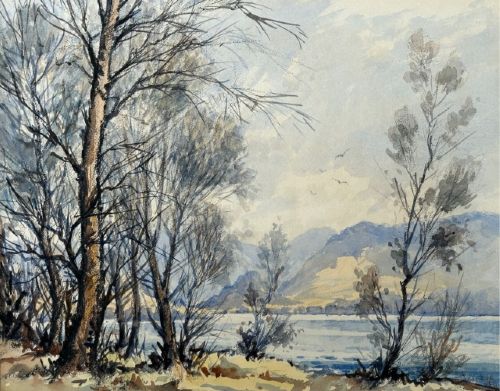
Vintage Painted Landscape Picture
A vintage painted landscape picture brings light, atmosphere and a sense of place directly to a wall.
Vintage Painted Landscape Picture
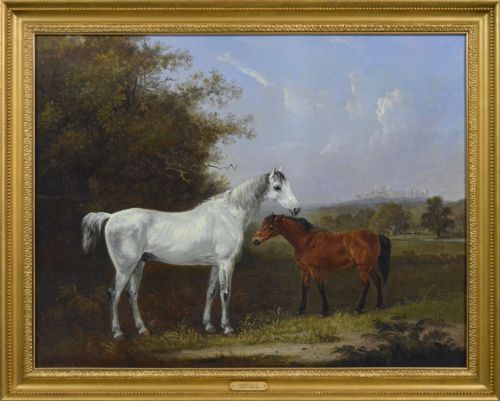
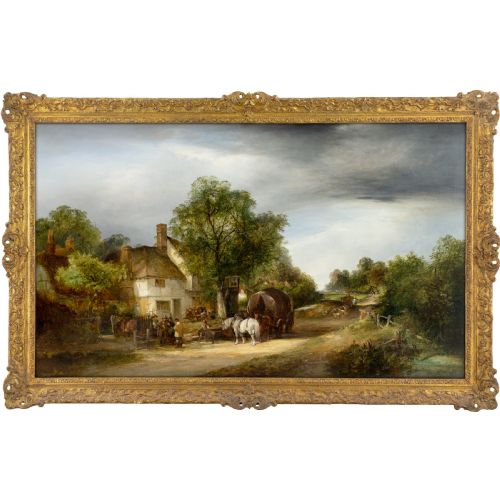
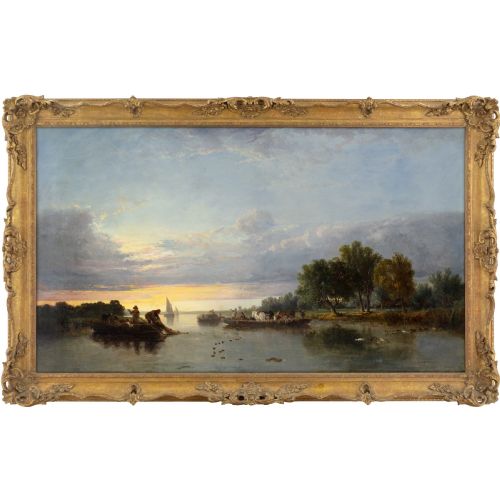
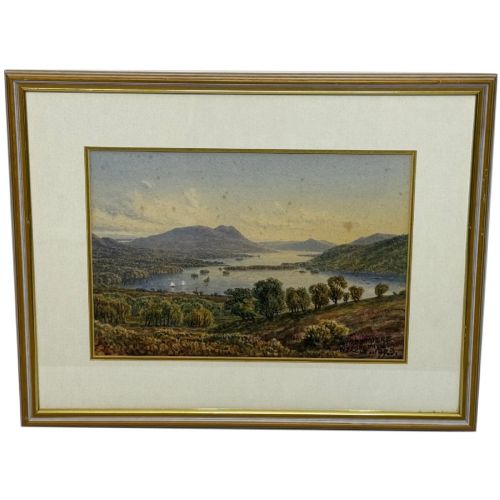
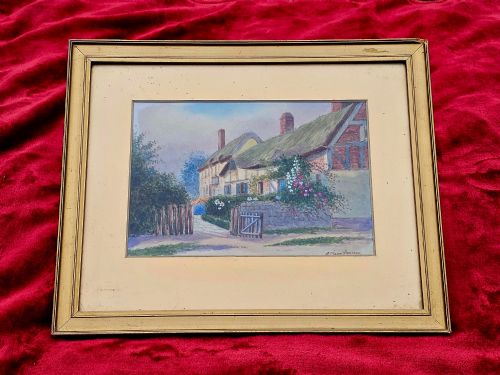
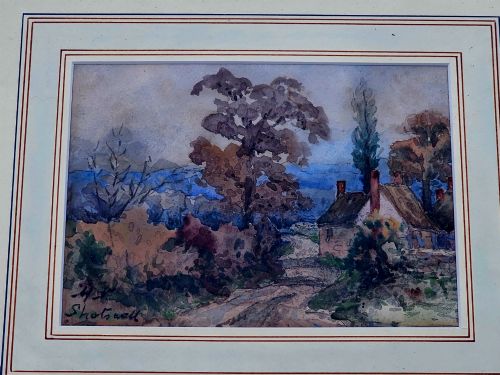
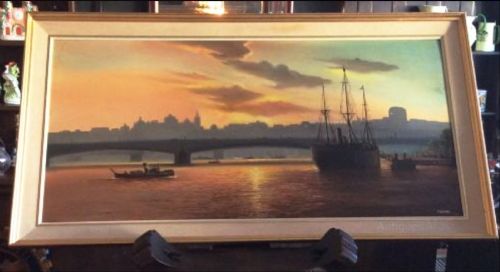
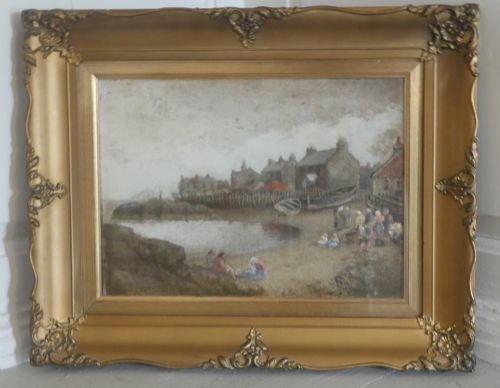
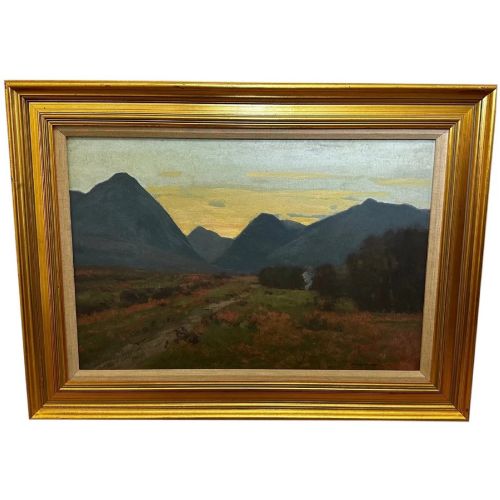
A vintage painted landscape picture captures open fields, rivers, coastal views and rural scenes created by artists working across the nineteenth and twentieth centuries. These pieces encompass framed works on canvas, board, paper and card originating from Victorian, Edwardian, and mid-century periods.
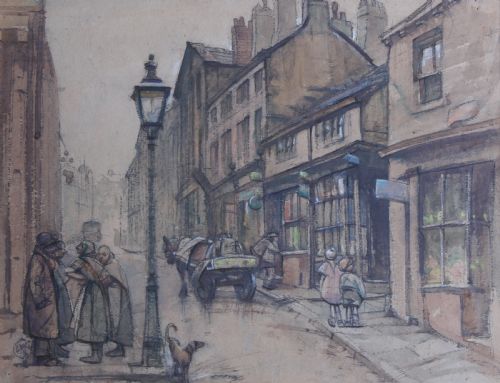
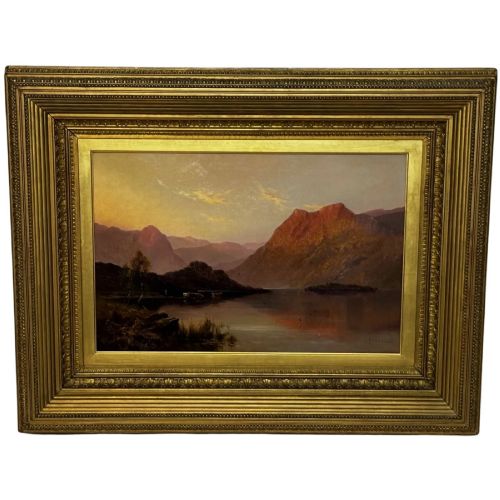
Buyers frequently encounter works executed in oil or watercolour, ranging in scale from intimate river views to large panoramic seascapes and cityscapes. The selection spans British and European regional scenes, coastal harbours, and pastoral subjects.
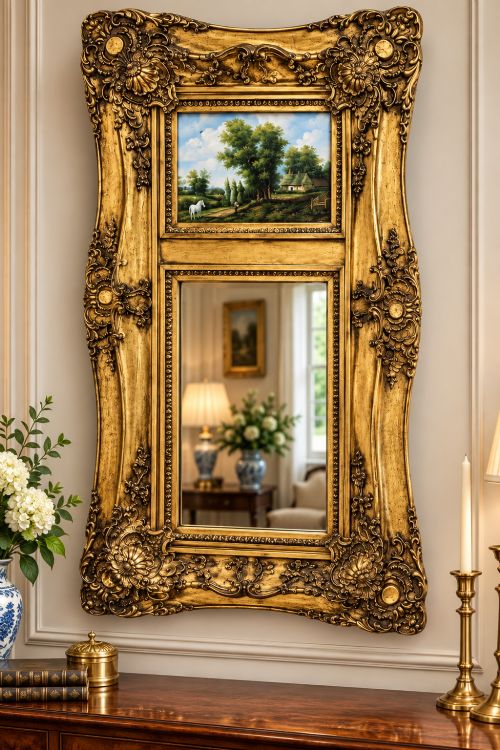
Examples often display framing in carved and gilded wood, complementing the period palette of the painting within. The variety extends from named academic watercolours to naive outsider art and atmospheric Impressionist studies.
Materials and construction
Artists painted primarily using oil on canvas, board or panel, or applied watercolours and pastels to paper and card. Pigments were worked with brushes or palette knives to build texture, depth and light across the surface.
Surfaces are housed in period surrounds, frequently constructed from wood and finished with applied gesso and gilt leaf. These frames protect the edges of the canvas or paper while adding structural weight and decorative presence.
Assessing quality and execution
Quality rests upon the confidence of the brushwork, the handling of natural light and atmospheric perspective, and the compositional balance of the scene. Superior works capture a convincing sense of weather, depth and movement rather than relying on stiff formulae.
The integration between the painting and its original or period frame contributes significantly to the overall integrity of the piece. Skilful handling of pigment, whether in fluid watercolour washes or rich oil impasto, marks out the more accomplished hand.
Kenneth Cozens·William H Myers·Alfred Young Nutt·Alfred Fontville de Breanski Jr·George Houston·Robert Leslie Howey·William Joseph Boyes·Charles Houben·Robert Thorne Waite·Richard Henry Wright·David Roberts·Frederick Walker·Eric Brown·Thomas Maidment·Frederick James Kerr·Maud Raphael Jones·Henry Yeen King·Percy Lancaster·David Cox·T Bergman·Herman S Melville·George Stanfield Walters·George Morland
The Vintage Painted Landscape Picture Glossary
- Oil on canvas
- A painting technique where oil-based pigments are applied to a stretched woven fabric support. This medium allows for rich colour saturation and textured brushwork.
- Watercolour
- A paint consisting of water-soluble pigments applied to paper, producing luminous and translucent effects. It is often used for rapid topographical or landscape studies.
- Gilt wood
- Wood carved and coated with a thin layer of gold leaf or metallic gilt paint. It is commonly found on traditional picture frames.
- Impressionism
- An art movement focusing on the depiction of light and fleeting moments through visible brushstrokes. Practitioners often worked outdoors to capture natural illumination.
- Board
- A rigid flat panel, often made of wood or wood pulp, used as a stable support for oil or gouache painting. It offers a firm surface compared to stretched canvas.
Vintage Painted Landscape Picture: Frequently Asked Questions
How do I hang a heavy framed landscape?
Ensure the wall fixings match the weight of the frame and use sturdy picture wire or D-rings secured firmly into the wooden stretcher or frame back. Heavy gilt frames require wall plugs and screws driven directly into masonry or wall studs.
Position the centre of the picture at eye level, roughly one hundred and fifty centimetres from the floor, to achieve a balanced display in a room.
Can I display watercolours in direct sunlight?
Watercolour pigments on paper are sensitive to ultraviolet light and will fade over long periods of exposure to direct sunlight. Hang these works on interior walls away from bright windows.
Using conservation-grade glass with UV-blocking properties during framing helps protect the pigments from environmental damage.
How do I identify the date of a painting?
Examine the signature, any inscriptions on the reverse of the canvas or board, and the style of the framing materials. Handwritten notes on the stretcher bars frequently record dates or locations.
Compare the painter's known working period, clothing styles in figurative elements, and framing construction techniques to narrow down the decade of creation.