
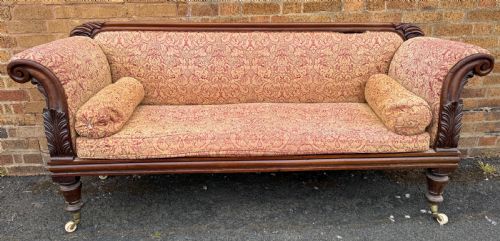


Vintage Padded Sofa Frame
A vintage padded sofa frame offers the foundational structure and exposed timber work of a traditional seat, ready for custom upholstery.
Vintage Padded Sofa Frame
When you search for a vintage padded sofa frame, you are looking at the exposed wooden skeleton and primary upholstered carcass of a settee or sofa. These pieces provide the structural base and decorative woodwork before final cloth covering is completed.
The selections available range across multiple historic periods including Regency, William IV, Victorian, Edwardian, and the 1930s. Styles stretch from French Rococo Revival and Biedermeier to Queen Anne revival and Georgian revival forms.
You are most likely to meet mahogany or walnut frames featuring carved details, scroll ends, and open arms. Forms include standard two-seater and three-seater settees alongside window seats.
How they were made
Cabinet makers constructed these skeletons primarily using solid mahogany or walnut, shaping the timber through carving and joinery. Exposed frames often display detailed scroll ends and decorative arm supports.
Internal padding and textile support systems were integrated alongside the woodwork. Materials such as brass accents, velvet, and various upholstery textiles completed the traditional construction process.
Some frames survived decades stripped of their padding, standing bare as wooden skeletons until someone finally gave them a second chance.
What varies in quality
The standard of carving and timber selection dictates the distinction between ordinary and superior pieces. Deeply carved walnut and figured mahogany show greater artisan skill than plain wooden frames.
Structural integrity of the joints and the preservation of the original wooden finish determine the lasting worth of the frame. Well-maintained joinery ensures the piece remains stable under modern seating weight.
The Vintage Padded Sofa Frame Glossary
- Scroll-end
- A sofa arm or frame terminal curved outward in a distinctive spiral scroll shape. This form appears frequently on William IV and nineteenth-century examples.
- Open arm
- A chair or sofa arm design leaving the wooden support partially or fully unpadded and visible. This style highlights the carved mahogany or walnut timber beneath.
- Biedermeier
- A Central European style dating to the nineteenth century focusing on utilitarian comfort and clean architectural lines. Pieces from this aesthetic often utilise domestic timbers.
- Window seat
- A narrow upholstered bench intended for placement beneath a window recess. These forms bridge the design elements of both chairs and settees.
Vintage Padded Sofa Frame: Frequently Asked Questions
What is a vintage padded sofa frame?
It is the structural wooden skeleton of an antique settee, often retaining carved details in mahogany, walnut, or rosewood. These pieces show the historic craftsmanship of the frame before modern cloth is applied.
Buyers select these items to restore them using specific fabrics that match their interior design. The underlying woodwork remains the primary historic feature.
How do I identify the period?
Dating relies on stylistic clues within the woodwork, such as Regency scroll ends or Edwardian mahogany framing. Historical revivals like Queen Anne style also indicate the design era of the piece.
Examining the timber type and construction joints helps narrow down the manufacturing decade. Cabinet making techniques changed noticeably between the Regency era and the 1930s.
Can I use these sofas daily?
These frames are built from solid hardwoods like mahogany and walnut, offering robust structural foundations for daily use. Proper restoration of the internal webbing and padding ensures everyday comfort.
Checking the stability of the joints is essential before placing the settee into heavy rotation. Professional upholstery adds the necessary support for regular seating.
What styles are available?
The selection includes French Rococo Revival, Biedermeier, William IV, and Queen Anne style walnut frames. Each aesthetic brings distinct carving motifs and wood finishes to the room.
Options range from formal three-seater sofas to compact window seats and open-arm settees. The variety spans across nineteenth-century and early twentieth-century British and European designs.