


Vintage Outdoor Urn Planters
These vintage outdoor urn planters bring classical form and weathered patina to gardens, and you are most likely to find robust cast iron examples here.
Vintage Outdoor Urn Planters
Vintage outdoor urn planters combine utilitarian garden vessels with decorative classical styling. Buyers seek these pieces to anchor pathways, patios and terraces with architectural weight and established character.
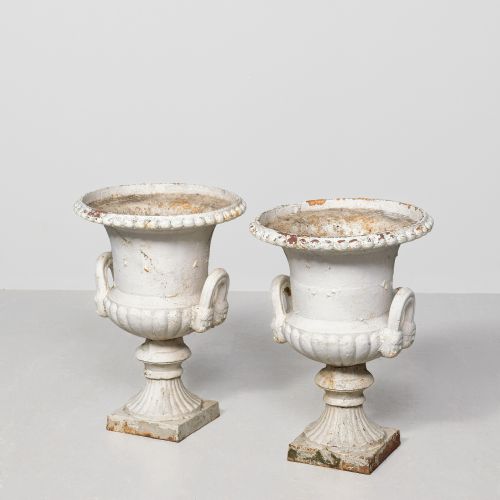
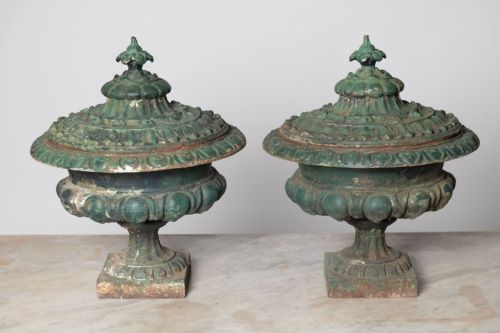
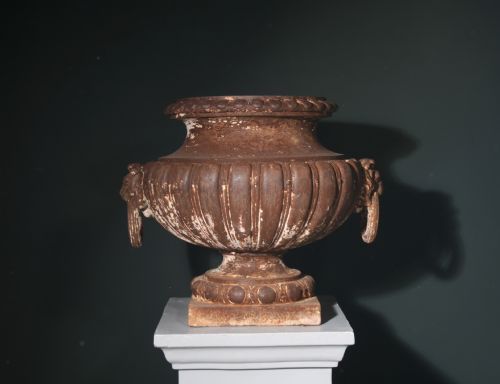
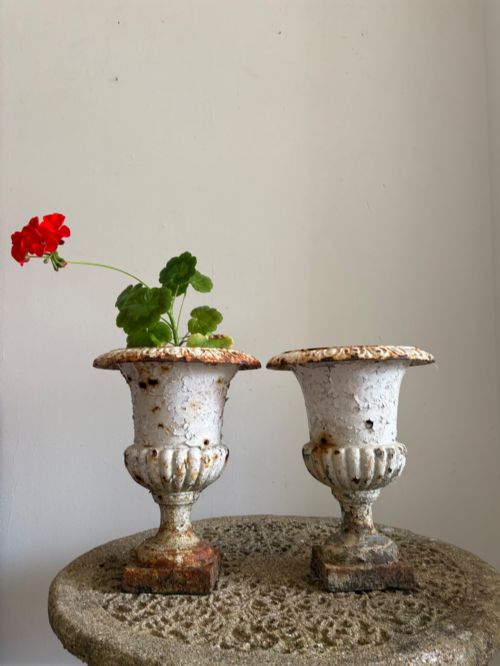
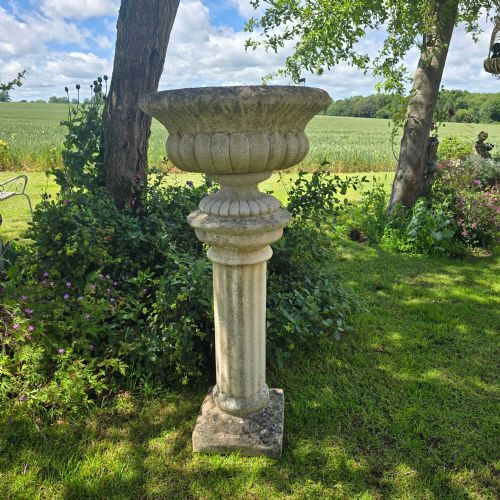
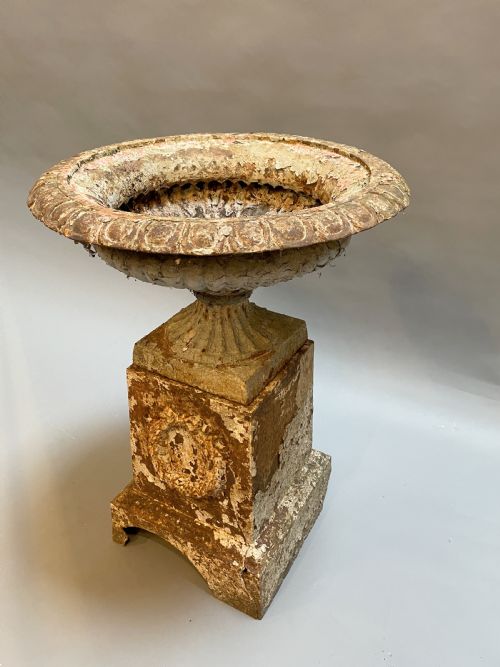
The selections span the nineteenth century through the mid twentieth century, drawing on Victorian, neoclassical and gothic revival traditions. Most pieces take the form of campana urns, tazza vessels or deep planters resting on matching plinths and pedestals.
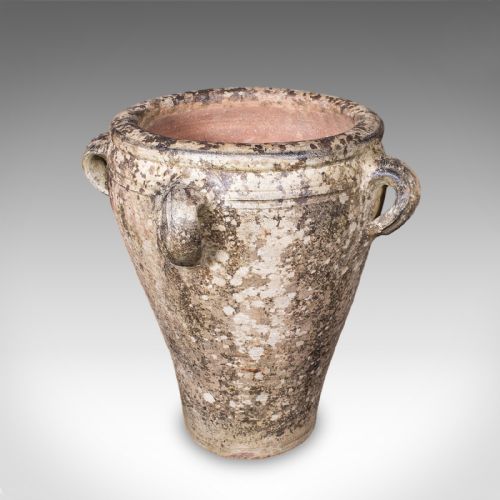
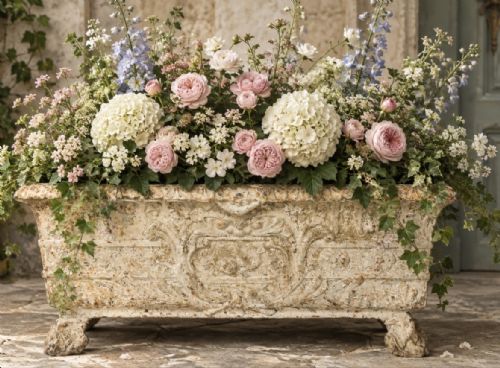
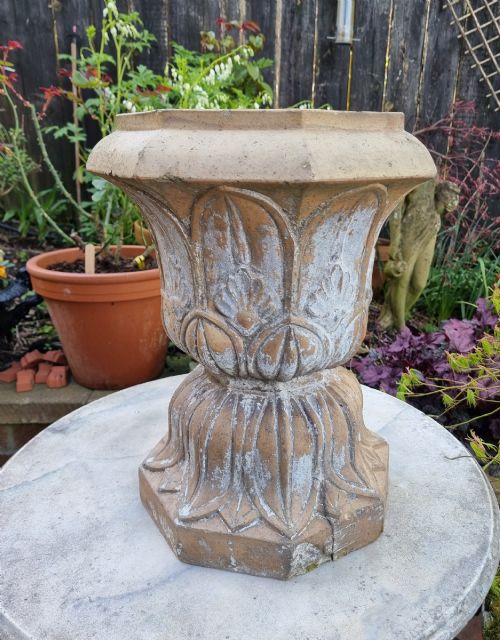
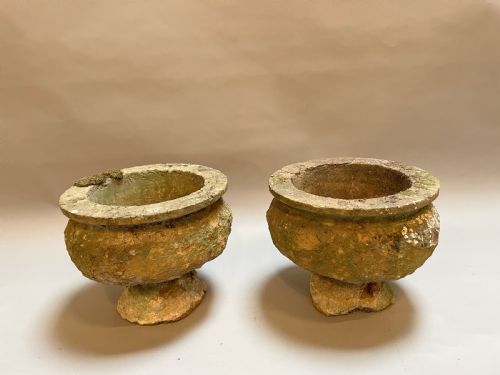
Cast iron examples dominate the available selection, frequently finished with original or weathered paint surfaces. Alongside metal vessels, the inventory includes terracotta jars, reconstituted stone bowls and salt glazed faux bois strawberry planters.
How they were made
Foundries cast metal planters using heavy iron moulds, producing crisp classical motifs and robust wall thicknesses that endure outdoor elements. Iron pieces often display distinct foundry marks or remain coated in accumulated layers of historic paint.
Terracotta and stoneware vessels rely on regional clays shaped by hand or thrown in large sections, then fired in kilns to achieve durable porous bodies. Stone variants involve the precise carving or casting of reconstituted aggregates, capturing the texture of natural masonry.
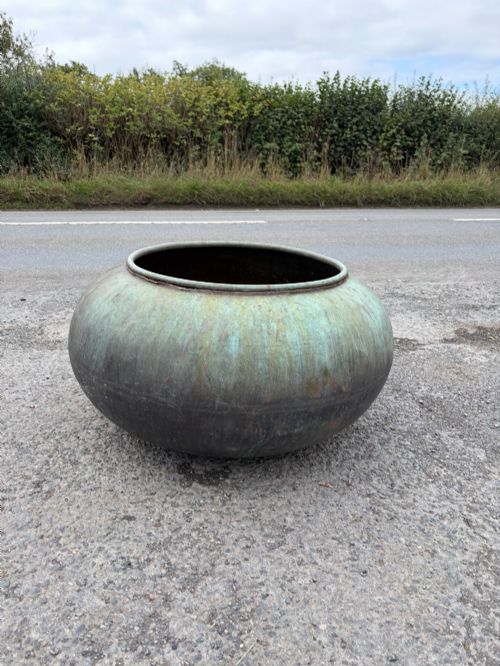
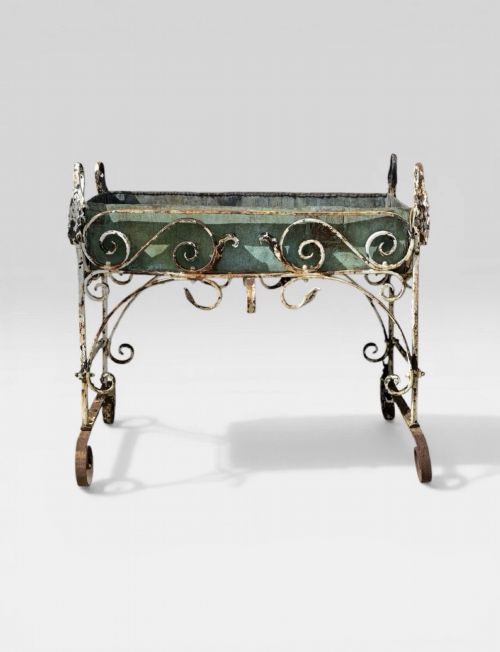
Wrought iron planters utilise hand-forged bars joined by rivets or welds to create open framework structures. These metal constructions frequently accommodate liners or hold smaller pots within decorative scrollwork.
Vintage Outdoor Urn Planters Retail Price Guide 2026
Typical asking prices for vintage outdoor urn planters among the pieces listed under this phrase on Sellingantiques today, from the lower quarter to the upper quarter. They describe what is for sale here now, not the wider market.
Periods represented span from pre-sixteenth century reclaimed stone up to mid-twentieth century cast iron designs.
What varies in quality
Quality rests in the crispness of the casting detail and the architectural proportion of the vessel to its base. Superior pieces exhibit deeply defined acanthus leaves, egg and dart mouldings, and balanced handles that integrate seamlessly with the body.
The integrity of the material dictates longevity and aesthetic depth, separating heavy-gauge metal castings and high-fired terracotta from weaker compositions. Original surface patination, such as flaking historic paint or lichen-encrusted stone, elevates the visual presence of an urn.
Completeness defines the standing of a garden ornament, particularly when original lids, matching plinths or paired companions remain intact. Matched pairs retain greater symmetry and balance when arranged formally within a garden landscape.
Coalbrookdale·Andrew Handyside·Val d'Osne Foundry·Compton Pottery
The Vintage Outdoor Urn Planters Glossary
- Campana urn
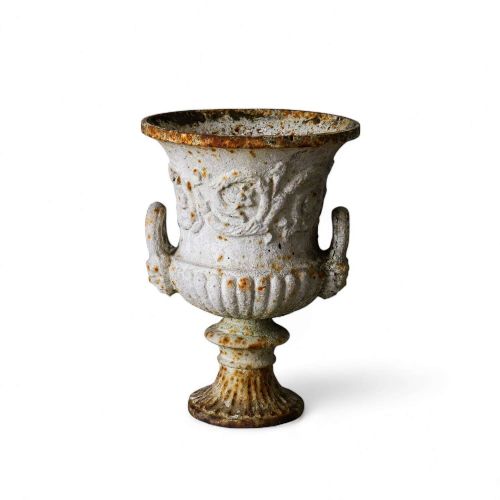
- A bell-shaped garden vessel with a flared rim and a footed base, common in nineteenth century cast iron. This classic silhouette originates from ancient Roman metal and marble prototypes.
- Tazza
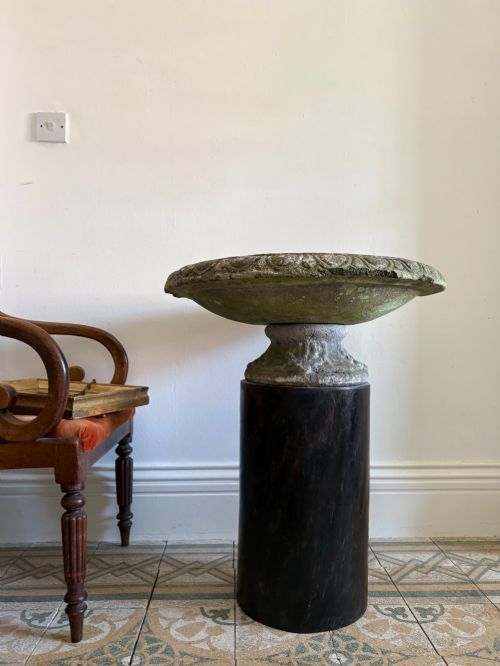
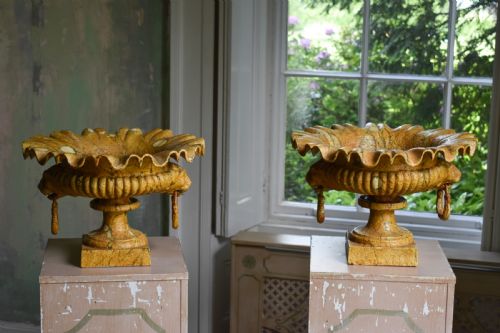
- A shallow bowl-shaped vessel elevated on a high stem and foot, frequently utilised as a garden planter. These pieces emphasise horizontal width over deep planting capacity.
- Faux bois
- An artistic imitation of wood grain rendered in ceramic, stone or concrete. In garden wares, this technique mimics rustic timber logs or branches.
- Plinth
- A heavy architectural block or pedestal that elevates an urn above ground level. These bases provide stability and improve the proportions of large garden ornaments.
- Patina
- The surface coloration and texture developed through decades of weathering, oxidation and environmental exposure. Collectors value this natural ageing over uniform modern finishes.
Vintage Outdoor Urn Planters: Frequently Asked Questions
How do I protect cast iron urns from frost?
Cast iron handles freezing temperatures well, but standing water trapped inside can expand and crack the metal or its contents. Ensure drainage holes remain clear and elevate vessels on feet during winter months.
For heavy stone or terracotta planters, lining the interior with protective material prevents moisture from penetrating the porous walls and causing frost spalling.
Can these planters stay outside all year?
Most vintage garden vessels are designed specifically for exterior placement and withstand rain, wind and sun exposure. Cast iron, stone and hard-fired terracotta develop stable outdoor surfaces over decades.
Delicate painted finishes or softer stone compositions benefit from sheltered positioning during severe winter storms to preserve their historic patination.
What is the best way to clean weathered garden planters?
Gentle washing with warm water and a soft bristle brush removes loose dirt without disturbing historic paint or established lichen. Avoid harsh chemical cleaners and pressure washers that strip away desirable patination.
Allowing natural weathering to continue maintains the authentic character expected from nineteenth century garden antiques.