



Vintage Ornate Screen
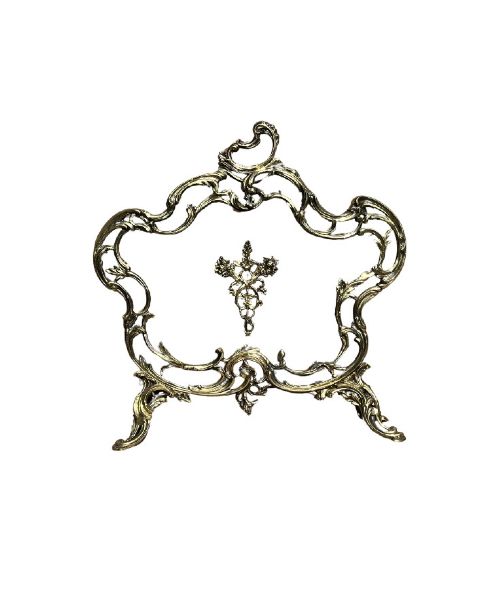
A vintage ornate screen brings heavy French revival brass and bronze into the hearth, turning a utilitarian fireplace guard into a centrepiece.
Vintage Ornate Screen
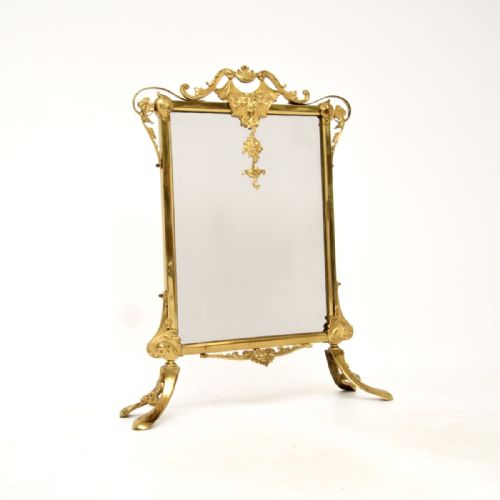
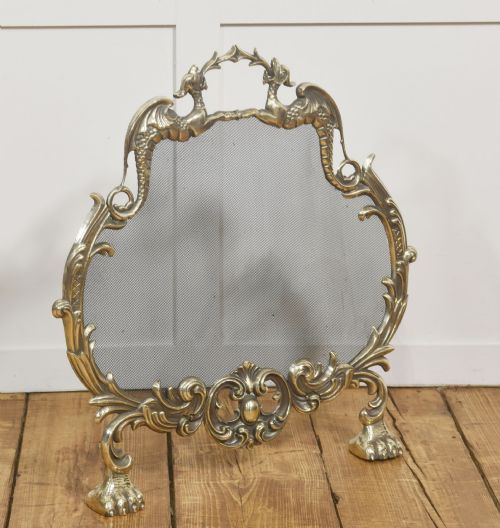
A vintage ornate screen is principally a fire screen or fireplace guard, designed to sit before an open hearth when the fire is unlit. The selection relies heavily on nineteenth-century French designs, spanning Louis XIV, Louis XVI, Empire, and Rococo Revivals alongside Victorian examples.
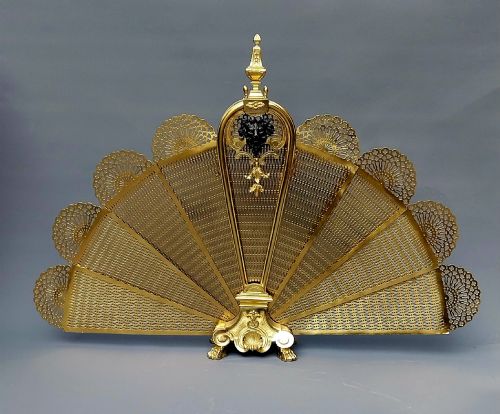
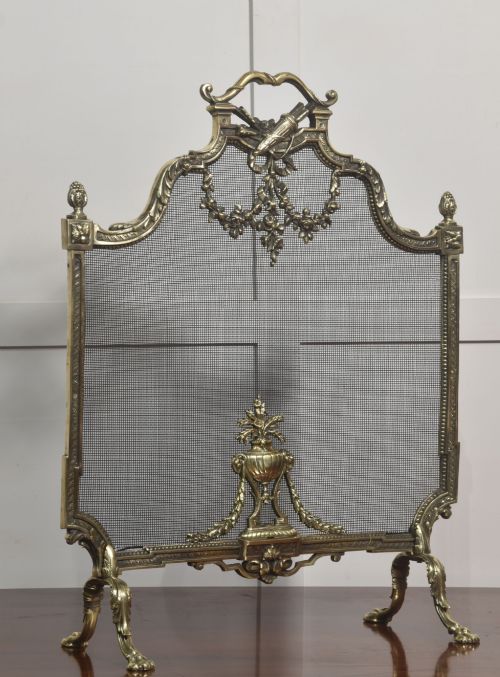
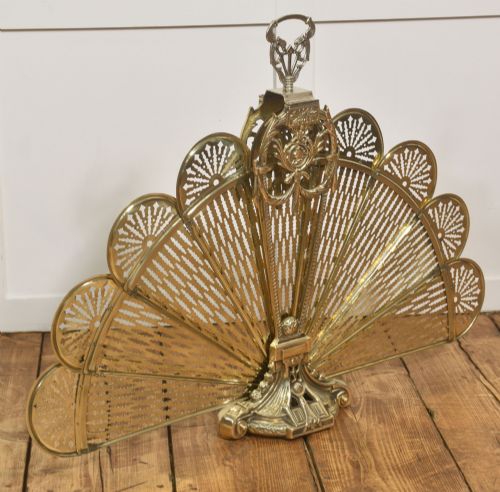
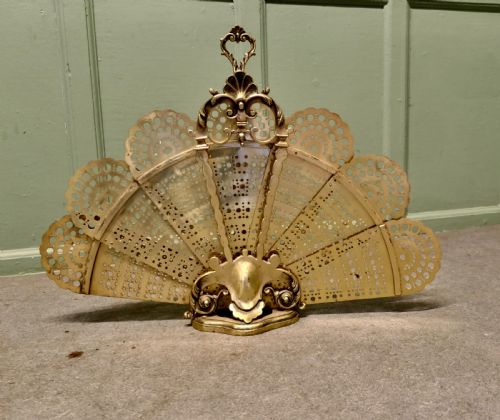
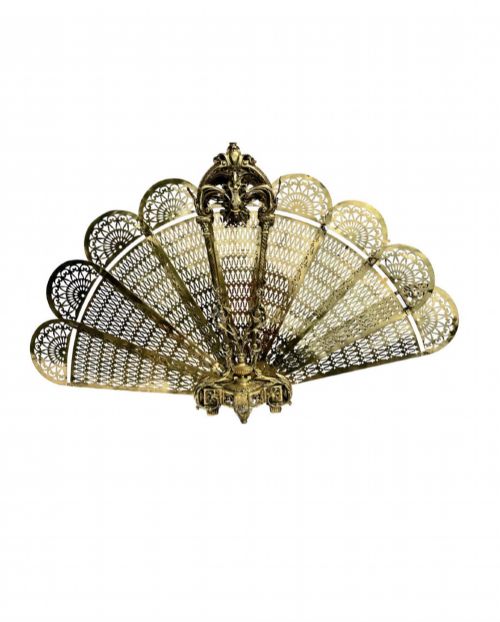
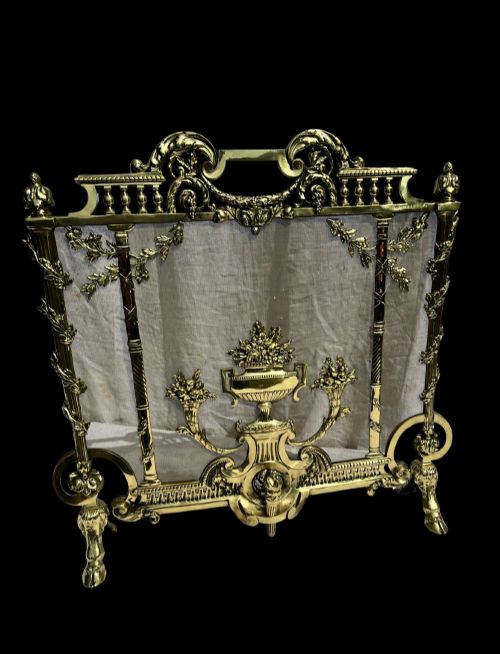
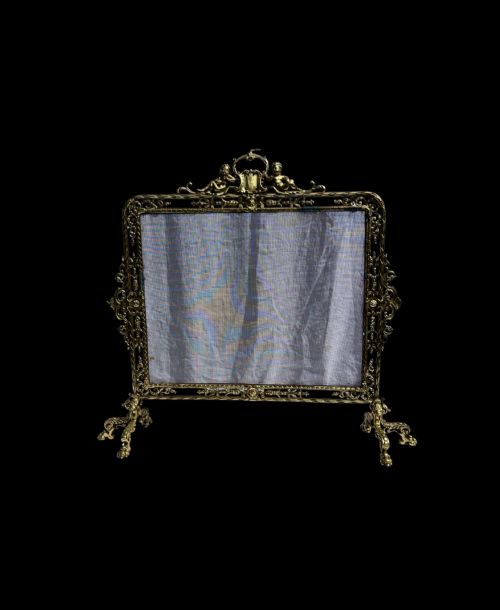
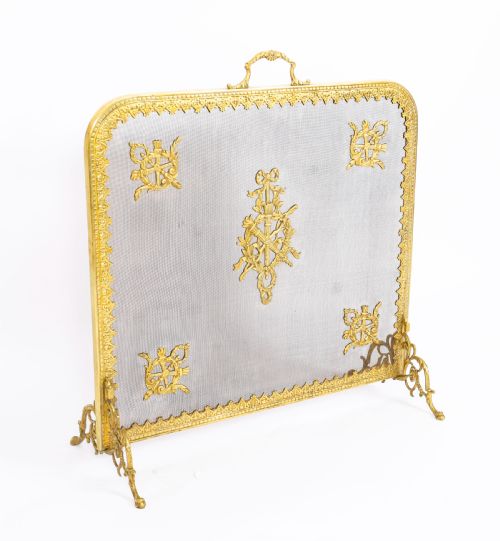
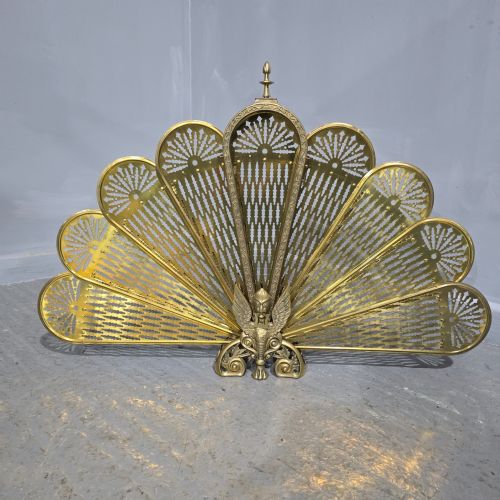
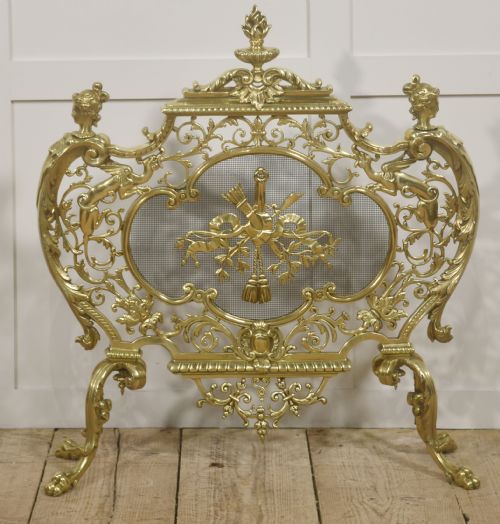
Most items take the form of heavy brass or gilt bronze frames fitted with wire mesh, metal mesh, or pierced sheet metal. Folding peacock fan designs and dolphin motifs appear alongside rigid rectangular frames decorated with classical trophies and scrolling foliage.
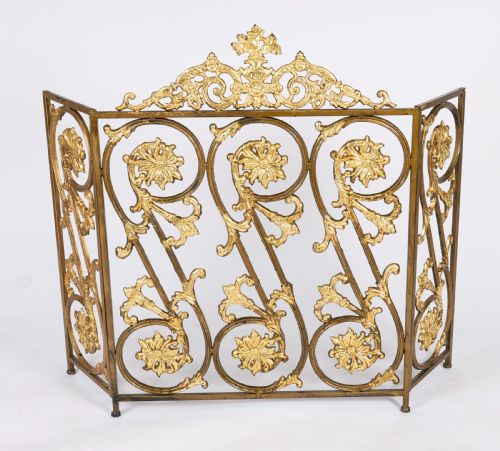
Beyond hearth furniture, the category accommodates related architectural salvage and decorative hardware, including cast iron panels and tapestry banner hangers. These pieces share a focus on intricate metalwork and decorative metal casting from the Victorian era and early twentieth century.
How they were made
Makers utilised brass, gilt bronze, and cast iron, forming structures through casting, piercing, and assembly with wire or steel mesh. Frames often received a gilt finish to enhance the reflective quality of the metal near the hearth.
Decoration relied on skilled metalwork, producing high-relief classical trophies, scrolling foliage in the Rococo manner, and articulated folding blades for peacock tail fire guards. Heavy casting techniques ensured the stability required for free-standing domestic ironmongery.
Vintage Ornate Screen Retail Price Guide 2026
Typical asking prices for vintage ornate screen among the pieces listed under this phrase on Sellingantiques today, from the lower quarter to the upper quarter. They describe what is for sale here now, not the wider market.
Object forms range from rigid architectural fire screens and folding peacock tail guards to heavy cast iron panels and banner hangers.
What varies in quality
Quality rests on the depth of the casting and the crispness of the chased or pierced detail within the metal frame. Finer examples display sharp relief in classical trophies and asymmetrical Rococo scrolls rather than soft, mass-produced contours.
The choice of material and finish also defines the tier, with heavy gilt bronze and fire-gilt brass sitting above standard cast brass. Integral stability, original mesh panels, and robust hinges on folding screens separate superior workshop production from simpler domestic ironmongery.
Bouhon Frères
The Vintage Ornate Screen Glossary
- Fire Screen
- A free-standing barrier placed in front of a fireplace opening to mask an unlit grate or block radiant heat. These screens use metal mesh or solid panels held within decorative frames.
- Gilt Bronze
- Bronze metal treated with a layer of gold, often through mercury gilding or electroplating, providing a durable and luminous finish. It appears on finer nineteenth-century French pieces.
- Rococo Revival
- A nineteenth-century design style mimicking the flowing, asymmetrical curves and natural motifs of the French eighteenth century. It dominates the ornamentation of many brass and bronze frames here.
- Architectural Salvage
- Building elements recovered from older structures for decorative or reuse purposes, including the heavy cast iron panels found in this selection.
- Peacock Fan Fire Screen
- A folding screen formed of overlapping metal blades that expand into the shape of a peacock tail. When closed, the fan slides into a compact housing.
Vintage Ornate Screen: Frequently Asked Questions
What is a vintage ornate screen used for?
These screens serve primarily as decorative hearth furniture, positioned in front of an unlit fireplace to hide the dark interior and add metallic warmth to a room.
They also function practically as spark guards when the fire dies down, with fine wire mesh or metal screens preventing embers from reaching the floor.
How do I clean a brass fire screen?
Dust the metal gently with a soft dry cloth to remove surface soot and debris without disturbing any remaining gilt finish.
Avoid harsh chemical metal polishes that strip away age patinas or damage delicate bronze surfaces, keeping cleaning strictly to gentle maintenance.
Are these screens safe to use with a real fire?
Most pieces are built from heavy brass, bronze, or iron with steel mesh designed to withstand proximity to hearth heat. However, antique folding fan screens and decorative gilt pieces are often better suited to decorative display or low-intensity use.
How can I tell a Rococo Revival screen apart?
Rococo Revival pieces feature characteristic asymmetrical C-scrolls, shell motifs, and naturalistic floral foliage rather than strict geometric symmetry. They frequently employ pierced brass and cast bronze to achieve elaborate, flowing outlines.