


Vintage Oriental Wall Plaque
A vintage oriental wall plaque brings heavy cast metal, cloisonne enamel and carved teak into a room with striking presence.
Vintage Oriental Wall Plaque
A vintage oriental wall plaque spans decorative items designed for display, including chargers, roundels, carved wooden panels and framed lacquer work. The pieces appearing here originate from multiple Asian traditions and periods, stretching from the late Edo and Meiji eras through the early twentieth century.
Buyers meet varied forms such as cloisonne enamel plates featuring koi, dragons and birds alongside deep-carved teak panels and red lacquered frames inlaid with mother of pearl and abalone. The selection ranges from substantial chargers intended to sit on surfaces or hang to matched pairs of wall panels.
The materials dictate the character of each piece, moving from the metallic sheen of patinated iron and bronze door plates to the bright pigments of Japanese Imari porcelain and the textured grain of hand-carved wood.
Materials and construction methods
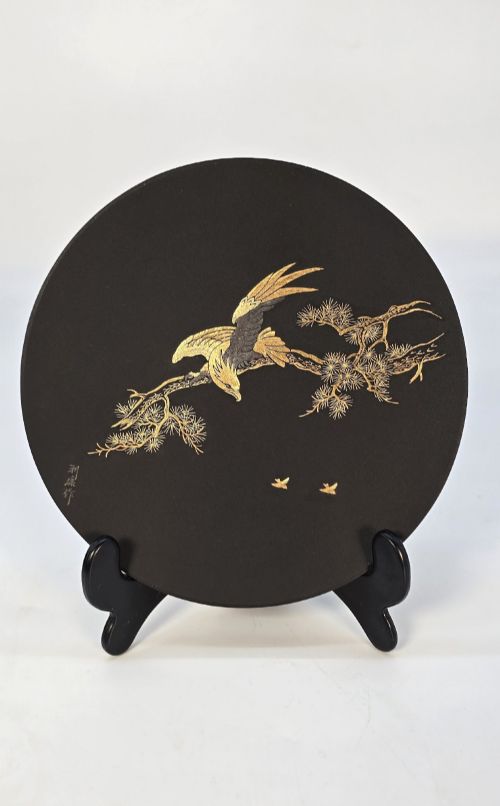
Makers utilised copper bases for cloisonne enamel, applying fine wire to outline intricate motifs of koi, ibis and samurai before filling the cells with coloured enamel and firing the surface. Iron and bronze components received careful patination alongside gold and silver inlay.
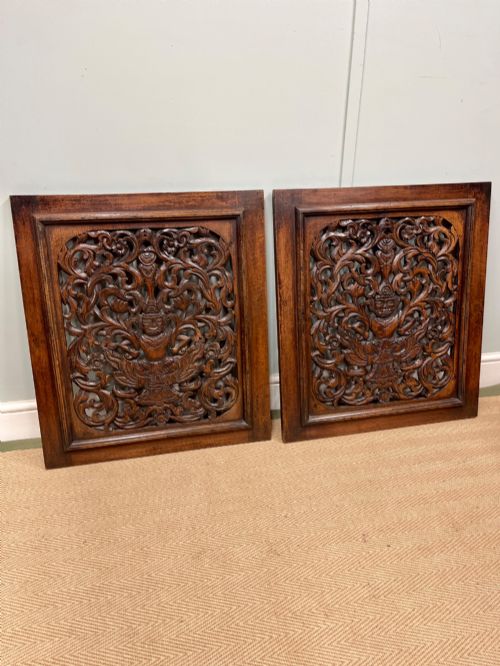
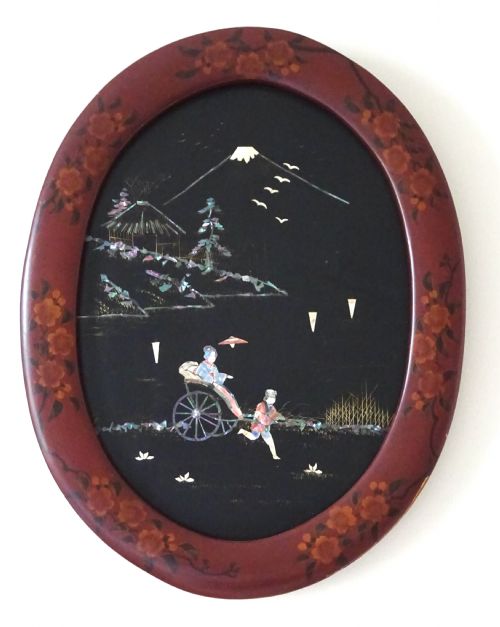
Woodworkers carved teak and other timbers by hand to form deep relief panels depicting figures such as Daruma. Lacquer workers layered red lacquer over wooden bases, setting mother of pearl, abalone and metallic foil directly into the surface to create pictorial scenes of birds in foliage.
The listings span the Victorian era, the Meiji period, and the 1920s and 1930s, using materials such as copper, porcelain, teak, and bronze.
Assessing quality in construction and design
The fineness of the metal wirework and the density of the enamel in cloisonne pieces distinguish superior examples, where cells remain crisp and even across complex dragon or koi designs. In carved wooden and lacquered panels, the depth of relief and the precision of the mother of pearl inlay separate standard items from masterwork creations.
The integrity of the ground material, whether patinated iron, heavy bronze or seasoned teak, dictates the longevity and physical weight of the object. Surface preservation, particularly the stability of the lacquer and the tightness of fitted frames, governs the overall standard of the piece.
The Vintage Oriental Wall Plaque Glossary
- Cloisonne
- A metalworking technique where fine wire is soldered to a base to form cells that hold coloured enamel paste before firing.
- Imari
- A style of Japanese porcelain decorated in underglaze blue and overglaze red, gold and other colours.
- Roundel
- A circular decorative panel or plaque.
- Charger
- A large decorative plate intended for display rather than dining.
- Patination
- The natural or induced ageing of a metal surface that alters its colour and texture over time.
Vintage Oriental Wall Plaque: Frequently Asked Questions
How do I hang a heavy charger?
Heavy chargers and large bronze plates require robust wall fixings and specialised metal hangers that distribute the weight securely across the rim or base.
Wire hangers must be checked for strength before mounting older ceramic or cast metal pieces on partition walls.
What is the difference between Imari and cloisonne?
Imari describes Japanese painted porcelain featuring distinct blue, red and gold palettes, whereas cloisonne involves fused enamel held within wire cells on a metal body.
Both techniques produced decorative plates and chargers during the nineteenth and early twentieth centuries.
How should I clean a lacquer plaque?
Lacquer panels require gentle dusting with a soft, dry cloth to prevent micro-abrasions on the delicate red surface and mother of pearl inlay.
Moisture and harsh cleaning agents must be avoided entirely to protect the aged wooden and lacquered substrates.
How can I tell the age of a carved wooden panel?
Age is judged by the tool marks left by hand-carving, the natural shrinkage and patina of the teak or timber, and the style of the depicted subject.
Comparing the joinery and framing methods against known nineteenth-century production standards also helps confirm the period.