

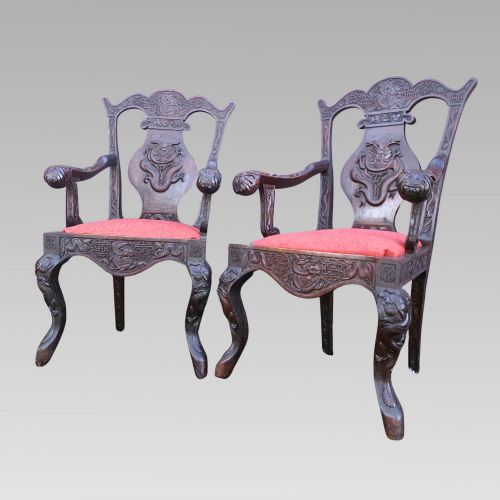


Vintage Oriental Seating
Vintage oriental seating encompasses historical chairs, benches, and stools spanning the eighteenth to early twentieth centuries, bringing tactile craftsmanship and distinct regional character into a room.
Vintage Oriental Seating
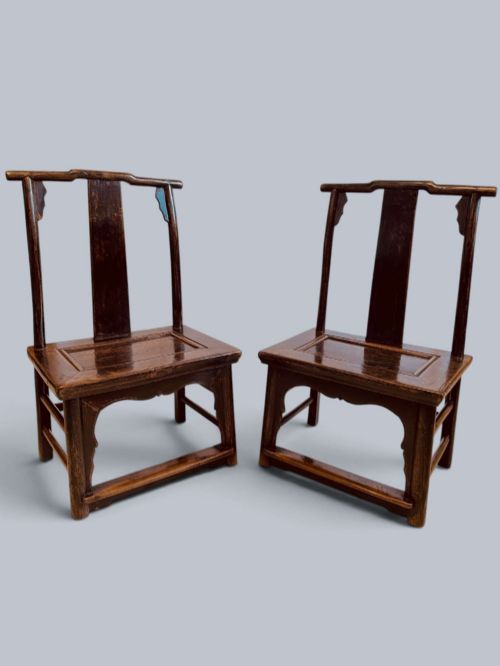
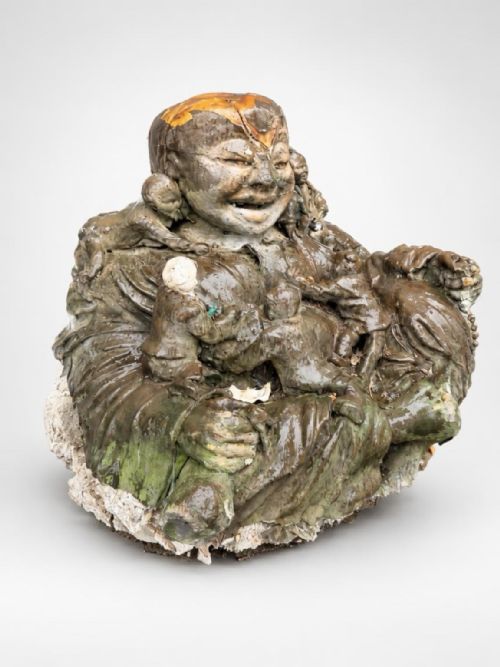
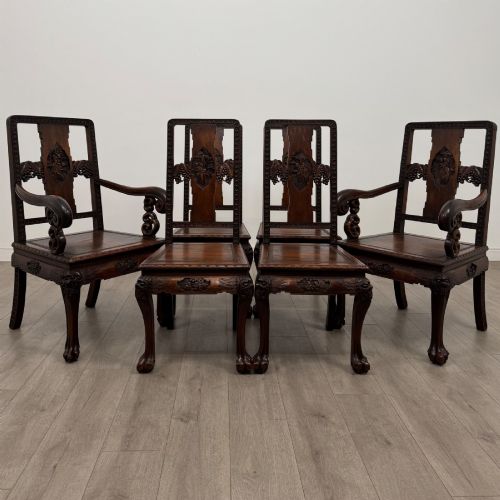
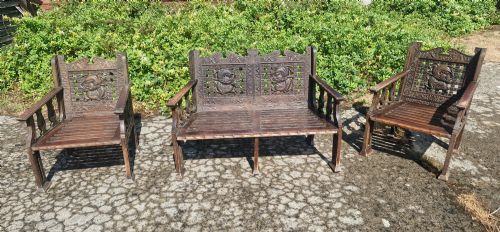
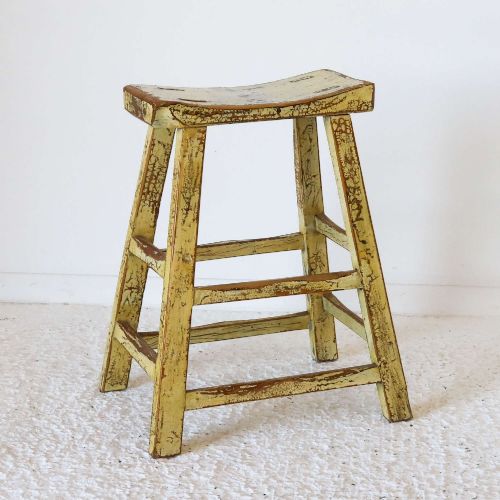
Vintage oriental seating brings together diverse forms intended for rest, including armchairs, dining chairs, benches, stools, and garden seats. These pieces originate from various traditions such as Chinese Export, Qing Dynasty, Anglo-Indian, Tibetan, and Chinoiserie styles. A buyer searching this phrase encounters everything from robust hardwood armchairs to lacquered elm stools and ceramic barrel garden seats.
The selection ranges across several centuries, drawing heavily upon nineteenth-century pieces alongside Edwardian interpretations and early twentieth-century examples. Dining chairs often appear in sets, while benches and accent chairs frequently survive as singular statement items. Forms vary from simple provincial folding chairs to ornate dragon armchairs and mother-of-pearl inlaid benches.
Materials and Technique
Makers utilised dense timbers including rosewood, teak, mahogany, blonde wood, and elm to construct these frames. Hardwoods provided the structural integrity required for intricate carving and joinery, while bamboo and cane offered lighter alternatives for chairs and seating suites.
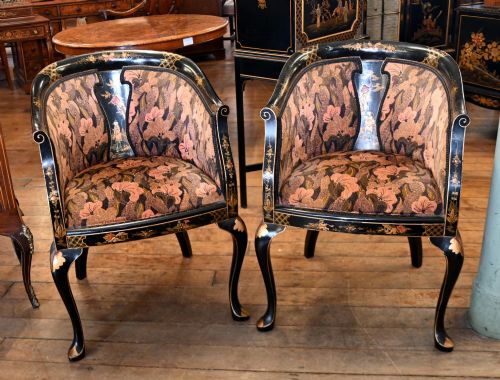
Surface decoration relies heavily on traditional finishes such as black and coloured lacquer, sometimes enhanced with gold leaf or mother-of-pearl inlay. Bronze and terracotta appear in sculptural seating elements like garden seats, while cane and wickerwork provide flexible seating surfaces.
Vintage Oriental Seating Retail Price Guide 2026
Typical asking prices for vintage oriental seating among the pieces listed under this phrase on Sellingantiques today, from the lower quarter to the upper quarter. They describe what is for sale here now, not the wider market.
Certain antique benches arrive inlaid with mother-of-pearl designed to catch the evening candlelight.
Distinctions in Execution
The degree of hand-carving and depth of relief set finer examples apart from simpler provincial work. Crisp execution of motifs such as dragons, foliage, and geometric patterns indicates superior workshop skill.
The integrity of the original surface finish, whether polished hardwood or layered lacquer, determines the visual impact of the piece. Subtle details like mother-of-pearl inlay alignment and the tightness of cane or bamboo work separate standard utility items from exceptional commissions.
The Vintage Oriental Seating Glossary
- Chinoiserie
- European decorative style inspired by Chinese artistic traditions, popular in furniture and lacquerwork. It frequently appears on Edwardian footstools and decorative cabinets.
- Qing Dynasty
- The final imperial dynasty of China, spanning the seventeenth to early twentieth centuries. Furniture from this period is noted for deep carving and rich hardwood utilisation.
- Garden Seat
- Barrel-shaped ceramic or bronze seat designed for outdoor use in courtyards or gardens. These pieces often feature blue and white glaze or pierced coin motifs.
- Elm
- A durable, tough timber utilised extensively in traditional Chinese provincial furniture. It takes lacquer well and displays a pronounced grain pattern.
- Bergere
- An enclosed upholstered French armchair with wooden frames, occasionally adapted within international suites. The sides typically feature cane or wicker panelling.
Vintage Oriental Seating: Frequently Asked Questions
How do I clean lacquered furniture?
Dust surfaces gently with a soft, dry microfibre cloth to remove daily particles without disturbing the underlying finish. Avoid chemical sprays, abrasive cleaners, or excess water which can damage fragile lacquer.
Keep pieces away from direct sunlight and sudden temperature shifts to prevent the wood beneath from expanding and cracking the lacquer surface.
Are garden seats meant for outdoors?
Ceramic and bronze garden seats originated for courtyard and garden use, enduring various weather conditions. Many collectors now bring them indoors to serve as accent tables or sculptural seating.
When placed indoors, they add architectural weight to a room while functioning safely on carpets or wooden floors.
How do I identify Chinese hardwood?
Examine the weight, grain density, and natural colour of the timber exposed beneath the finish. Rosewood, teak, and mahogany feel exceptionally heavy and dense compared to standard softwoods.
Look for traditional joinery methods that allow the dense wood to expand and contract naturally across changing seasons.
Can I mix styles in a room?
Combining different regional styles, such as placing a Chinese elm chair near an Anglo-Indian elbow chair, creates visual depth. Balance heavy carved hardwood items with lighter cane or bamboo pieces to avoid overcrowding the space.
Let shared materials, such as dark wood tones or black lacquer finishes, anchor disparate pieces together within the same interior.