


Vintage Oriental Landscape Art
Vintage oriental landscape art brings distant vistas home through delicate brushwork and rich textiles.
Vintage Oriental Landscape Art
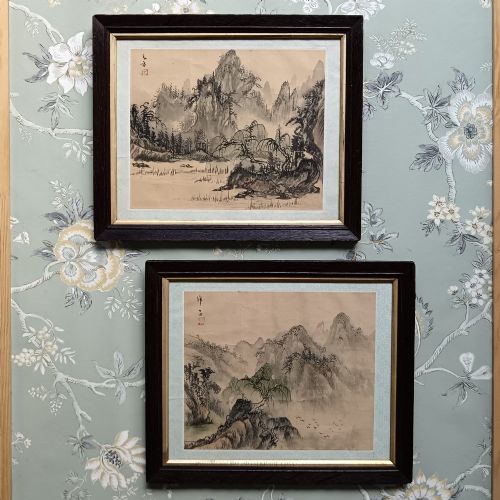
Vintage oriental landscape art encompasses paintings, prints, textiles, and carved sculptures depicting traditional scenery from across Asia. Buyers searching for vintage oriental landscape art will find framed wall art, silk paintings, and carved jade mountain landscape sculptures spanning from the eighteenth century to the mid-twentieth century.
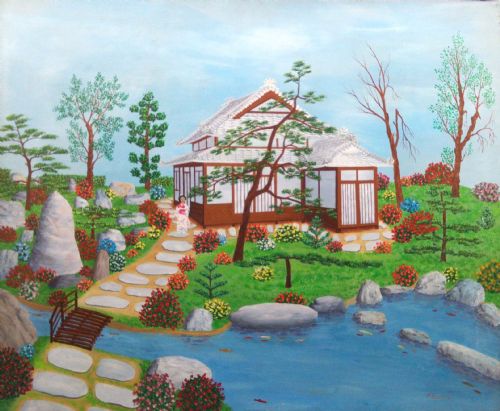
The selection on this page ranges from Chinese Shan Shui silk paintings and Japanese woodblock prints to large oil paintings and intricate table screens. Pieces appear across diverse periods including the Victorian era, the nineteenth century, and the nineteen-sixties, reflecting various traditions such as traditional Chinese art, Japanese Ukiyo-e, and Orientalism.
How they were made
Materials such as silk, paper, wood, and glass provide the foundation for many of these works, complemented by oil on canvas, watercolor, and ink. Artisans utilised traditional techniques ranging from delicate silk painting and woodblock printing to detailed hand-painted brushwork.
Three-dimensional pieces demonstrate specialised craftsmanship through carved hardwood stands, jade sculpting, and cloisonne enameling. Silver compacts and carpets further illustrate the diverse media employed by makers working across different regional traditions.
Listings incorporate items from the eighteenth, nineteenth, and twentieth centuries, utilising oil, ink, silk, glass, and carved jade.
What varies in quality
Quality rests upon the execution of the hand-painted or carved detail, the preservation of delicate materials like silk and paper, and the integration of original frames or hardwood stands. Finer examples display precise brush control, depth of perspective, and harmonious composition that elevate the subject matter beyond standard decorative output.
Materials themselves distinguish the pieces, as seen in the selection of carved jade versus standard wood or the complexity of cloisonne work. The integrity of original mountings, such as carved stands for table screens and silk paintings, also influences the overall character of each piece.
Kunisada·Ando·Otto Pilny·Richard Wilson
The Vintage Oriental Landscape Art Glossary
- Shan Shui
- Traditional Chinese painting style that depicts scenery using brush and ink rather than more conventional observational sketching. This style focuses on natural elements such as mountains, rivers, and waterfalls.
- Ukiyo-e
- Japanese genre of art translated as pictures of the floating world, which flourished from the seventeenth through nineteenth centuries. Artists typically produced woodblock prints and paintings of landscapes, history, and theatre.
- Cloisonne
- Enamelware technique where artists affix metal wires to a base object to create compartments that are then filled with coloured enamel paste. The piece is fired and polished to reveal a decorative pattern.
- Chinoiserie
- European decorative style inspired by Chinese art and design, incorporating asymmetric motifs, landscape elements, and ornate detailing. This style influenced furniture, textiles, and fine art over several centuries.
Vintage Oriental Landscape Art: Frequently Asked Questions
How do I identify traditional Chinese Shan Shui paintings?
Shan Shui paintings typically depict natural scenery such as mountains and rivers using traditional ink and brushwork techniques on silk or paper. Many examples feature calligraphic inscriptions and artist signatures.
Examining the mounting and framing helps determine the period, with pieces ranging from mid-twentieth-century examples to earlier works housed in original frames.
What is the difference between woodblock prints and paintings?
Woodblock prints involve carving an image onto a wooden block, applying ink or colour pigments, and pressing the design onto paper or textile surfaces. Paintings are executed directly by hand using mediums such as ink, watercolor, or oil on canvas and silk.
Prints often exhibit fine linear details characteristic of Japanese Ukiyo-e traditions, whereas paintings show individual brush strokes and varied pigment density.
How should I care for antique silk and paper art?
Silk and paper works require protection from direct sunlight to prevent fading of delicate inks and pigments. Maintaining stable indoor humidity levels prevents the desiccation or warping of organic materials.
Framing under protective glass shields the surface from airborne dust and moisture while preserving the structural integrity of the mounting.
What distinguishes Japanese Ukiyo-e from other styles?
Ukiyo-e art focuses on scenes of everyday life, landscapes, and historical narratives produced primarily through woodblock printing techniques during the Edo period and Victorian era. These works often employ flat areas of colour and defined outlines.
Collectors can identify them by their distinct compositional framing, signature cartouches, and subject matter depicting Japanese gardens, tea houses, and scenic vistas.