




Vintage Opaline Shade Light
A vintage opaline shade light brings soft diffusion and period character to a room, combining milk glass with functional metalwork.
Vintage Opaline Shade Light
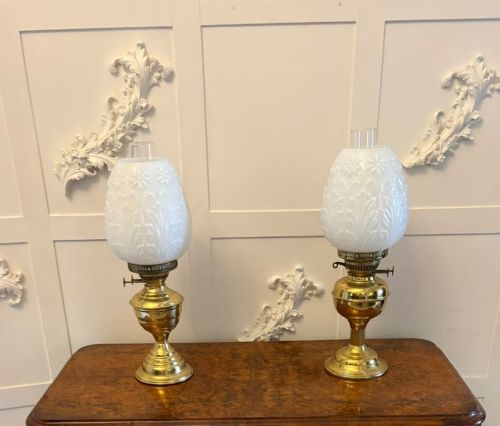
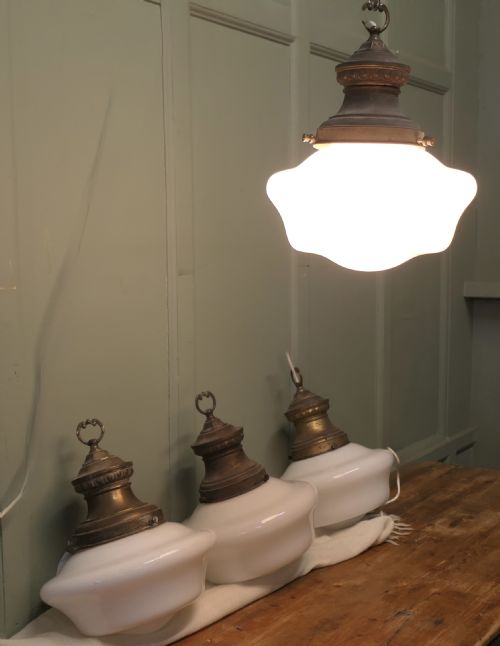
A vintage opaline shade light encompasses a variety of domestic and industrial illumination, from pendant lights and ceiling fixtures to converted oil lamps and desk lights. These pieces date across the Victorian, Edwardian, Art Deco and early twentieth-century periods, capturing shifts in interior lighting technology and design.
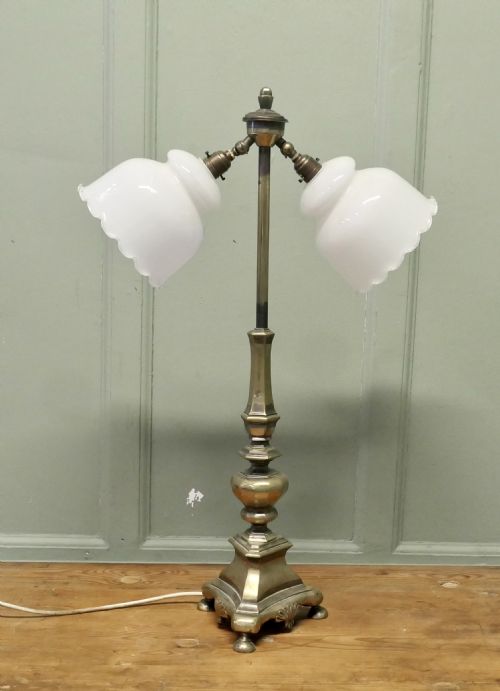
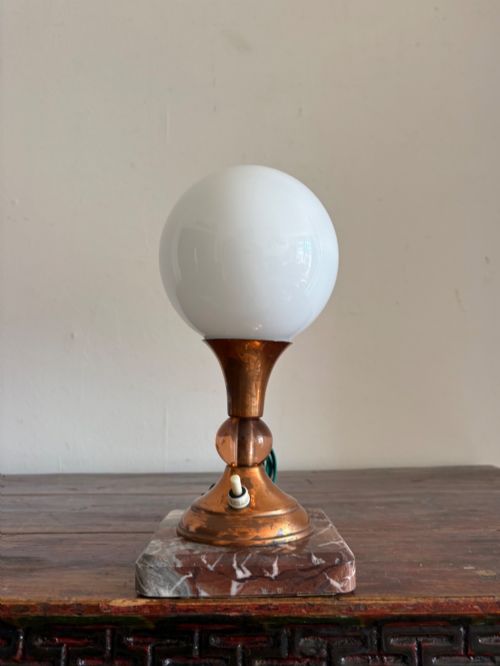
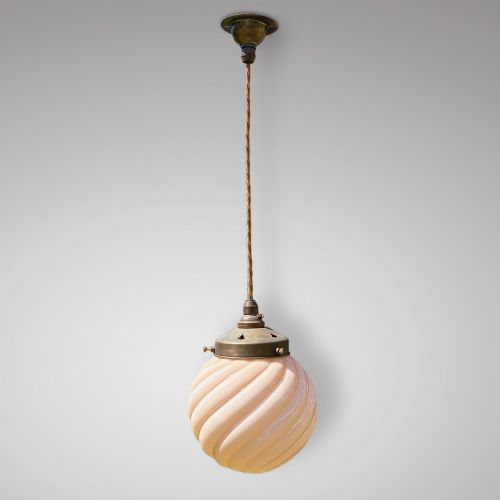
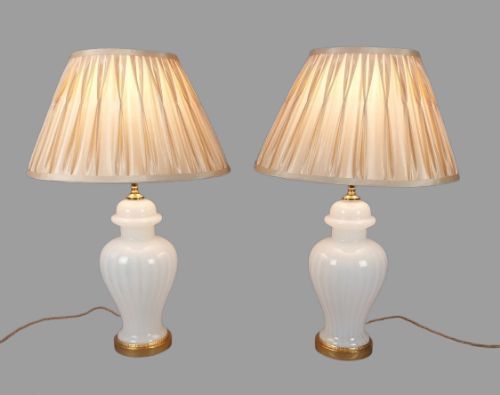
You are most likely to encounter pendant lights and table lamps combining opaline glass with brass or chrome mounts. The selection ranges from conical and pear-shaped hanging shades to substantial chapel lights and paired desk lamps.
Origins span British and continental European workshops, frequently pairing French art deco or Victorian glass with metal bases of brass, bronze and copper. The forms adapt readily to modern interiors while retaining their distinct historical silhouette.
How they were made
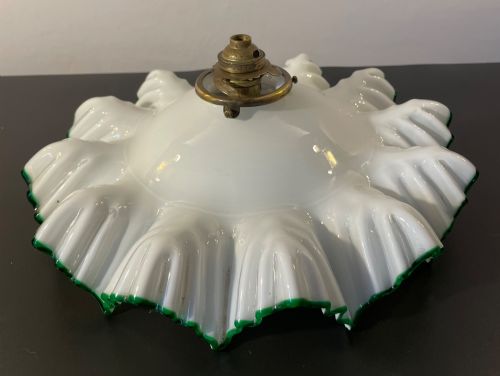
Opaline glass was manufactured by adding opacifying agents to the molten batch, producing a dense, milk-white material that softens and diffuses light evenly. Glassmakers shaped these shades using blowing techniques, sometimes creating reeded, fish-scale or frilled surfaces.
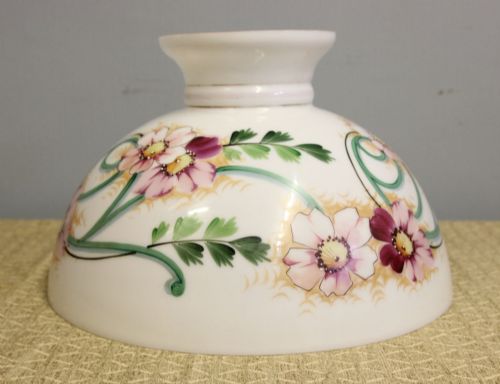
Metal components such as brass, bronze, copper and chrome were cast, spun or turned to form the structural mounts, stems and bases. Many pieces incorporate hand-painted decoration on the glass or combine marble and enamel elements for added weight and contrast.
Listings span multiple eras from the 1860s Victorian period through to 1930s Art Deco and modernist designs.
What varies in quality
Quality reveals itself in the weight and consistency of the opaline glass, where superior examples display a smooth, dense milk-white diffusion without thin patches or bubbles. The refinement of the metalwork, whether cast brass, ormolu, or heavy chrome, dictates the overall solidity of the fitting.
The sophistication of the silhouette also sets pieces apart, distinguishing standard utilitarian fixtures from decorative works featuring reeded designs, hand-painted motifs, or sculptural marble and bronze bases.
Wild & Wessel
The Vintage Opaline Shade Light Glossary
- Opaline glass
- A translucent, milk-white glass used to diffuse light gently without harsh glare. It gained popularity in nineteenth- and early twentieth-century lighting.
- Pendant light
- A hanging light fixture suspended from the ceiling by a cord, chain, or metal rod. These often feature conical or pear-shaped opaline shades.
- Plafonnier
- A ceiling-mounted light fixture positioned flush or close to the ceiling. These frequently utilise painted or frosted glass shades.
- Oil lamp
- A lighting device that burns liquid fuel via a wick, commonly converted to electricity in later periods. They often pair brass reservoirs with opaline shades.
- Uplighter
- A floor or table lamp designed to direct illumination upwards towards the ceiling. Edwardian telescopic examples often combine brass standards with opaline glass.
Vintage Opaline Shade Light: Frequently Asked Questions
What is an opaline shade light?
An opaline shade light is a lighting fixture featuring a milk-white glass shade designed to soften and diffuse bulb glare. These pieces range from ceiling pendants to table lamps.
They date primarily from the Victorian era through the Art Deco period, incorporating metal mounts in brass, bronze, and chrome.
How do I date an antique opaline light?
Dating relies on stylistic markers, mounting materials, and construction techniques. Victorian and Edwardian pieces frequently combine heavy brass with oil lamp conversions.
Art Deco and 1930s examples often introduce chrome, geometric forms, or industrial shapes such as fish-scale and conical pendants.
Were these lights originally electric?
Many early pieces began as oil or paraffin lamps before being converted to electricity during the twentieth century. Ceiling pendants and industrial fittings were generally manufactured for electrical use.
Conversion details do not detract from the period authenticity of the brass and glass components.
How do I style a vintage opaline light?
The neutral white glass and metallic finishes allow these lights to complement both traditional and modern interiors. Pendant lights suit kitchens and hallways, while desk lamps fit studies.
Their soft diffusion creates an ambient glow suitable for living spaces without overwhelming the room.