





Vintage Opaline Lamp
A vintage opaline lamp brings soft, diffused illumination to a room through milky glass paired with brass, bronze, or marble.
Vintage Opaline Lamp
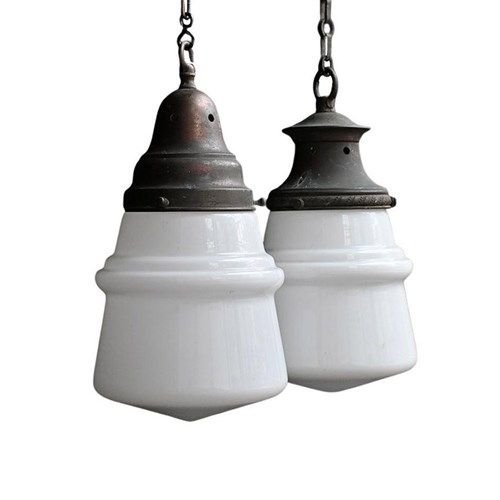
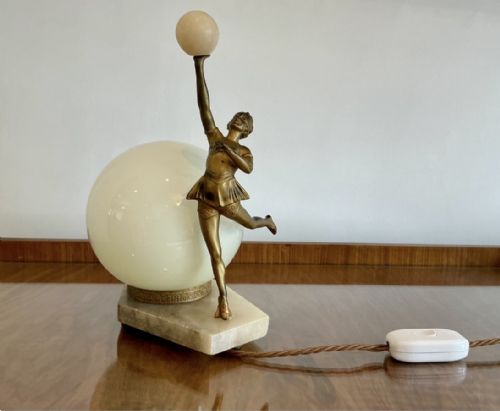
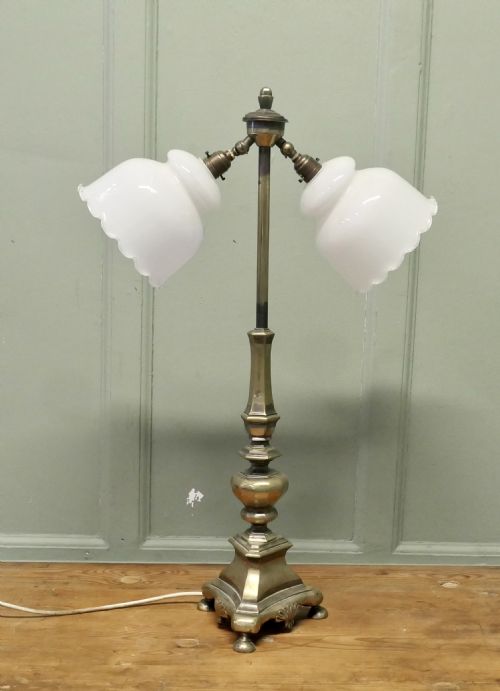
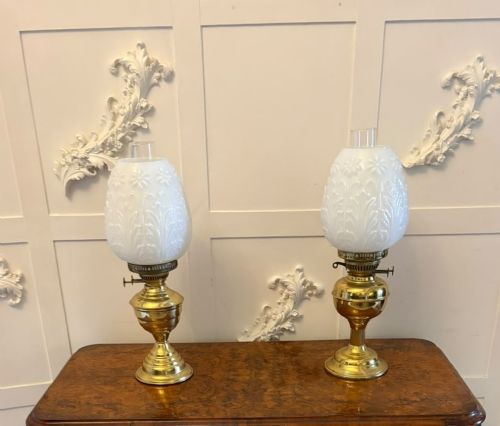
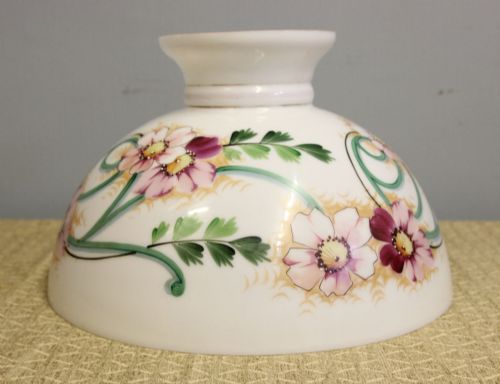
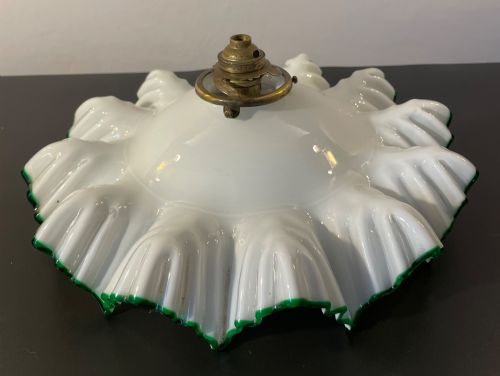
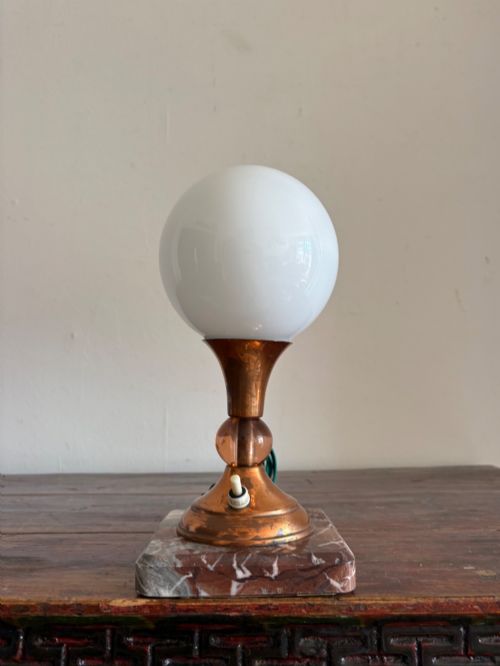
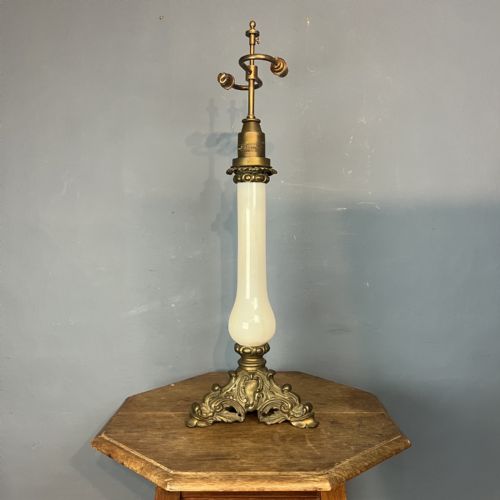
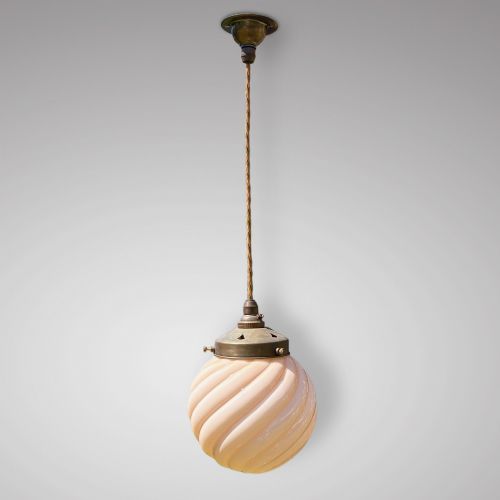
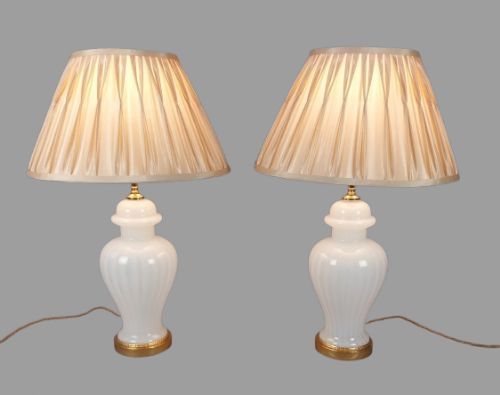
A vintage opaline lamp search reveals lighting fixtures constructed primarily from milky white or tinted opaline glass, frequently paired with metal mounts and bases. These pieces span the nineteenth century through the Art Deco and mid-century periods, taking forms from simple pendant shades to elaborate column and oil lamps.
Buyers encounter table lamps, pendant lights, and converted oil lamps originating from English, French, and continental workshops. The selection leans heavily toward Edwardian brass and glass combinations alongside 1930s pendant lighting.
The styles range from Victorian and Edwardian traditionalism through Art Nouveau and Art Deco geometric designs. Pieces appear in various configurations, including single table lights, hanging ceiling shades, and matched pairs.
How they were made
The primary material is opaline glass, a translucent or opaque glass blown into moulds or shaped by hand to create consistent light diffusion. This glass is frequently combined with structural elements in brass, bronze, copper, and chrome.
Metal components involve casting, spinning, and turning, often incorporating decorative brass mountings, gilt details, or marble and granite bases. Burners and mechanical fittings from makers like Hinks or Wild & Wessel are integrated directly into the metalwork of oil-burning variants.
Vintage Opaline Lamp Retail Price Guide 2026
Typical asking prices for vintage opaline lamp among the pieces listed under this phrase on Sellingantiques today, from the lower quarter to the upper quarter. They describe what is for sale here now, not the wider market.
Early twentieth-century chapels and pullman railway carriages once relied on these very same opaline shades to soothe passengers and parishioners alike.
What varies in quality
Quality rests in the weight and substance of the materials used, particularly the thickness of the opaline glass and the density of the cast brass or bronze components. Superior examples display refined proportions and crisply cast metal mounts rather than light, stamped pressings.
The sophistication of the glass itself dictates the upper tier of pieces, where an even distribution of colour and smooth surface texture prevail. Intricate detailing in the metalwork, such as hand chasing on ormolu or precise reeded designs on shades, separates standard production items from finer workshop pieces.
Joseph Hinks·Wild & Wessel·Mc Gary
The Vintage Opaline Lamp Glossary
- Opaline glass
- A type of semi-opaque glass coloured with bone ash or other agents to diffuse light softly. It appears most commonly in white, blue, and green shades across Victorian and twentieth-century lighting.
- Hinks burner
- A specific mechanical burner system patented for oil and paraffin lamps. These burners regulate the flame and appear frequently on nineteenth-century dual-wick table lamps.
- Uplighter
- A lamp designed to direct illumination upwards towards the ceiling rather than down into the room. Edwardian telescopic examples use brass columns that adjust in height.
- Ormolu
- Gilded bronze or brass applied to decorative mounts and bases. It provides a rich, polished golden finish common on French neoclassical and Victorian pieces.
- Pendant light
- A light fixture suspended from the ceiling by a cord, chain, or metal rod. These often feature conical, spherical, or fish-scale opaline shades.
Vintage Opaline Lamp: Frequently Asked Questions
How do I wire a vintage lamp?
Most vintage lamps require rewiring to meet modern electrical safety standards before use in a home. A qualified electrician can thread contemporary flex through the existing brass channels without altering the outer appearance.
Original brass and bronze holders can often be adapted to take modern bulbs while retaining their historical switches and key mechanisms.
Were these originally oil lamps?
Many nineteenth-century and Edwardian examples began life burning paraffin or oil before conversion to electricity. These pieces typically retain their original burners, galleries, or font reservoirs beneath the glass shade.
Converted lamps make popular table and desk lights because they preserve the heavy brass and bronze engineering of the period while accepting standard modern electrical fittings.
How do I clean opaline glass?
Wash opaline glass gently using warm water and a mild dish soap to remove dust and surface grime. Avoid abrasive scouring pads or harsh chemical cleaners that might scratch the delicate surface or damage gilt highlights on the glass.
Metal bases in brass, bronze, or chrome respond well to dry dusting, while unlacquered brass patinas naturally over time without the need for heavy polishing.
How can I date an opaline lamp?
Dating relies on stylistic clues, including the shape of the metal mountings, the presence of maker stamps, and the manufacturing technique of the glass. Victorian and Edwardian pieces frequently feature heavy brass casting and burner mechanisms, while 1930s examples lean towards Art Deco chrome, geometric shapes, and simpler pendant suspension.
Patent marks or maker names stamped onto the brass collars and wick knobs provide precise chronological anchors for nineteenth-century items.