

Vintage Office Filing
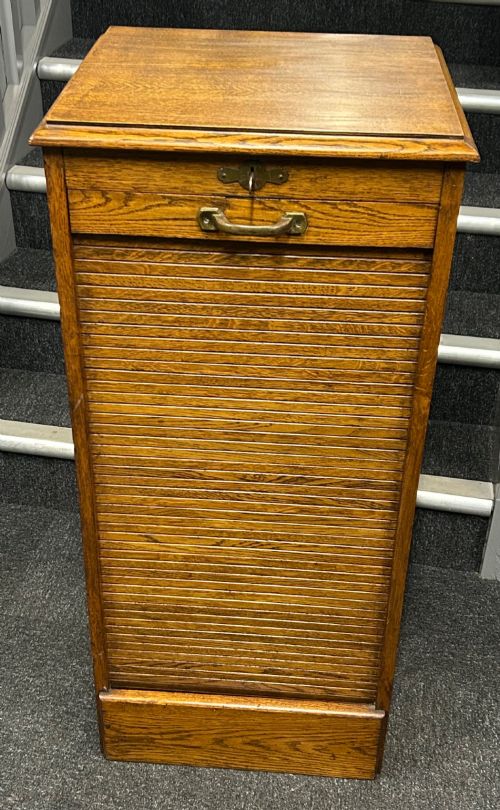
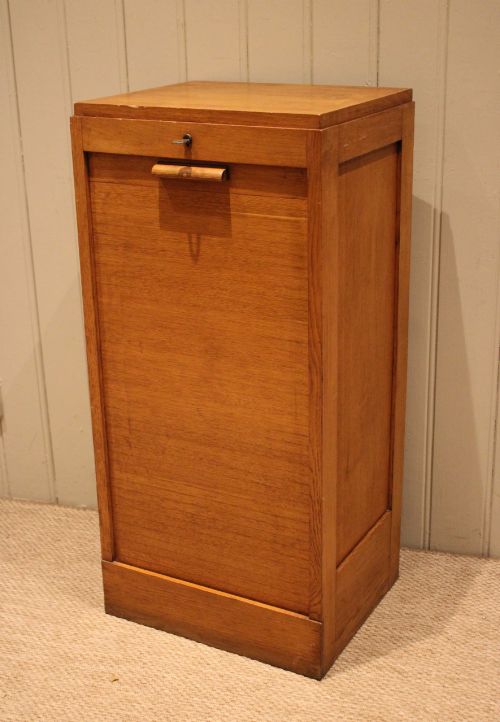
Vintage office filing pieces span heavy oak drawer units and tambour front cabinets designed to bring order to workspace paper.
Vintage Office Filing
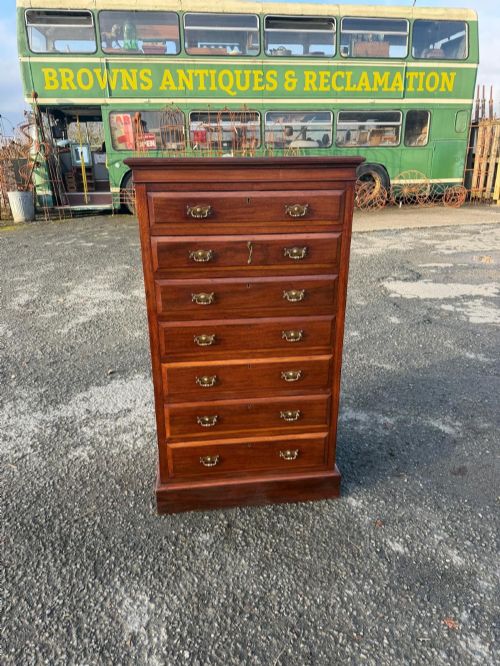
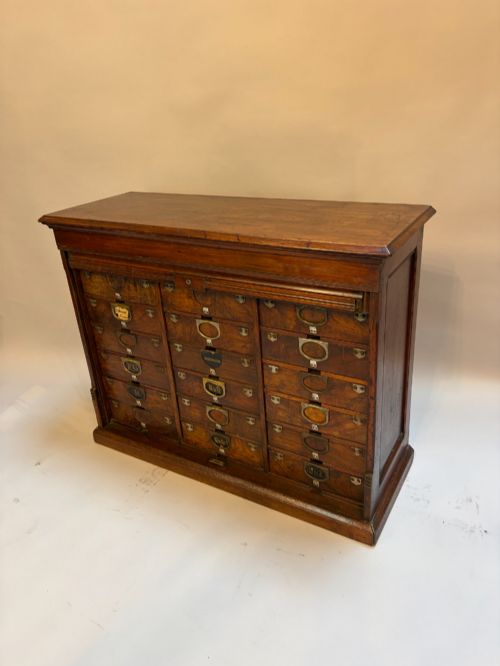
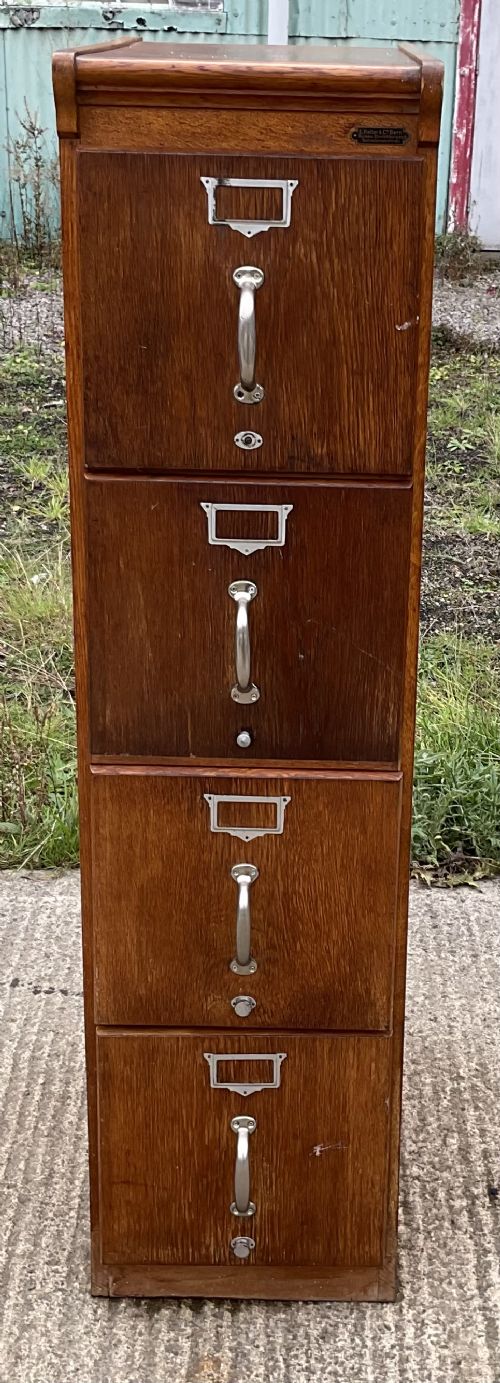
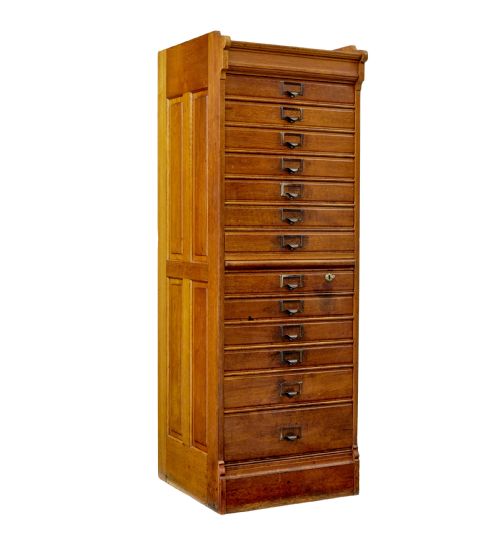
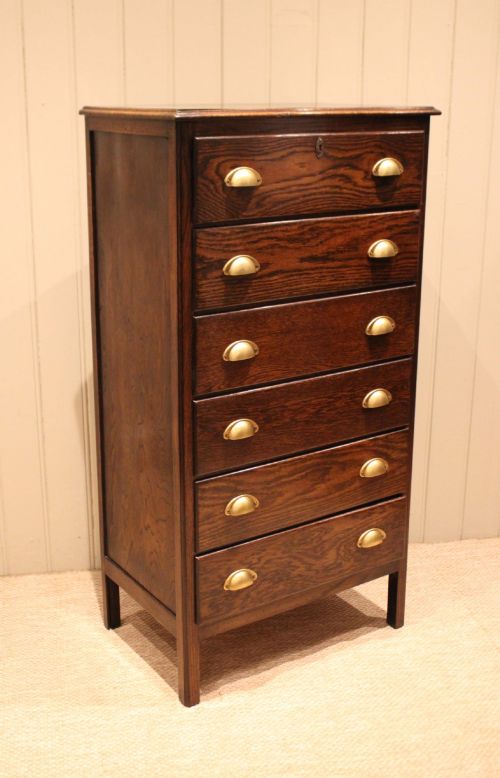
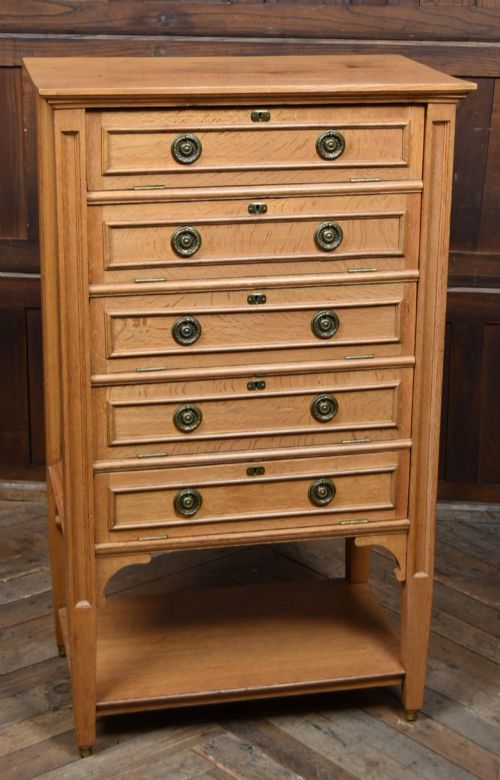
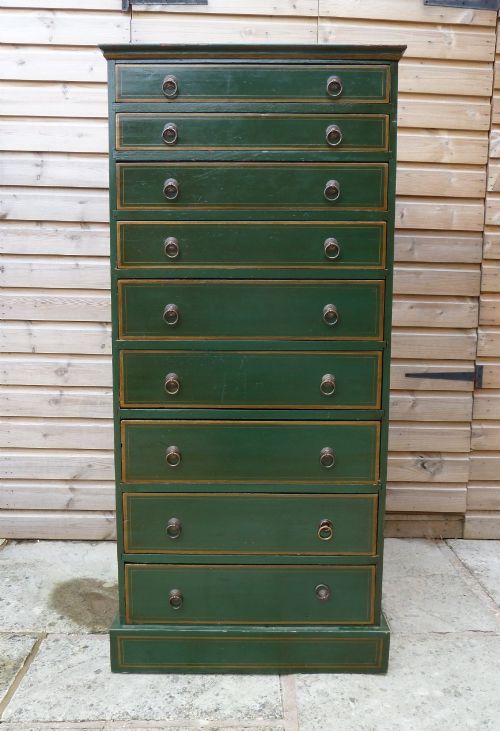
Vintage office filing pieces include upright filing cabinets, banks of drawers, and tambour front units built to store documents in commercial and domestic settings. Buyers seeking these items will find sturdy timber constructions from the nineteenth and twentieth centuries.
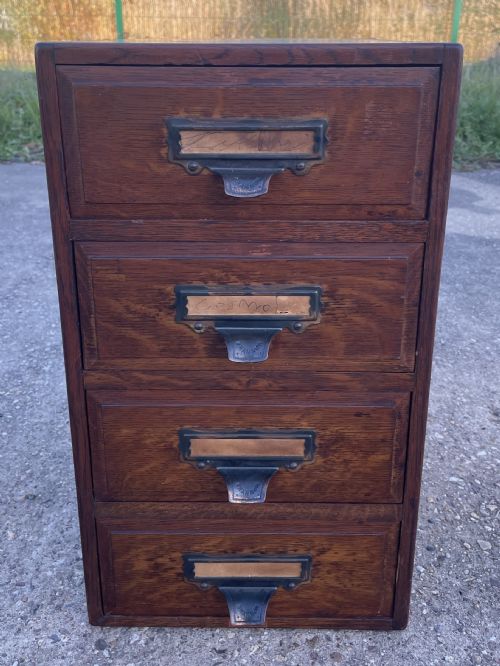
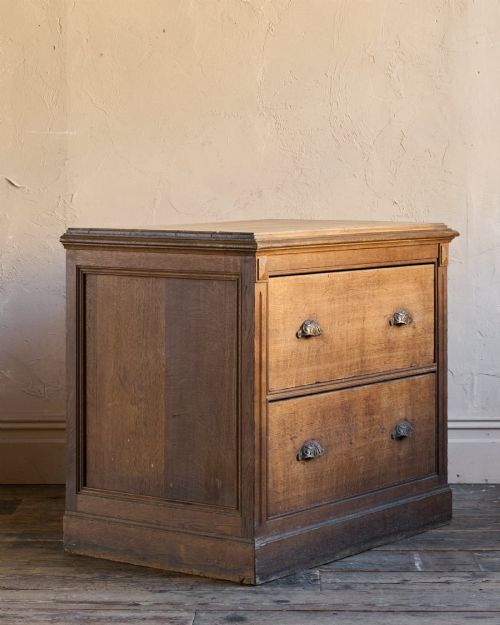
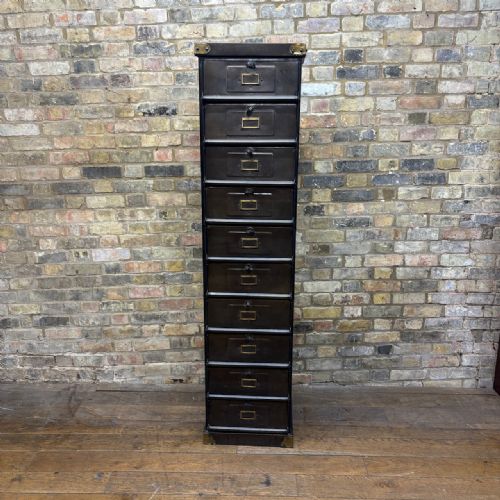
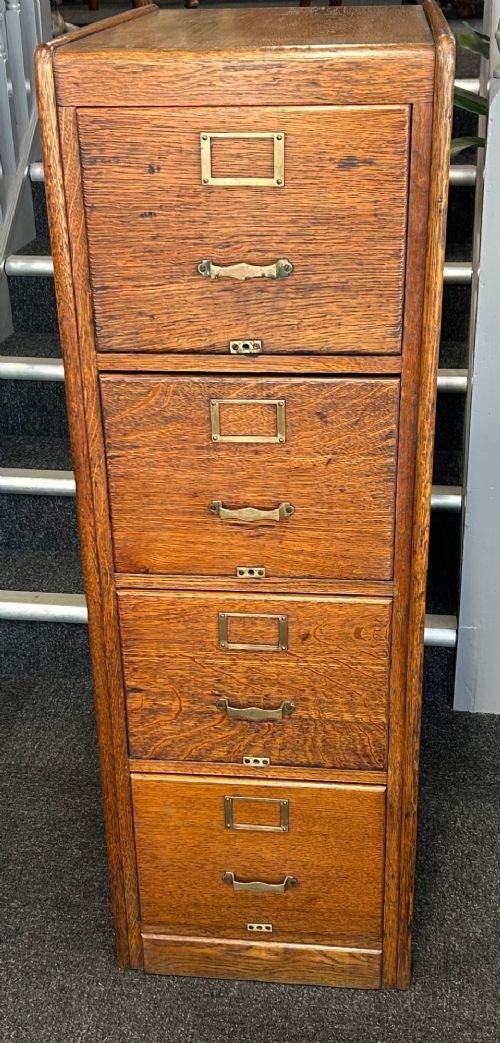
The most common examples on this page are oak and mahogany vertical filing cabinets and multi-drawer banks dating from the Edwardian era and the early twentieth century. These pieces reflect the functional demands of past offices through specialised storage layouts.
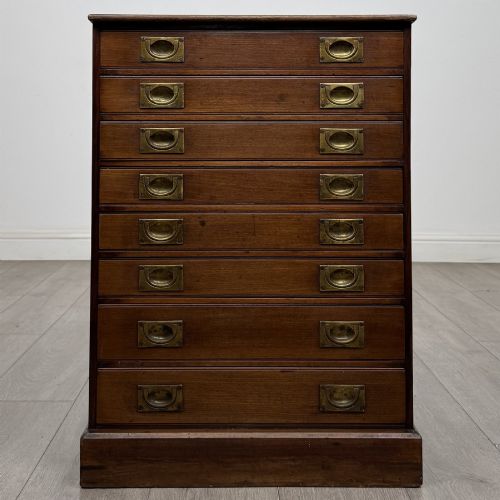
Alternative forms such as plan chests, campaign units, and card filing sets also appear across the selection. Each object demonstrates the period mechanisms used to keep correspondence and records sorted.
How They Were Made
Makers utilised solid oak and mahogany alongside secondary pine for carcass construction, often mounting brass or metal handles and label holders to the drawer fronts. Tambour doors required finely slotted wooden slats glued to flexible canvas backings to slide smoothly around curved tracks.
Joints were cut with precision to withstand heavy daily use in busy offices, employing dovetailed drawers and panelled sides for structural strength. Metal elements like ormolu mounts and iron hinges provided reinforcement and mechanical reliability.
Finishes ranged from polished French polishes on fine hardwood desks to painted surfaces on utility pine cupboards. Leather inserts and brass locking mechanisms completed the construction of higher-grade administrative furniture.
Vintage Office Filing Retail Price Guide 2026
Typical asking prices for vintage office filing among the pieces listed under this phrase on Sellingantiques today, from the lower quarter to the upper quarter. They describe what is for sale here now, not the wider market.
Listings feature woods including oak, mahogany, walnut, pine, teak, and rosewood across pieces dating from the nineteenth century to the 1940s.
What Varies in Quality
The choice of timber creates a clear distinction between standard utility items and luxury pieces, with figured mahogany and quarter-sawn oak representing superior cabinet-making. Grain selection and matching across drawer fronts show the original maker's intent.
Hardware integrity separates everyday pieces from better examples, particularly the presence of original brass shell pulls, working locks, and patent mechanisms. The smooth operation of tambour doors along their wooden tracks indicates careful initial fitting and minimal subsequent warping.
The Vintage Office Filing Glossary
- Tambour
- A flexible sliding door made from narrow strips of wood attached to canvas or leather, allowing access to cabinets in confined spaces. This mechanism was popular in early twentieth-century office furniture.
- Cartonnier
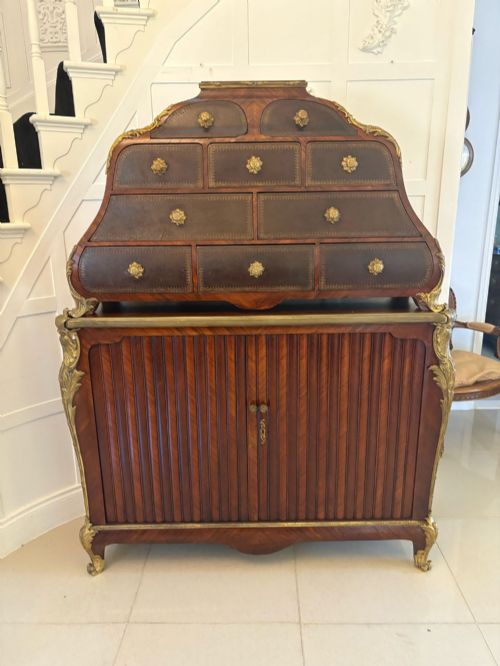
- A decorative cabinet fitted with multiple compartments or boxes designed to hold papers and documents. French examples often incorporate fine veneers and ormolu mounts.
- Plan chest
- A wide, shallow set of drawers built specifically for storing large architectural drawings, maps, and blueprints flat. These units are typically constructed from heavy timber.
- Shell pull
- A pressed metal or cast brass handle shaped like a half-seashell, often combined with a slot for a paper label. They appear frequently on industrial and commercial banks of drawers.
- Campaign filing cabinet
- Portable storage furniture made in sections with brass corners and recessed carrying handles, designed for easy transport by military officers. Mahogany is the most common wood for these pieces.
Vintage Office Filing: Frequently Asked Questions
What is a tambour filing cabinet?
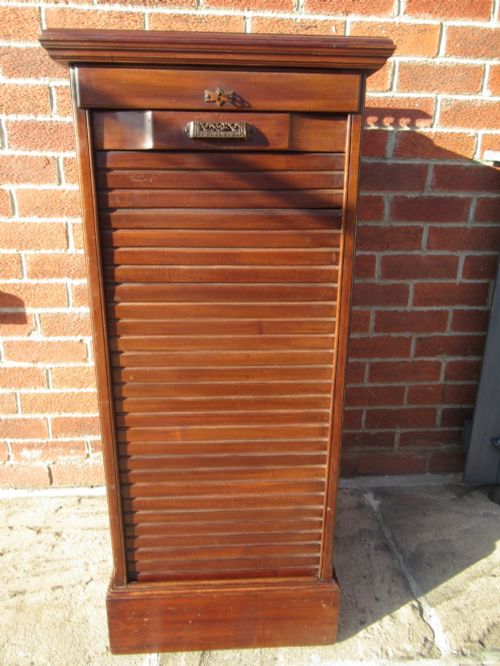
A tambour filing cabinet utilises flexible wooden slats on a canvas backing that slide around a track to conceal the interior shelves or drawers. This design saved space in compact offices.
Such cabinets appeared frequently during the Edwardian period and the early twentieth century, constructed primarily in oak or mahogany.
How do I identify an Edwardian filing cabinet?
Edwardian filing cabinets usually feature quarter-sawn oak timbers with prominent medullary rays and clean, functional lines. They often include panelled sides and brass label holders.
These pieces typically date from the first decade of the twentieth century and prioritize practical document sorting over heavy ornamentation.
Were these cabinets made for homes or offices?
The pieces served both bustling commercial counting houses and private domestic studies, depending on their size and finish. Sturdier banks of drawers were built for heavy daily business use.
Finer mahogany and kingwood pieces were designed for domestic libraries or executive reception rooms.
What woods were used for vintage filing?
Oak and mahogany dominate the selection, offering the structural rigidity needed for heavy drawer loads. Pine appears on utility pieces and interior carcases.
More decorative examples utilise walnut, teak, and rosewood alongside brass and leather details.