


Vintage Oak Umbrella Holder
A vintage oak umbrella holder is a robust hallway furnishing that keeps wet days orderly while grounding an interior with solid timber.
Vintage Oak Umbrella Holder
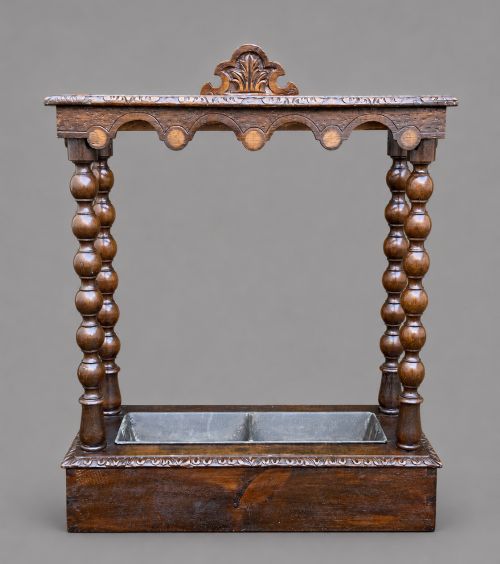
A vintage oak umbrella holder appears across this selection primarily as a stick stand, a barrel, or an integrated component of a larger hall stand. These utilitarian pieces span the nineteenth century, the Victorian and Edwardian eras, through to the early twentieth century.
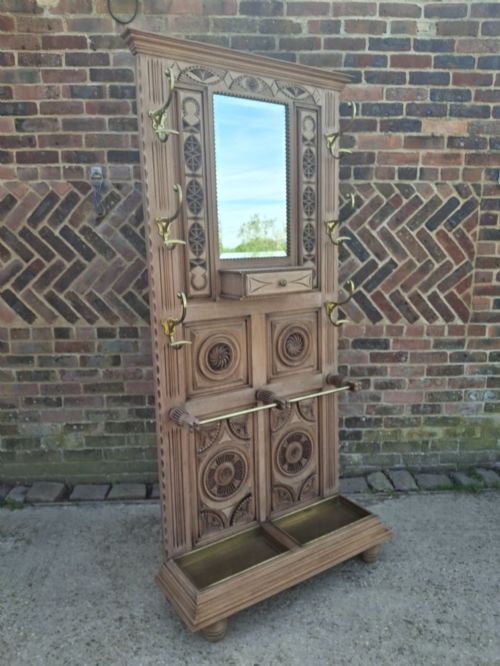
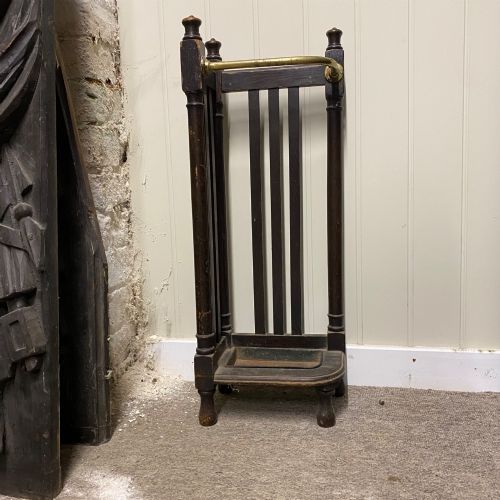
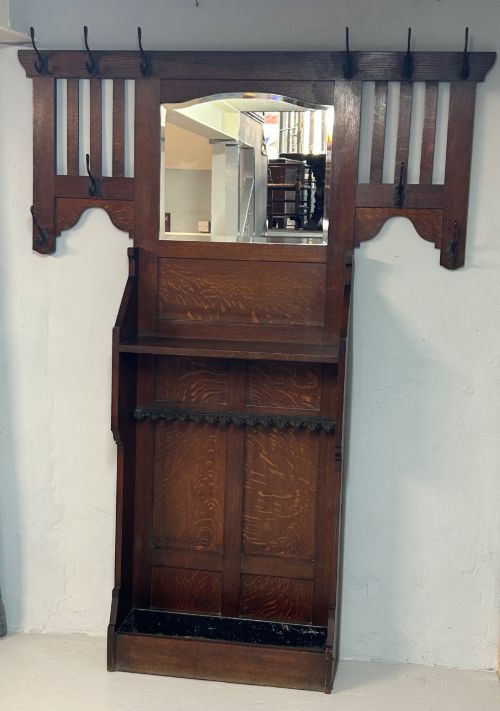
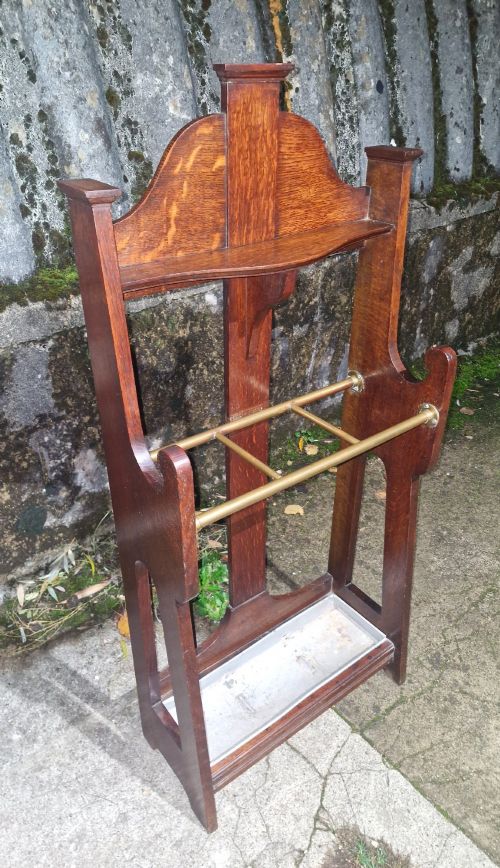
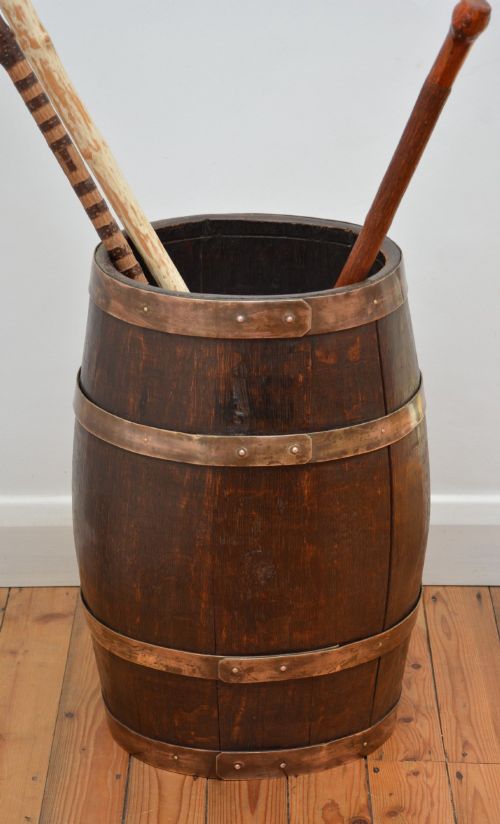
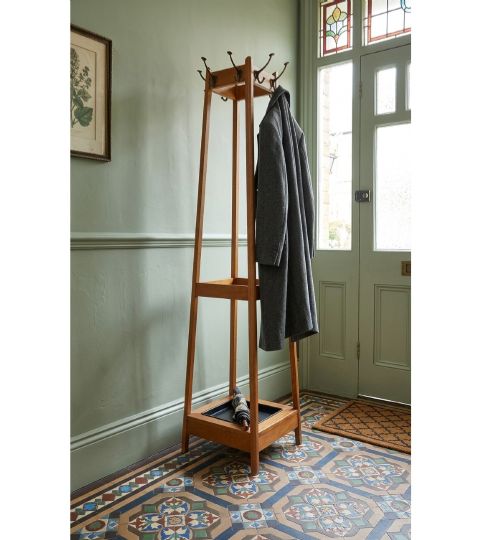
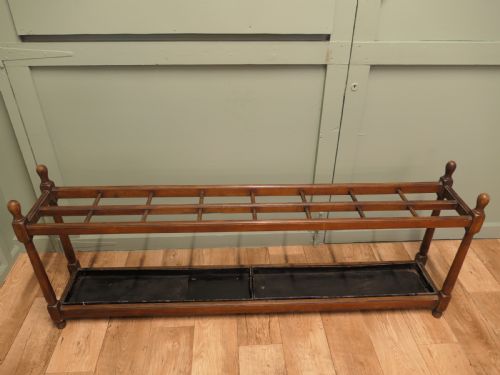
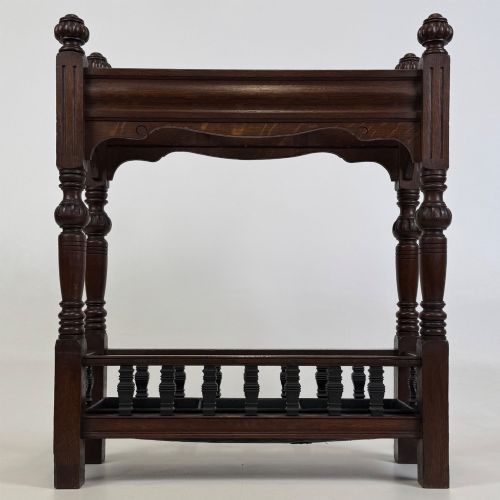
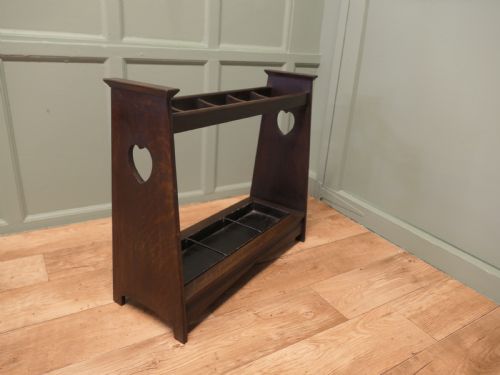
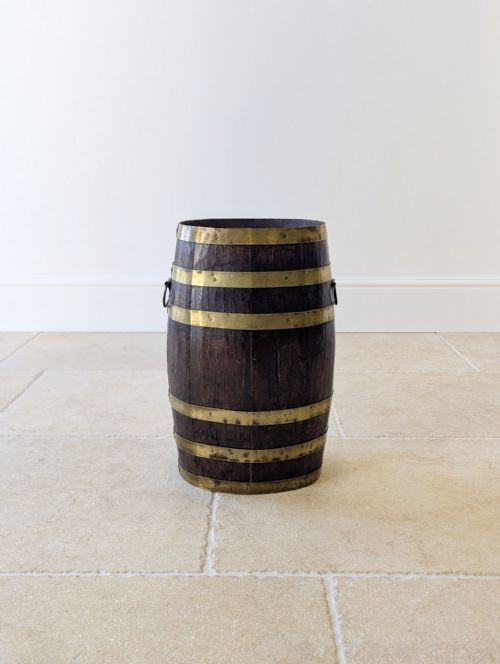
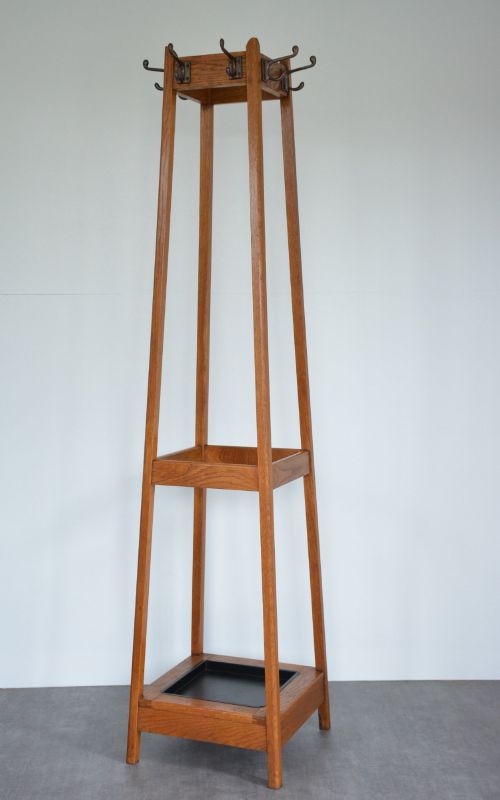
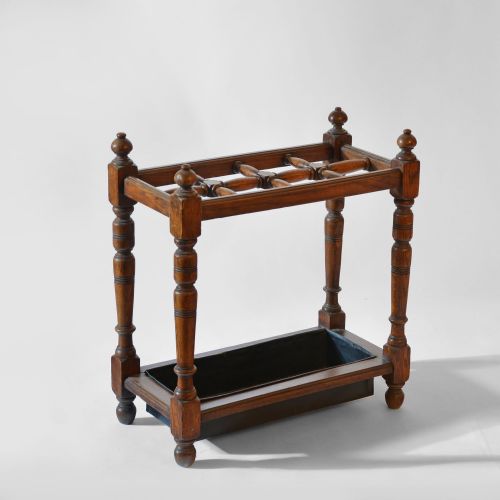
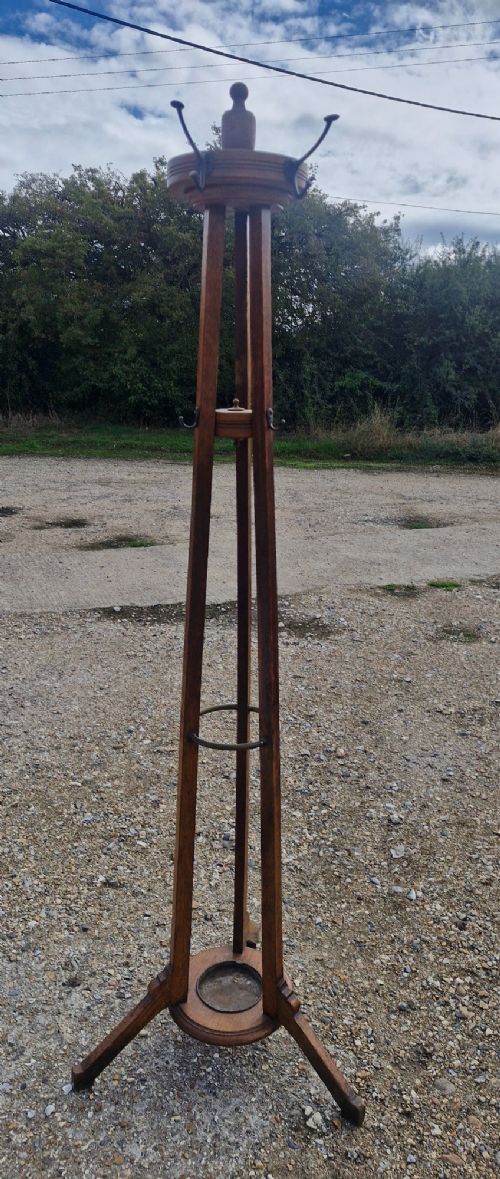
The most frequent form encountered is the freestanding barrel or tub, alongside rectangular stick stands equipped with metal drip trays. Makers also constructed larger hall stands that combined coat hooks, hat racks, and umbrella wells into a single hallway piece.
Examples range from simple country house items to distinct stylistic expressions including Arts and Crafts, Gothic Revival, and Jacobean Revival. Buyers select these furnishings for domestic hallways, receptions, and commercial hospitality spaces.
Materials and construction
Makers built these pieces predominantly from solid oak, utilising its dense grain to withstand daily contact with wet walking sticks and heavy umbrellas. Coopered construction appears frequently, shaping individual staves of timber into oval or round barrels.
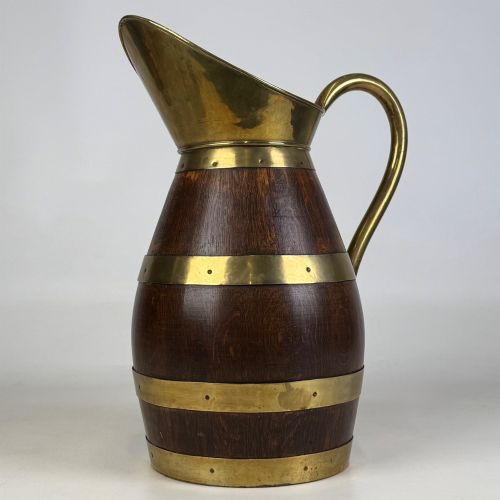
Metalwork provides essential reinforcement and function, featuring brass bands, iron hoops, copper bracing, and zinc drip trays. These metal additions stabilise the staves and protect the timber base from constant moisture retention.
Vintage Oak Umbrella Holder Retail Price Guide 2026
Typical asking prices for vintage oak umbrella holder among the pieces listed under this phrase on Sellingantiques today, from the lower quarter to the upper quarter. They describe what is for sale here now, not the wider market.
Listings span the nineteenth century through the Edwardian period, uniting oak with brass, copper, iron, and zinc elements.
Craftsmanship and proportion
Quality rests in the integrity of the cooperage and the weight of the supporting metal bands. Tightly fitted oak staves and robust brass or copper binding indicate careful workshop production rather than hurried assembly.
Detailing differentiates standard hall furniture from finer decorative examples. Carved ornamentation, integrated cast metal drip trays, and retained original hardware distinguish the superior instances in this category.
Heals of London·Liberty Design
The Vintage Oak Umbrella Holder Glossary
- Coopered
- Constructed from wooden staves bound together with metal hoops, much like a traditional barrel. This technique ensures the vessel remains stable when holding heavy walking sticks.
- Drip tray
- A removable metal basin placed at the base of a stand to catch water from wet umbrellas. These trays protect timber floors from moisture damage.
- Stick stand
- A piece of furniture designed specifically for organising walking sticks, canes, and umbrellas. They feature divided upper frames and open lower sections.
- Hall stand
- A tall hallway furnishing combining umbrella storage, coat hooks, and frequently a mirror or glove box. They served as central reception furniture in period homes.
- Arts and Crafts
- A design movement prioritising honest construction, visible craftsmanship, and simple forms. Pieces from this tradition often display exposed joinery and minimal ornamentation.
Vintage Oak Umbrella Holder: Frequently Asked Questions
Where should I place an umbrella stand?
Position your stand in a hallway, porch, or reception entrance where wet outerwear and walking sticks naturally accumulate upon arrival.
Ensure there is sufficient clearance around the piece so umbrellas can be retrieved easily without disturbing nearby furniture.
How do I protect the wooden base from water damage?
Most quality stands include an original metal drip tray or zinc liner to catch moisture from wet umbrellas before it reaches the timber.
Empty and dry this basin regularly to prevent standing water from causing internal corrosion or dampness in the base.
What is a coopered umbrella stand?
A coopered stand is constructed using curved wooden staves fitted tightly together and secured with exterior metal bands or hoops.
This traditional barrel-making technique provides natural strength and water-tight integrity for holding heavy walking sticks.
How do I distinguish Victorian from Edwardian stands?
Victorian examples tend to feature heavier proportions, darker timber finishes, and sometimes ornate Gothic or Aesthetic Movement carving.
Edwardian pieces often display lighter golden oak tones, simpler joinery, and functional Arts and Crafts influences.