



Vintage Oak Tavern Table
A vintage oak tavern table brings robust character to a room, offering sturdy utility and enduring presence built from honest timber.
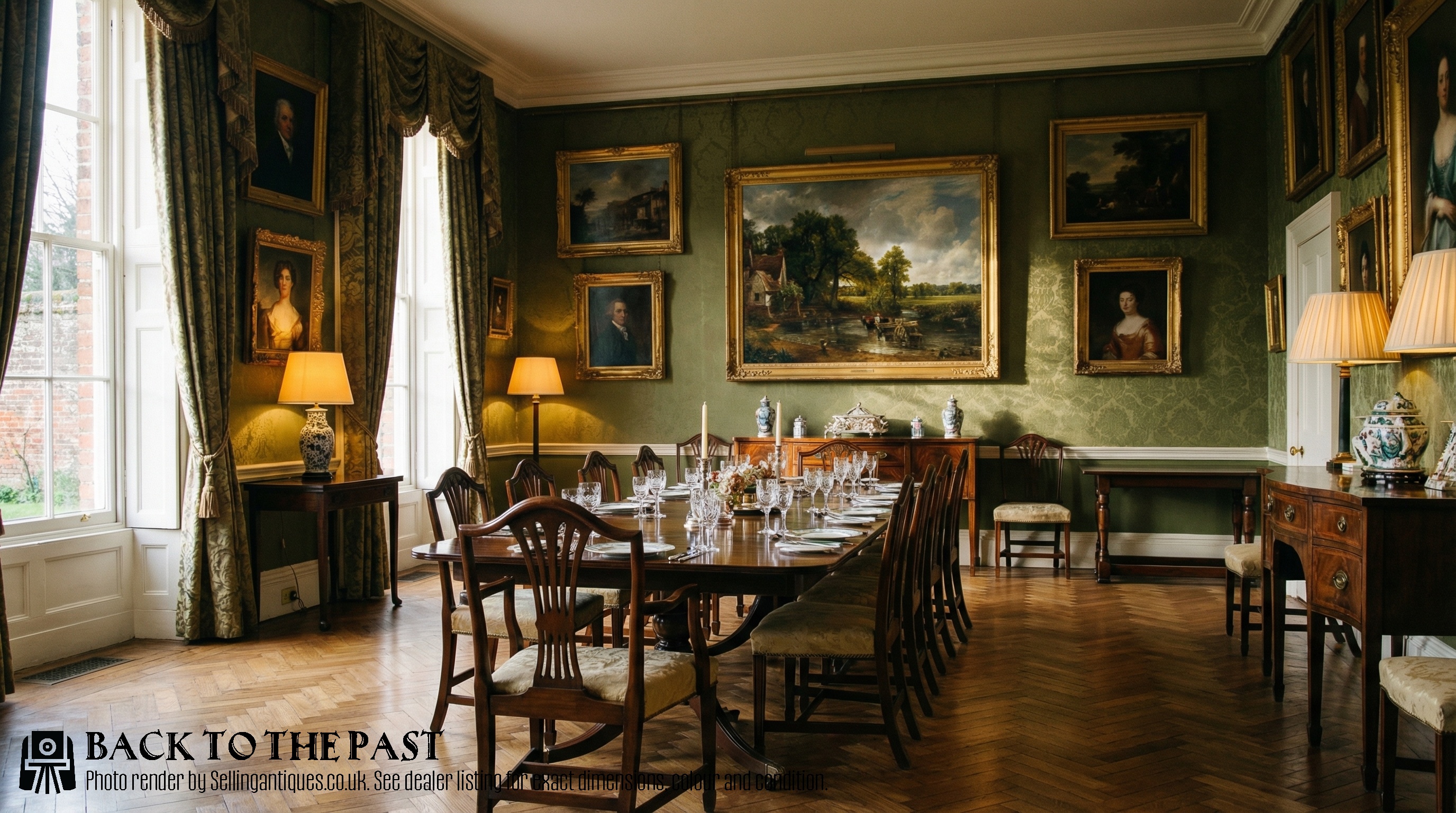
Vintage Oak Tavern Table
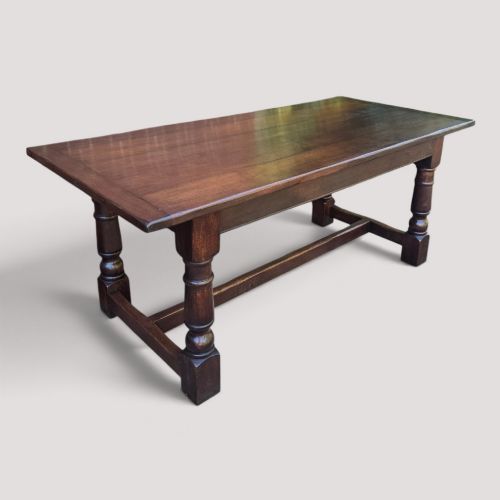
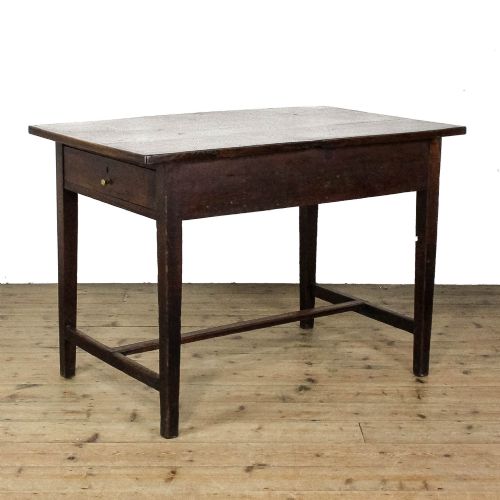
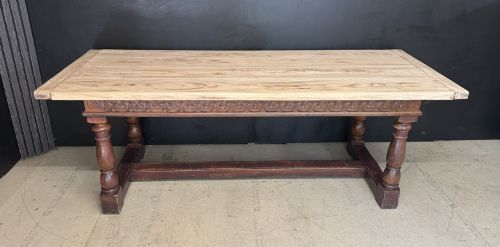
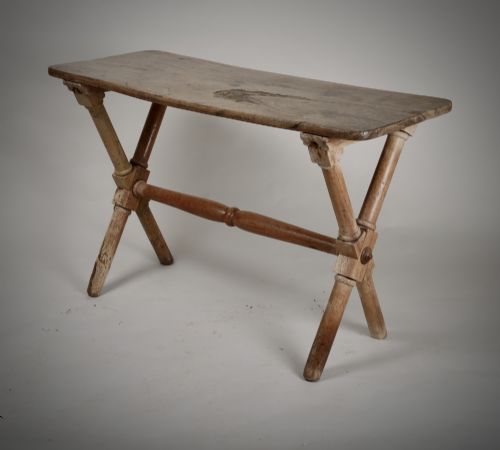
When you search for a vintage oak tavern table, you encounter substantial dining and working boards rooted in centuries of hospitality and domestic use. These pieces span periods from the Georgian era through the Edwardian years and the early twentieth century, reflecting varied regional traditions.
You are most likely to meet nineteenth-century examples and 1920s country interpretations on this page, often built with thick plank tops and sturdy underframes. Alongside standard tavern tables, related forms such as refectory tables, kitchen tables and cricket tables appear in the listings.
The origins range from English workshops to Welsh country kitchens, utilising native hardwoods like oak and elm. Each piece carries the marks of communal dining, public house service or everyday labour.
How they were made
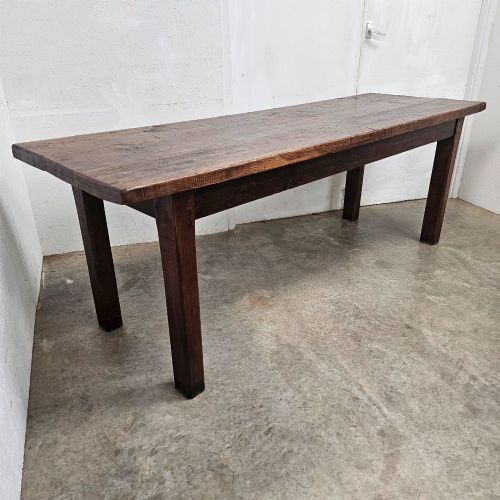
Makers built these tables primarily from solid oak, supplemented by pine bases and elm tops where local timbers dictated construction. Thick timber planks formed the surfaces, designed to withstand heavy daily use without buckling.
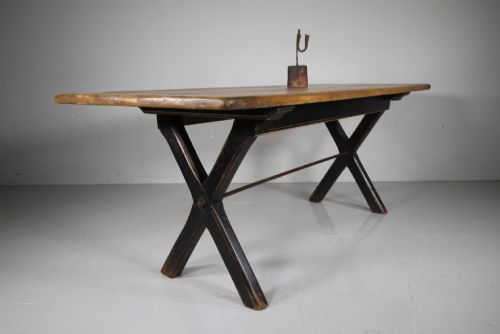
Joinery relied on traditional methods, pairing heavy wooden framing with occasional iron or brass fixings for structural stability. Trestle supports and sturdy legs handled the substantial weight of the timber tops.
Vintage Oak Tavern Table Retail Price Guide 2026
Typical asking prices for vintage oak tavern table among the pieces listed under this phrase on Sellingantiques today, from the lower quarter to the upper quarter. They describe what is for sale here now, not the wider market.
Table forms span dining tables, kitchen tables, refectory boards and three-legged cricket tables.
What varies in quality
The hierarchy of quality rests upon the selection of timber and the proportion of the structure. Tables formed from thick, well-figured oak planks demonstrate greater integrity than those utilising mixed secondary woods.
Proportion and presence separate everyday utility pieces from finer country furniture. Original timber surfaces with honest patination carry more weight than heavily restored boards.
The Vintage Oak Tavern Table Glossary
- Plank top
- A table surface constructed from multiple parallel boards joined together. This traditional method allowed makers to utilise wide boards of native timber.
- Trestle
- A structural support consisting of a horizontal beam fixed to two vertical feet. This design provides maximum legroom beneath long dining boards.
- Cricket table
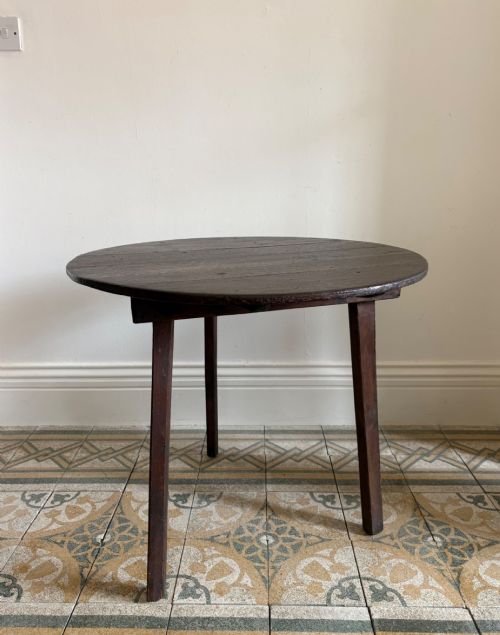
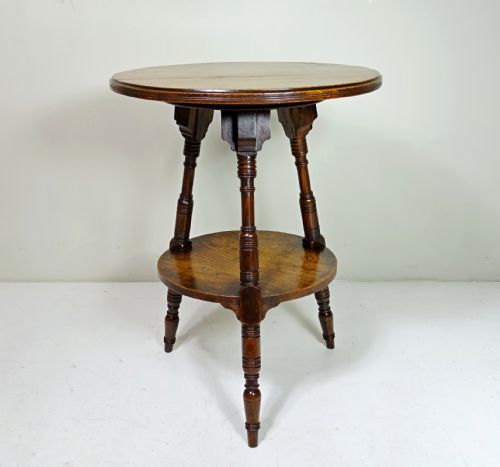
- A small three-legged round table typically raised on pegged legs. The triangular base prevents wobbling on uneven flagstone floors.
- Refectory table
- A long, narrow dining table historically used for communal meals. These pieces feature extended proportions suited to large gatherings.
Vintage Oak Tavern Table: Frequently Asked Questions
What is a tavern table?
A tavern table is a sturdy wooden board originally designed for public houses and domestic kitchens. These tables served for dining, drinking and daily labour.
Their robust construction allowed them to withstand heavy daily service in communal spaces.
How do I style a tavern table?
Pair your table with mismatched wooden chairs, benches or vernacular seating to maintain an authentic country aesthetic. The honest timber surface works well as a central dining hub.
Keep surface decoration simple to let the grain and patination of the old wood remain the focal point.
How do I date these tables?
Dating relies on examining the construction methods, tool marks and timber preparation visible across the underframe and top. Georgian and nineteenth-century pieces often display hand-sawn boards and pegged joints.
Stylistic cues from Arts and Crafts or rustic country traditions help narrow the period of manufacture.
Are these tables suitable for modern dining?
These tables provide generous surface area and stable construction suited to everyday meals and gatherings. Their solid timber build handles daily family life with ease.
Consider the height and clearance beneath the apron to ensure comfortable seating for your chairs.