
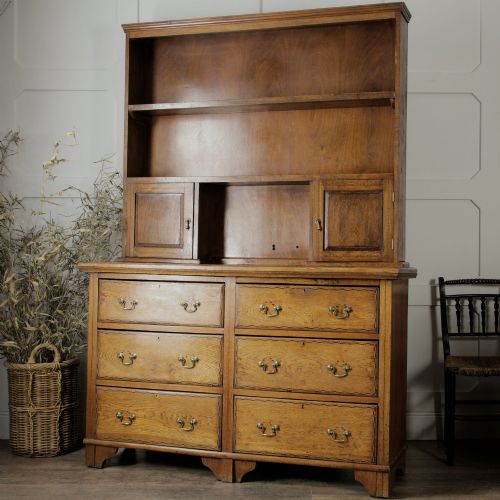

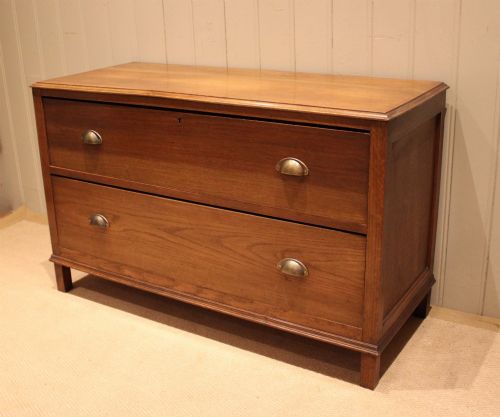
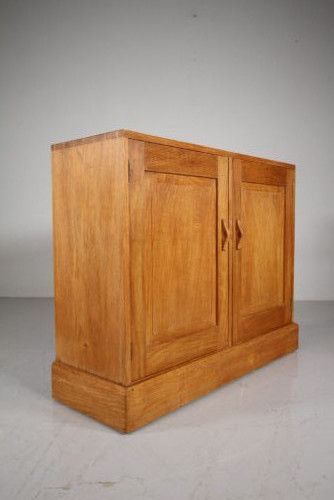
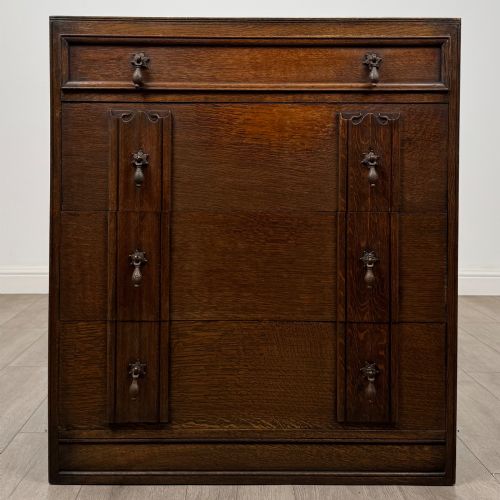
Vintage Oak Storage Dresser
These vintage oak storage dressers bring honest utility and rich timber grain to domestic spaces.
Vintage Oak Storage Dresser
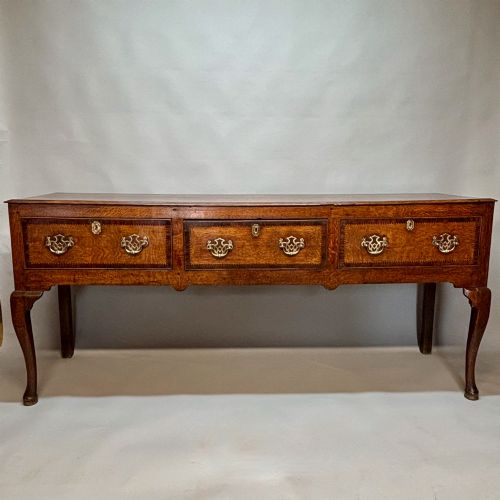
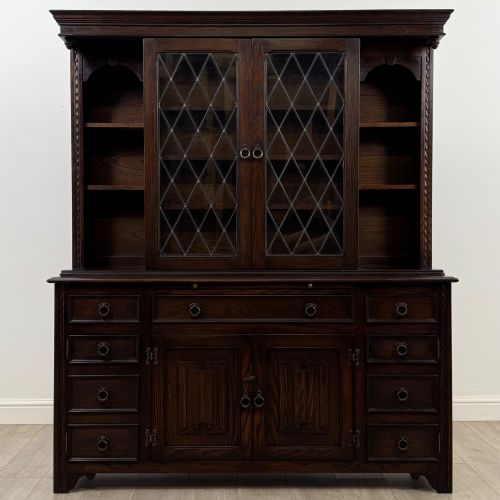
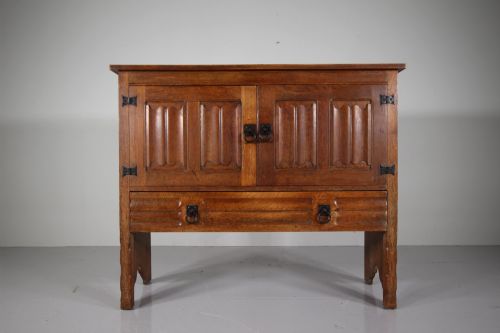
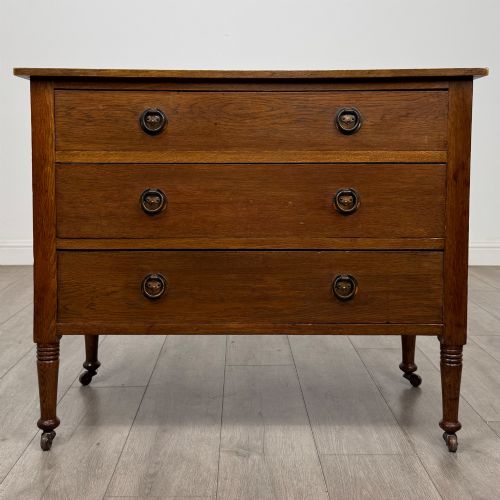
A vintage oak storage dresser provides practical domestic organisation through fitted drawers, cupboards and open shelving. Buyers searching this phrase encounter substantial timber furniture designed to hold tableware, linen and household provisions.
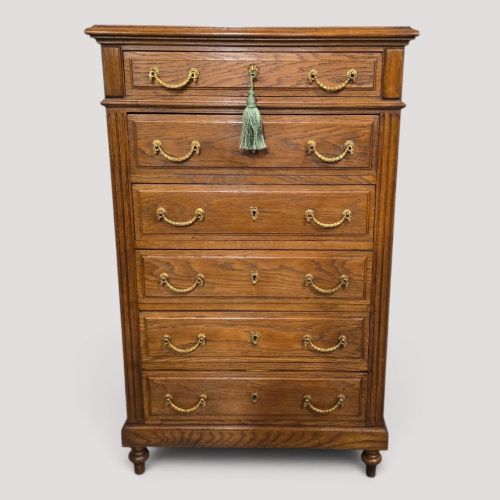
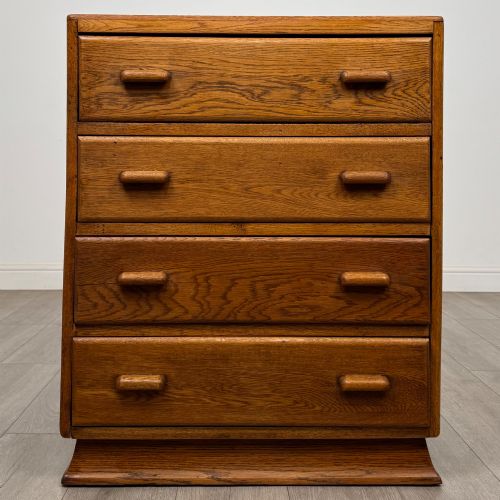
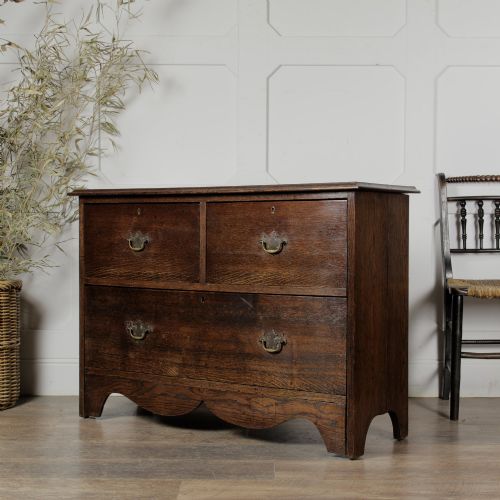
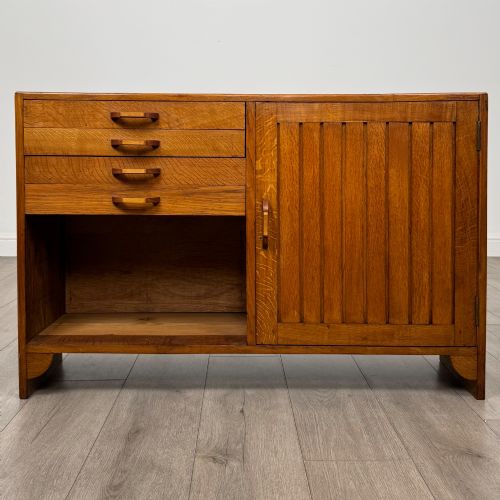
The selections span centuries of cabinetmaking, ranging from seventeenth-century provincial pieces and eighteenth-century Georgian and Lancashire examples to Edwardian productions and 1930s Arts and Crafts designs. Edwardian pieces in golden or solid oak appear most frequently on this page.
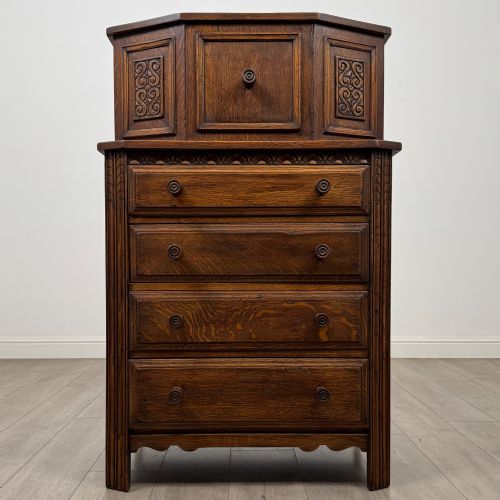
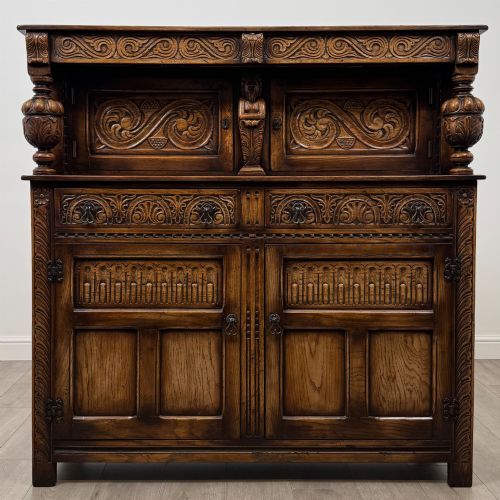
Forms vary from tall kitchen dressers and low dresser bases to court cupboards and sideboards. Each variation reflects the domestic requirements of its period, uniting display surfaces with concealed storage.
Materials and construction
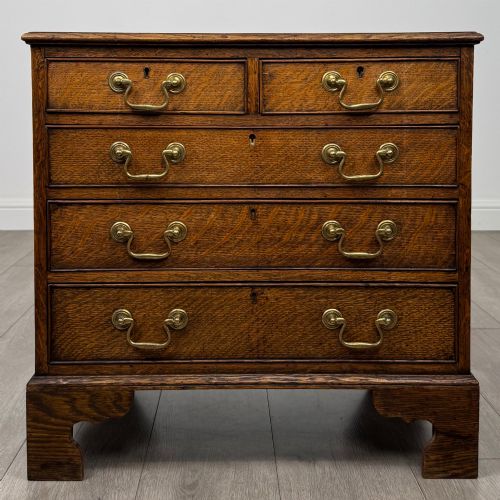
Cabinetmakers relied primarily on solid oak, chosen for its durability and prominent figuring, occasionally supplemented by limed oak finishes or contrasting walnut and mahogany elements. Brass, iron and metal hardware, including drop handles and key escutcheons, secure the functional doors and drawers.
Construction techniques involve traditional joinery such as panelled doors, pegged mortise and tenon joints, and hand-cut dovetails on drawer boxes. Carved ornamentation, linenfold panels and geometric mouldings frequently embellish the structural framework.
Materials documented across the inventory include solid oak, limed oak, walnut, mahogany, brass and iron.
Variations in quality
Quality rests upon the selection of timber and the precision of the joinery rather than mere age. Pieces displaying carefully matched grain patterns, substantial solid oak thickness and well-executed hand carving represent the upper tier of the range.
Interior construction reveals the standard of craftsmanship, distinguishing utilitarian workshop output from finer cabinetmaking. Original brass hardware, smooth-running drawers and sound structural integrity elevate a piece far above standard utility items.
Peter Waals
The Vintage Oak Storage Dresser Glossary
- Dresser base
- A lower cabinet featuring drawers and cupboards without the upper plate rack. This form provides a wide surface top and substantial enclosed storage.
- Court cupboard
- A heavy seventeenth or eighteenth-century enclosed cupboard featuring an upper recessed section supported by columns. These items were traditionally used for storing food and utensils.
- Linenfold
- A carved wooden panel motif imitating folded fabric. This decorative technique appears frequently on cupboard doors and friezes.
- Limed oak
- A finish applied to timber using a white pigment to highlight the open grain pores. This treatment became popular during the twentieth century.
- Dovetail
- A joint formed by interlocking wedge-shaped fingers used to secure drawer corners. Hand-cut examples indicate earlier or higher-quality workshop production.
Vintage Oak Storage Dresser: Frequently Asked Questions
What is a vintage oak storage dresser?
A vintage oak storage dresser is a heavy timber cabinet combining drawers, cupboards or shelving designed for domestic storage and display.
These pieces range from early provincial dresser bases to Edwardian cupboards and 1930s Arts and Crafts furniture.
How do I date an oak dresser?
Dating relies on examining construction methods, timber preparation, hardware and stylistic motifs. Hand-cut dovetails, pegged joints and applied carvings point towards specific historic periods.
Later twentieth-century pieces often feature machine milling, limed oak finishes or distinct modernist influences like Cotswold School designs.
Where were these dressers used?
These items served primarily in kitchens, dining rooms and halls to store food, crockery, linens and dry goods.
Today they function equally well in modern interiors as practical sideboards, media consoles or statement storage cabinets.
How do I care for vintage oak furniture?
Maintain oak furniture by avoiding direct sunlight and maintaining stable room humidity to prevent timber splitting.
Apply natural beeswax periodically to nourish the grain and preserve the protective surface sheen.