



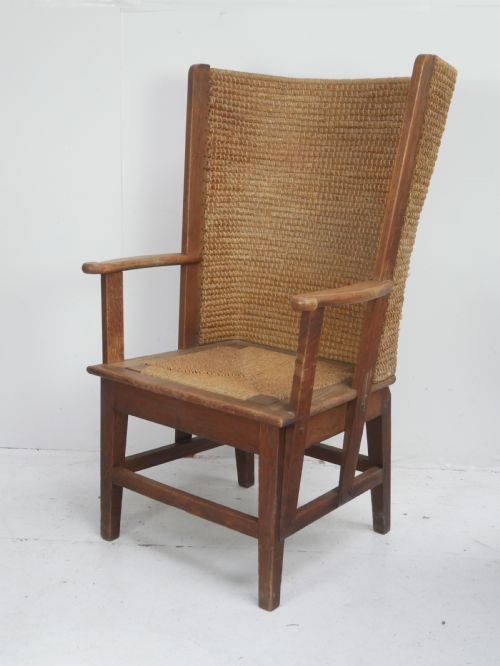


Vintage Oak Rush Chair
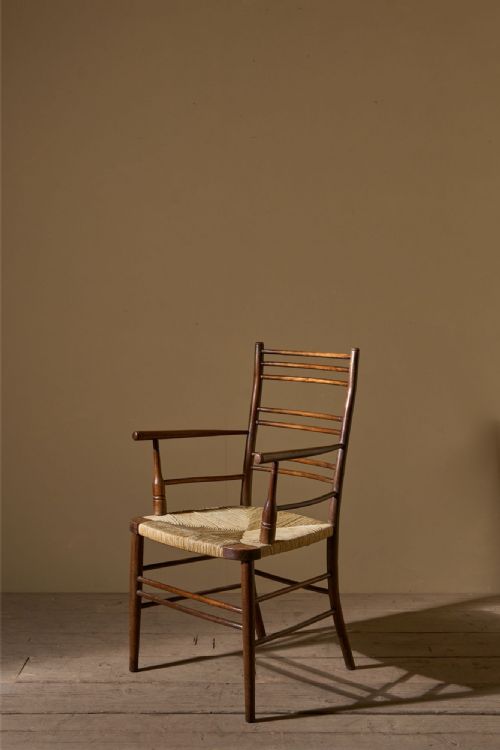
A vintage oak rush chair brings honest regional character and tactile texture to an interior through sturdy turned uprights and woven seats.
Vintage Oak Rush Chair
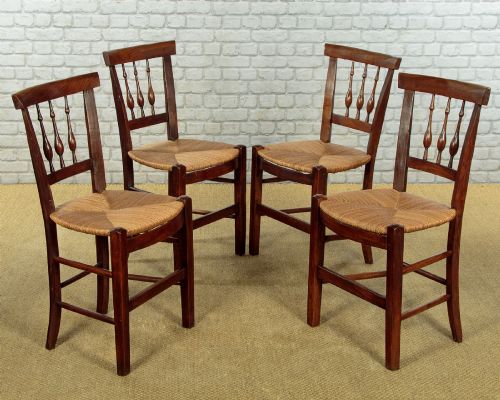
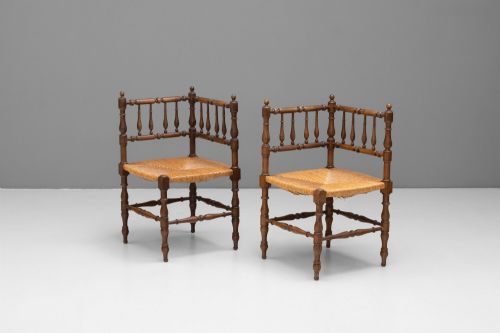
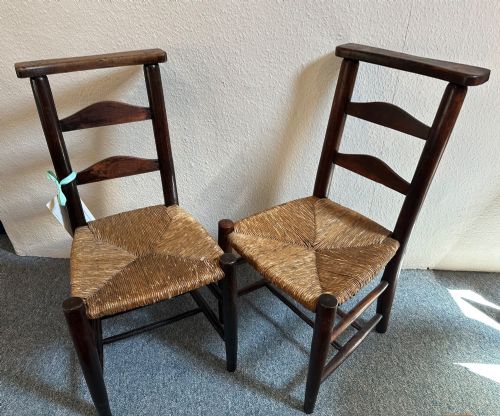
A vintage oak rush chair is a traditional vernacular seating form, built primarily from solid oak frames paired with woven rush or straw seating surfaces. These pieces emerge in formats ranging from single side chairs and carvers to large matching dining sets, rocking chairs, and specialised corner configurations.
Buyers seeking this phrase encounter sturdy English country and Arts and Crafts examples, alongside French provincial ladder backs and Scottish vernacular forms. The selection spans the eighteenth century through to the early decades of the twentieth century, reflecting enduring domestic utility.
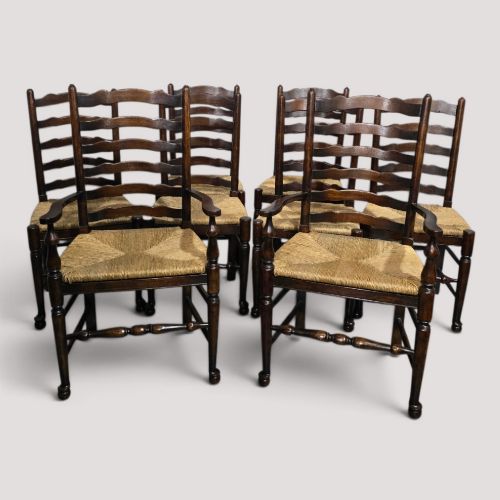
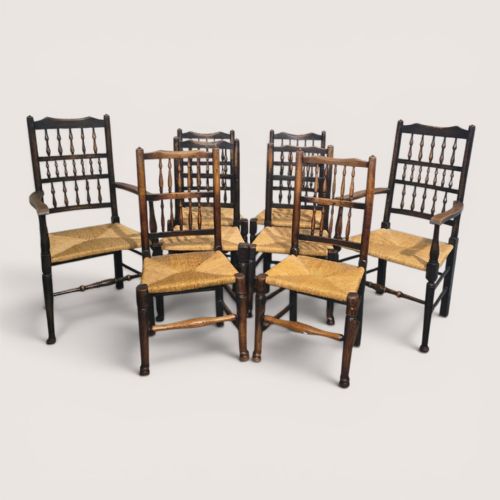
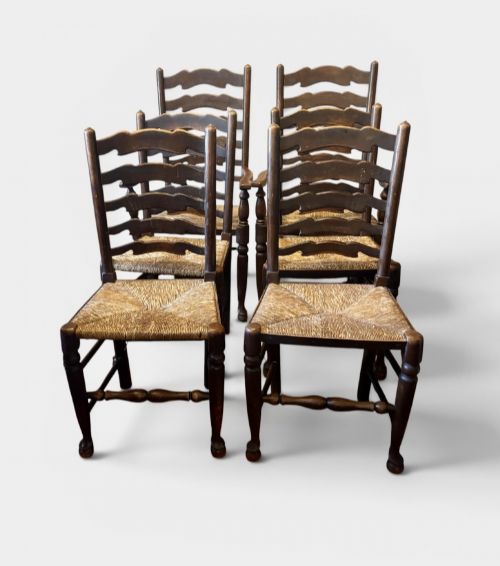
Single armchairs, small children's high chairs, and extensive sets of six or eight dining chairs dominate the available forms. Many originate from specific rural traditions or notable workshops, utilising local timbers like elm, ash, and oak alongside traditional rush seating.
How they were made
Makers construct the timber frames of these chairs using native hardwoods, predominantly solid oak combined with structural elements of ash, elm, and occasionally iron or glass details. Turnery lathes shape the ladder backs, spindle backs, and bar backs, while mortise and tenon joints secure the overall framework without metal fasteners.
The seating surface relies on hand-twisted dried rush or straw, woven tightly around wooden seat rails in distinct patterns that distribute weight evenly. Skilled artisans wrap these natural fibres while damp so the material shrinks taut as it dries, creating a durable and resilient support.
St. Paul's Cathedral once commissioned utilitarian oak seating that later found its way into domestic dining rooms.
What varies in quality
Quality in a vintage oak rush chair rests on the architectural integrity of the frame and the tightness of the woven seat. Superior pieces exhibit well-balanced proportions, carefully turned uprights, and dense, evenly packed rush that resists sagging under daily use.
Signatures, maker's marks, or historical provenance elevate certain chairs, particularly those associated with known Arts and Crafts workshops or documented institutional commissions. The uniformity within larger sets of dining chairs also dictates distinction, as matched groups demonstrate greater workshop skill than assembled harlequin collections.
Liberty Morris & Co·William Morris·Dicon Nance St.Ives Studio·Lawrence Neal·Liberty & Co·Heals
The Vintage Oak Rush Chair Glossary
- Rush seat
- A seating area woven from dried marsh grass or reed twisted into cords. This traditional method yields a flexible, supportive surface that acquires a warm patina over decades.
- Ladder back
- A chair back featuring horizontal arched slats between the vertical rear posts. This regional design provides ergonomic support while utilising straightforward turning techniques.
- Carver
- An armchair designed to match a set of dining chairs, typically positioned at the head of a table. These pieces feature integrated armrests connected to the seat rails and front uprights.
- Vernacular
- Everyday furniture designed by regional makers for local utility rather than high-style metropolitan fashion. These objects prioritize local materials and practical construction methods.
- Spindle back
- A chair back constructed from numerous thin, turned wooden rods vertically arranged between the top rail and the seat. This lighter framework offers robust structural support.
Vintage Oak Rush Chair: Frequently Asked Questions
How do I clean a rush seat?
Dust the woven fibres regularly with a soft brush attachment to prevent dirt from lodging between the strands.
Avoid using water or chemical cleaners on dried rush, as moisture causes the natural material to rot and weaken over time.
Can I use these chairs daily?
These chairs were built for everyday domestic utility in kitchens and dining rooms, making them well-suited for regular modern use.
Ensure the joints remain rigid and the rush shows no deep fraying before placing them under heavy daily loads.
How are periods identified?
Cabinetmaking techniques, tool marks, timber shrinkage, and design styles help establish the approximate age of a wooden frame.
Arts and Crafts examples often display characteristic simplicity and workshop stamps, while eighteenth-century models reveal hand-cut joinery and deeper patination.