
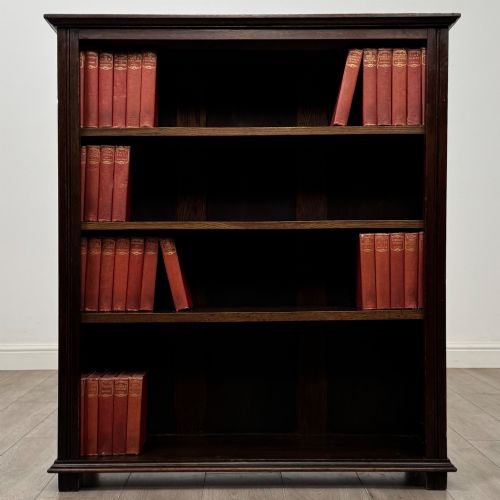
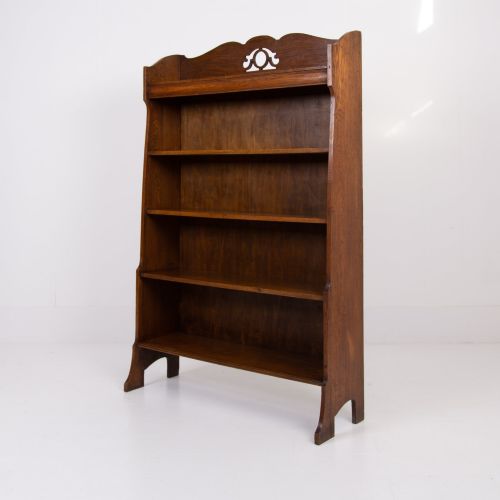
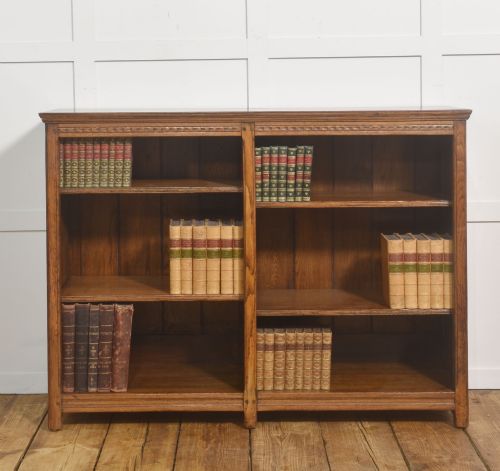
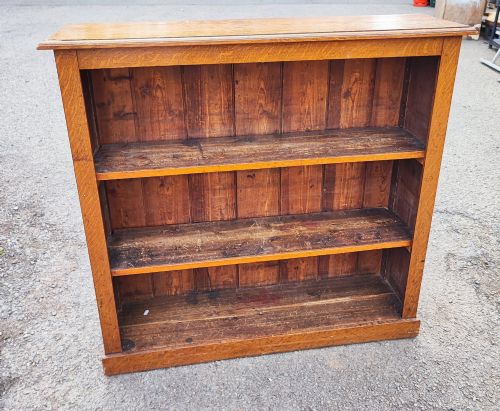
Vintage Oak Display Unit
A vintage oak display unit brings honest timber and dependable shelving into a room, sorting books and curiosities with quiet authority.
Vintage Oak Display Unit
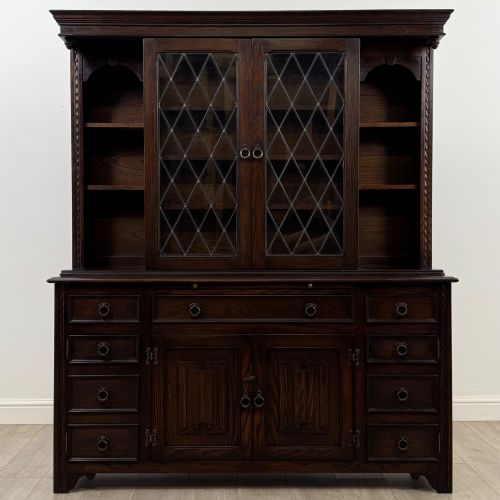
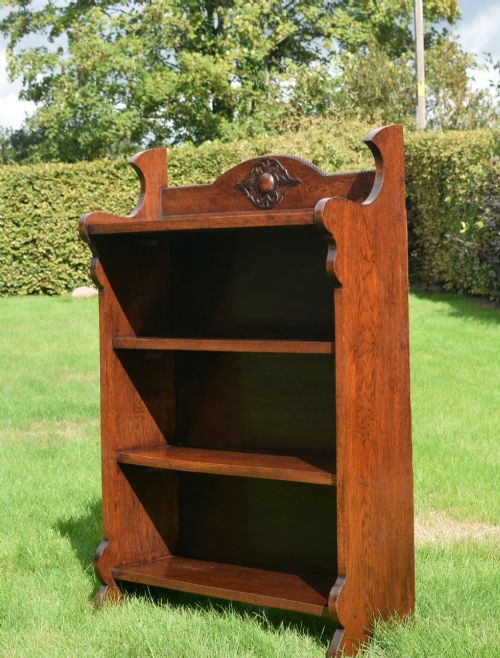
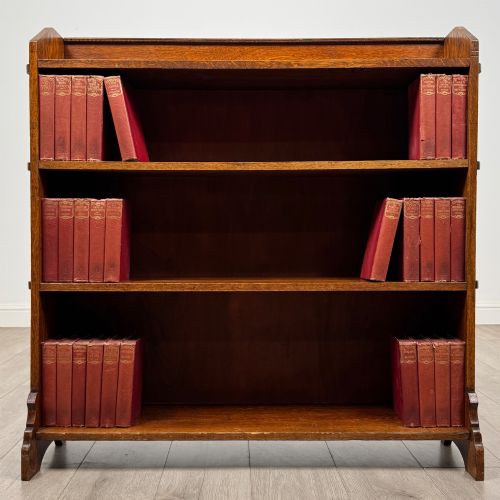
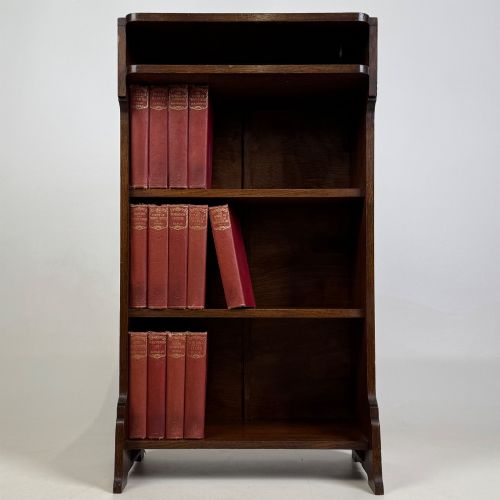
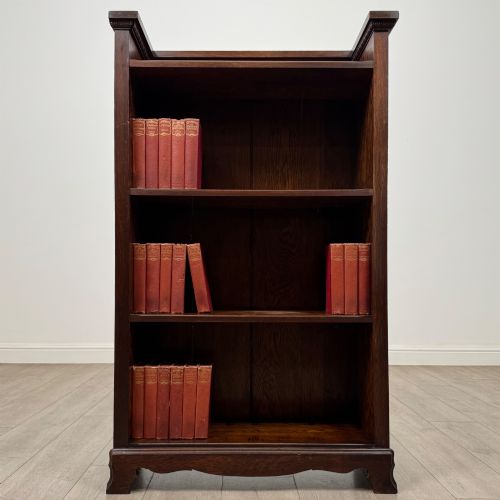
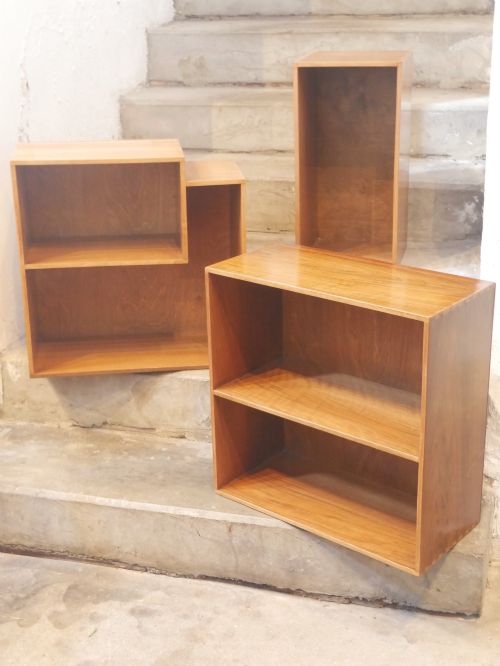
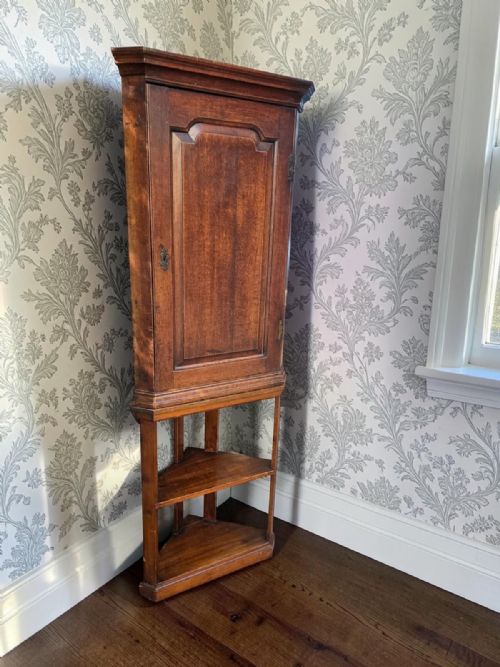
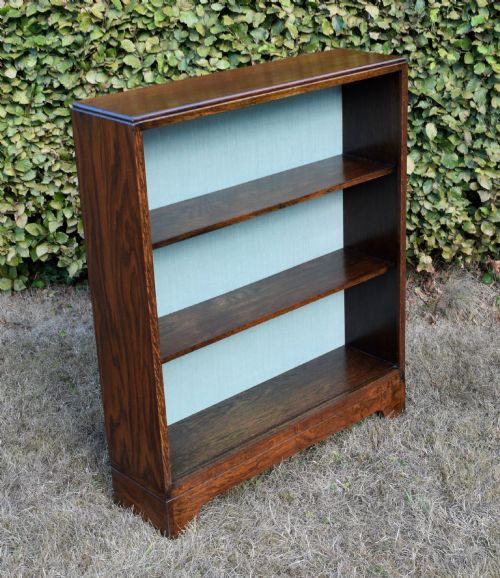
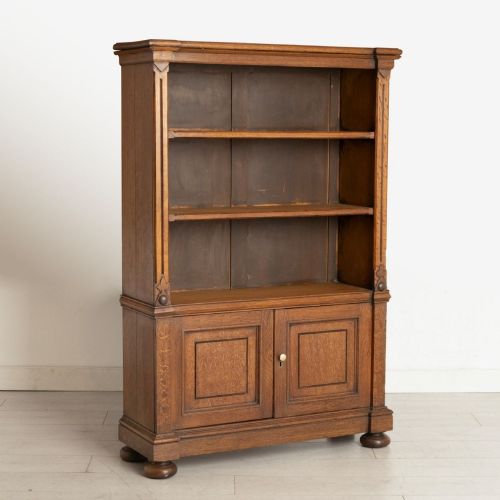
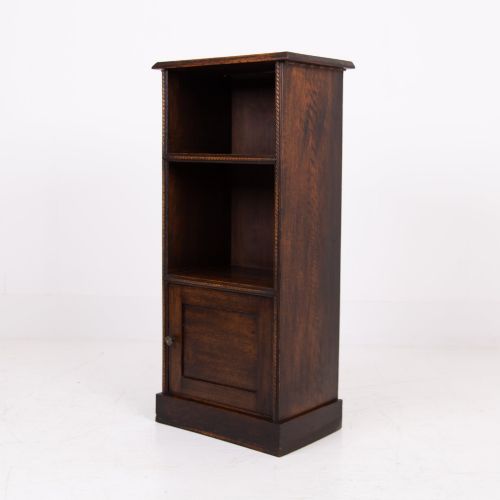
A vintage oak display unit encompasses a broad selection of bookcases, open shelving, corner cabinets, and glazed display cabinets. These pieces serve primarily to house books and display treasured objects while anchoring a room with traditional woodwork.
The selections available here lean heavily towards Edwardian and early twentieth-century examples, alongside Victorian, Georgian, and Art Deco interpretations. Buyers will frequently encounter open bookcases, glazed cabinets, and corner cupboards designed for domestic storage.
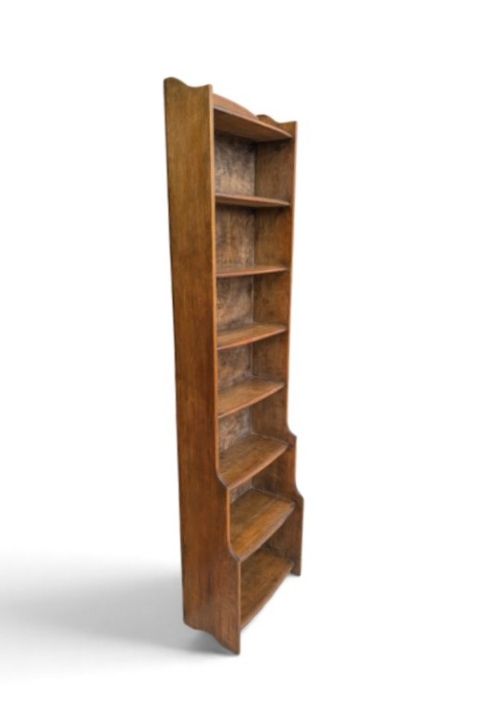
Origins stretch from standard English oak furniture to specific regional pieces like Welsh corner cupboards. The forms range from compact waterfall bookcases and small cupboards on stands to tall adjustable shelving units.
How they were made
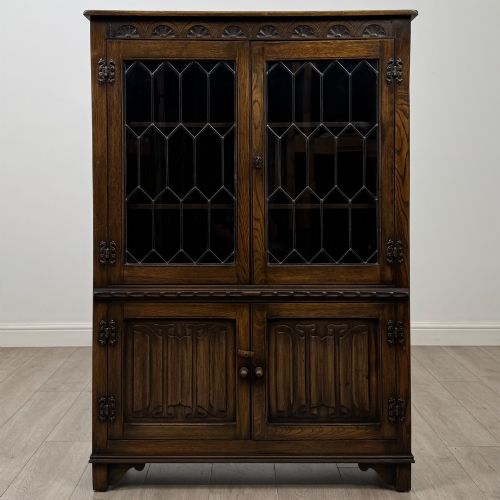
Makers relied principally on solid oak, frequently selected for its pronounced grain and durability, sometimes complemented by golden or dark finishes. Glass panels feature heavily on display doors to protect contents while maintaining visibility.
Hardware and structural reinforcement typically incorporate brass handles, iron fittings, and lead details, alongside occasional leather accents on desktop surfaces. Interior construction often utilises adjustable wooden shelving supported by simple, practical joinery.
Listings feature oak predominantly, supported by glass, brass, and iron across Edwardian, Victorian, and Art Deco periods.
What varies in quality
Quality rests in the selection of the timber and the subtlety of the detailing, such as carved linenfold panels or clean Arts and Crafts lines versus plain commercial production. The thickness of the oak boards and the weight of the brass or iron hardware signal the grade of the piece.
Proportion and utility also separate standard items from superior examples, visible in the smoothness of adjustable shelf mechanisms and the clarity of the glazed doors. Pieces bearing recognised workshop attributions or coherent period styling command greater attention from collectors.
Heals·Dudley and Co
The Vintage Oak Display Unit Glossary
- Golden oak
- A warm, honey-toned finish applied to oak timber that highlights the natural grain. This treatment became particularly popular during the Edwardian period.
- Linenfold
- A style of relief carving mimicking folded parchment or linen, frequently seen on cabinet doors from revival periods. It adds architectural texture to flat wooden surfaces.
- Waterfall bookcase
- A set of open shelves that steps back progressively from bottom to top, creating a profile resembling a cascade. This compact form suited smaller Edwardian rooms.
- Haberdashery counter
- A glazed retail display fixture adapted for domestic storage, featuring multiple drawers or compartments. These units bring an industrial aesthetic to residential spaces.
- Corner cupboard
- A specialised cabinet built with an angled footprint to fit snugly into the corner of a room. Versions range from tall single-door units to two-part cupboards.
Vintage Oak Display Unit: Frequently Asked Questions
How do I choose between an open bookcase and a glazed display cabinet?
Open bookcases provide immediate, easy access to books and everyday items, making them practical for a busy study or living room. Glazed display cabinets protect delicate china and collections from dust while keeping them fully visible.
Consider the environment where the unit will live and whether the contents require physical protection from daily household activity.
Where should I place a corner cabinet?
Corner cabinets utilise awkward or neglected junctions in a room, turning dead space into functional storage. They work effectively in dining rooms for glassware or in hallways to soften bare angles.
Measure the adjacent wall spaces carefully to ensure the depth of the cabinet door swings open without obstruction.
How do I identify an Edwardian oak bookcase?
Edwardian oak pieces often feature lighter golden tones, simpler linear carving, and adjustable shelving supported by brass studs. They reflect a shift away from heavier Victorian styles towards lighter domestic furniture.
Look for honest construction methods and lighter proportions that suit early twentieth-century room layouts.
Can adjustable shelves handle heavy books?
Most period oak bookcases with adjustable shelving utilise sturdy wooden pegs or metal tracks designed to bear significant weight. Solid oak construction provides the natural strength required for dense rows of volumes.
Inspect the shelf thickness and support mechanisms to ensure they distribute heavy loads securely across the interior.