
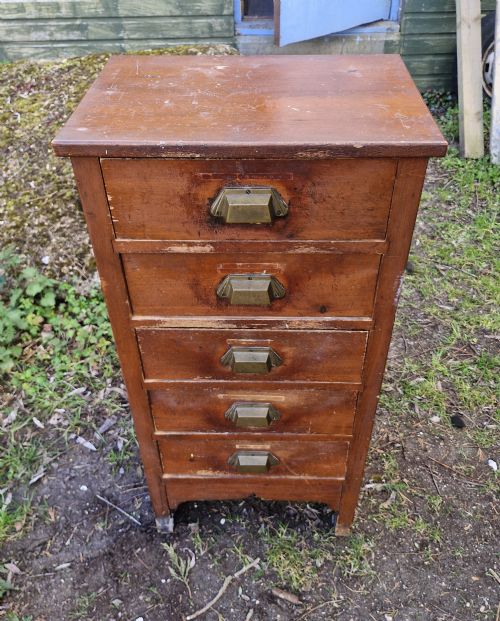


Vintage Oak Desk Companion
These vintage oak desk companion pieces bring order to a working surface, offering sturdy construction and period character for daily use.
Vintage Oak Desk Companion
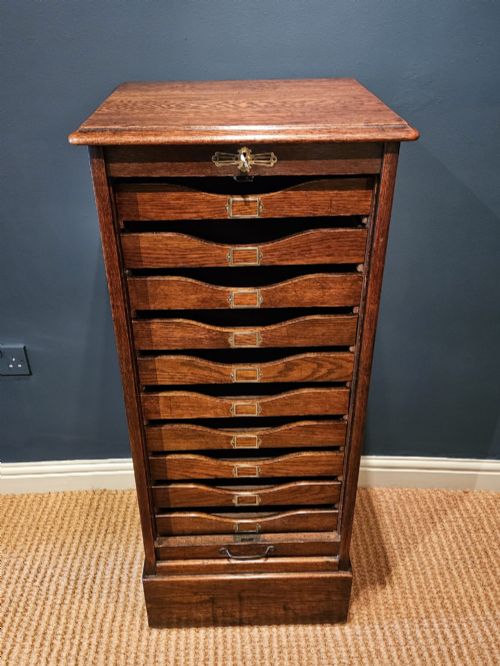
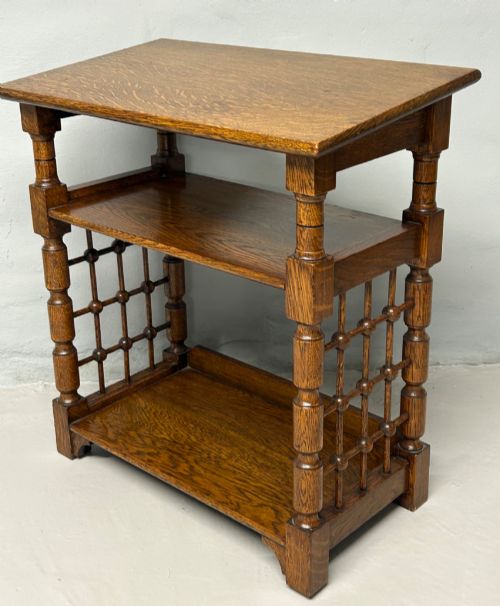
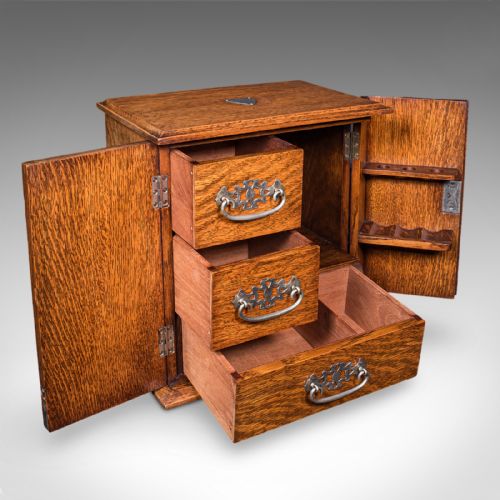
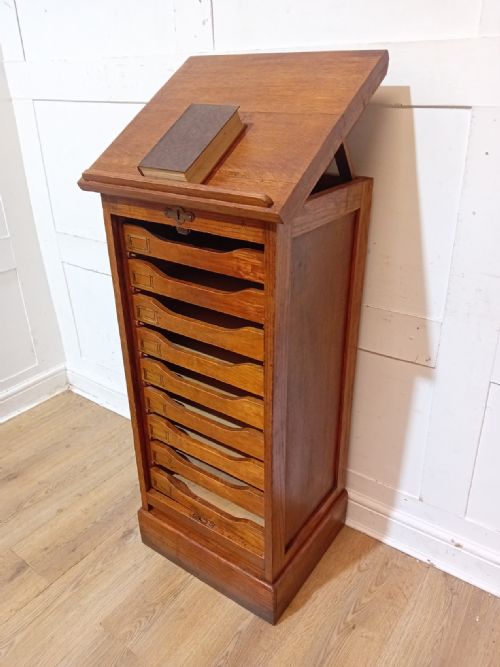
A vintage oak desk companion covers a range of desktop furniture and accessories designed to keep papers, timepieces, and writing materials in order. When searching this phrase, buyers encounter items such as stationery boxes, filing cabinets, inkstands, and book stands.
The versions most frequently met on this page date from the Victorian and Edwardian eras through to the early twentieth century. These pieces reflect the functional needs of past offices and studies, utilising robust timbers to withstand heavy daily use.
Materials and construction
Makers relied primarily on oak for its durability and strong grain, often pairing the timber with brass handles, hinges, and mounts. Additional elements of glass, leather, steel, and pine appear across various internal fittings and backing boards.
Joinery methods range from simple panel construction to tambour fronts and drop-front mechanisms designed for smooth operation. Metal components such as locks and hinges were selected for heavy utility rather than mere decoration.
The selection spans Victorian, Edwardian, and early twentieth century periods, featuring oak paired with brass, glass, and leather.
Distinguishing quality
Quality in these desktop pieces rests on the precision of the joinery and the integrity of the original mechanisms. Smooth action in tambour doors, drop-fronts, and tightly fitted drawers separates finer pieces from simpler utility items.
The choice of supplementary materials also defines the tier of the piece. Well-cast brass hardware, intact glass inserts, and careful finishing to the secondary timbers elevate a standard desk accessory.
The Vintage Oak Desk Companion Glossary
- Tambour front
- A flexible door made of narrow strips of wood glued to a canvas backing, allowing it to slide smoothly around a curved track.
- Stationery box
- A desktop container featuring partitioned compartments and sloping lids designed to hold writing paper and envelopes.
- Inkstand
- A tray or stand holding one or more inkwells, often incorporating pen grooves and small compartments for stamps or nibs.
- Arts and Crafts
- A design movement favouring honest construction, simple forms, and visible craftsmanship over excessive machine ornamentation.
- Lecturn top
- An angled upper surface designed to hold a book or writing tablet at a comfortable reading position.
Vintage Oak Desk Companion: Frequently Asked Questions
What fits inside a stationery box?
These boxes typically hold folded writing paper, envelopes, and small sealing wax accessories within fitted internal partitions.
Larger stationary cabinets on this page also accommodate ledgers and incoming post.
How do tambour doors operate?
Tambour doors slide along recessed wooden tracks using narrow slats joined to a flexible fabric backing.
This mechanism allows the door to curve around the side or top of a filing cabinet without needing outward swing space.
How do I maintain oak desktop items?
Regular dusting with a dry, soft cloth protects the timber finish from gathering abrasive grit in the grain.
Occasional application of traditional beeswax nourishes the oak without building up artificial sheen.
Where were these pieces used?
Such accessories found their place on writing desks in Victorian and Edwardian studies, offices, and doctor surgeries.
They served professionals who needed correspondence and reference books immediately to hand.