



Vintage Nursery Seating
Vintage nursery seating gathers small chairs, rockers and highchairs made to furnish children's spaces across the eighteenth, nineteenth and early twentieth centuries.
Vintage Nursery Seating
Vintage nursery seating comprises small-scale chairs, rocking chairs, highchairs, armchairs and swings designed specifically for children across the Georgian, Victorian and Edwardian periods.
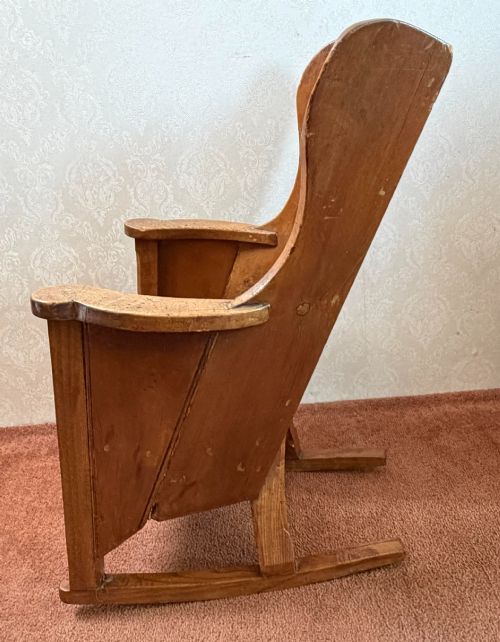
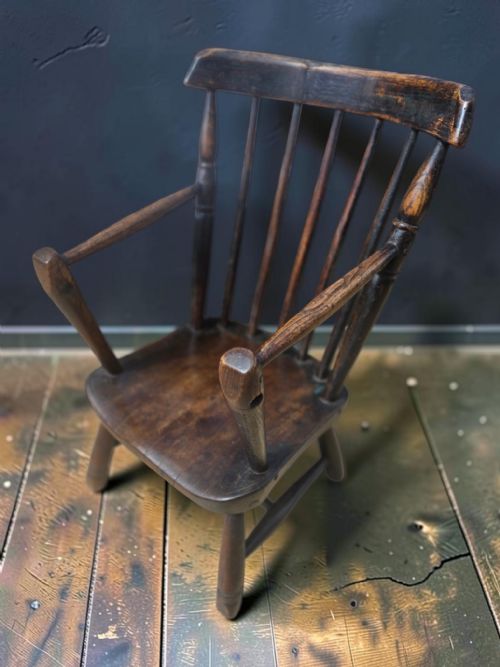
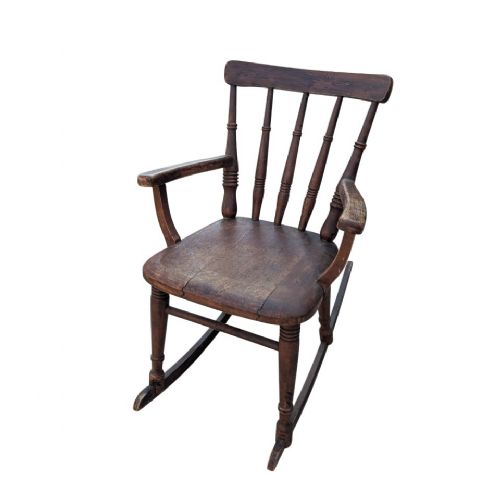
The versions most commonly met on this page include nineteenth-century rocking chairs, Windsor chairs and highchairs constructed in regional workshops and larger cabinetmakers' premises.
Makers produced these forms in variations ranging from rustic elm and beech country chairs to formal mahogany and walnut designs intended for affluent households.
How they were made
Craftsmen built these small seats using traditional timber framing, combining turned spindles, bentwood components and carved elements in woods such as mahogany, elm, beech, oak and walnut.
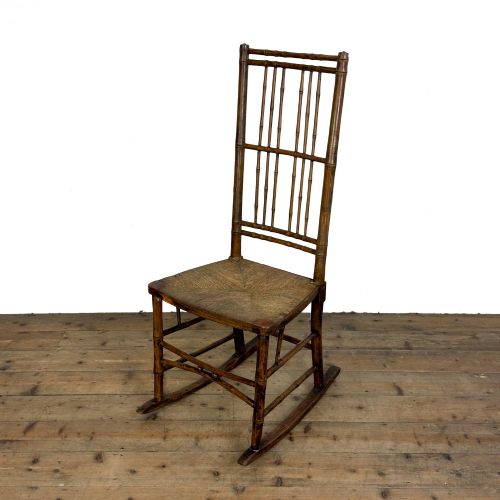
Seating surfaces frequently utilised woven cane, rush or bergere panels alongside upholstered fabric, leather or plain timber boards.
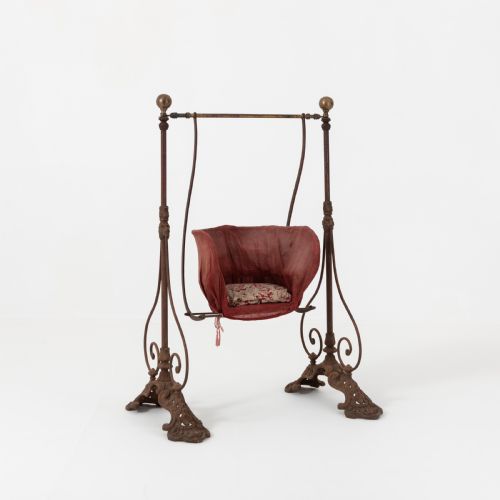
Specialist construction included metamorphic folding mechanisms for highchairs and cast iron framing for nursery swings.
Cast iron swings allowed Victorian infants to sway indoors while safely bolted to the nursery floor.
What varies in quality
Quality rests upon the selection of timber and the integrity of the joinery, distinguishing sturdy cabinet-built pieces from simpler utilitarian items.
Refined examples display sophisticated carving, inlays, or polished mahogany and walnut surfaces, whereas country vernacular pieces rely on honest local forms and sturdy turned components.
The survival of original surfaces, whether polished wood, early paint or natural patina, dictates the character and integrity of each piece.
The Vintage Nursery Seating Glossary
- Windsor chair
- A wooden chair built with a heavy solid wooden seat into which the legs and back spindles are driven directly. This form appears frequently in nineteenth-century examples.
- High chair
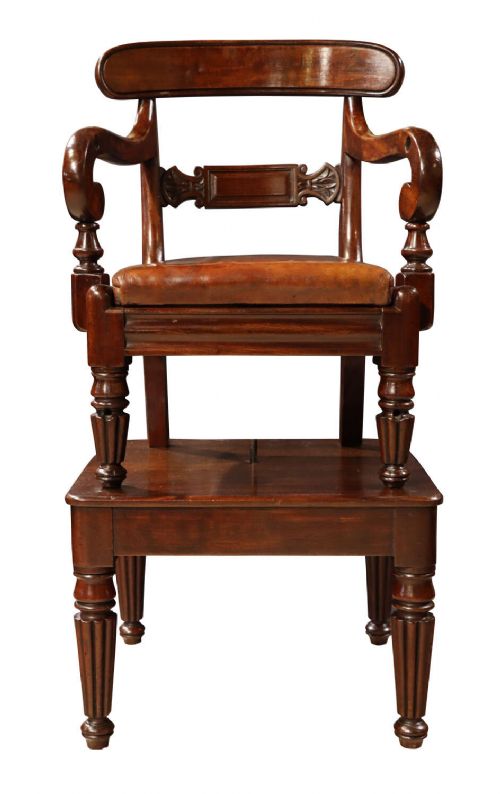
- An elevated child's seat designed for dining at table. Some surviving nineteenth-century examples feature metamorphic folding designs.
- Bergere
- A type of upholstered armchair featuring enclosed canework sides and back panels. It appears on formal Victorian and nineteenth-century pieces.
- Faux bamboo
- Wood turned and carved to imitate the segmented stalks of natural bamboo. This decorative treatment appears on Victorian and later pieces.
- Metamorphic
- Describing furniture designed to transform into another functional object. In this category, high chairs often convert into low nursery chairs.
Vintage Nursery Seating: Frequently Asked Questions
Are these chairs safe for modern children?
These historical pieces were built to past domestic standards rather than modern safety regulations. Many collectors today acquire them primarily for display or gentle domestic use.
Buyers intending daily use for young children generally inspect stability and consult specialists regarding structural reinforcement.
How do I identify a Georgian high chair?
Georgian high chairs typically feature robust mahogany construction, straightforward joinery and period-appropriate stretcher placement. They reflect the furniture styles prevalent through the eighteenth and early nineteenth centuries.
Comparing the turned members and timber patination against dated examples helps confirm the period of manufacture.
What is a metamorphic high chair?
A metamorphic high chair is a dual-purpose piece designed to convert from an elevated dining seat into a low chair or rocker. This ingenious mechanism saved space in period homes.
Makers achieved this through clever pivot joints and sliding timber tracks built into the frame.
Where were country Windsor chairs made?
Country Windsor chairs were produced by regional bodgers and local cabinetmakers working in rural districts and provincial towns. They utilised readily available local timbers such as elm, beech and ash.
These workshop pieces prioritized robust utility and traditional construction over formal decorative flourishes.