
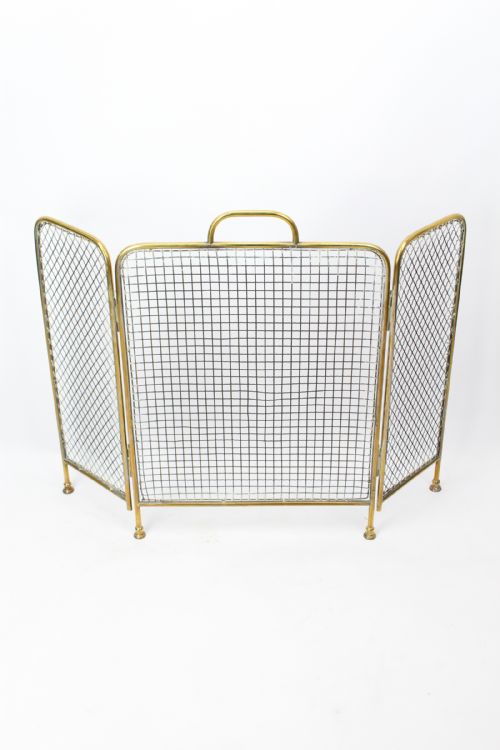


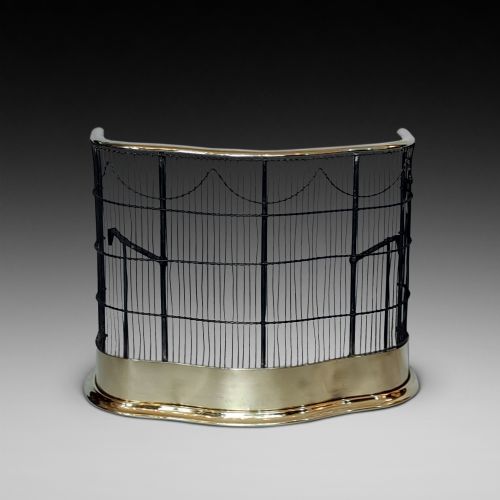


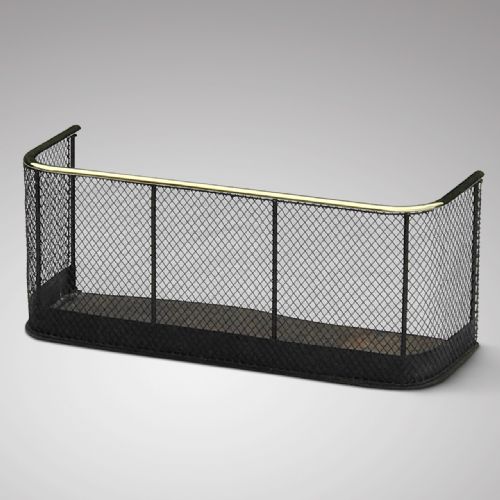
Vintage Nursery Fire Screen
A vintage nursery fire screen provides essential hearth safety, combining robust wire mesh with polished brass rails to protect children from stray sparks.
Vintage Nursery Fire Screen
A vintage nursery fire screen protects children from open hearths by surrounding the fireplace with a protective barrier. These pieces appear across several periods, including the Regency era, the Victorian period, and the Edwardian era.
The form typically takes the shape of a fender or a folding guard designed to enclose the hearth completely. Many examples include a brass top rail or a dedicated clothes rail for drying garments near the warmth.
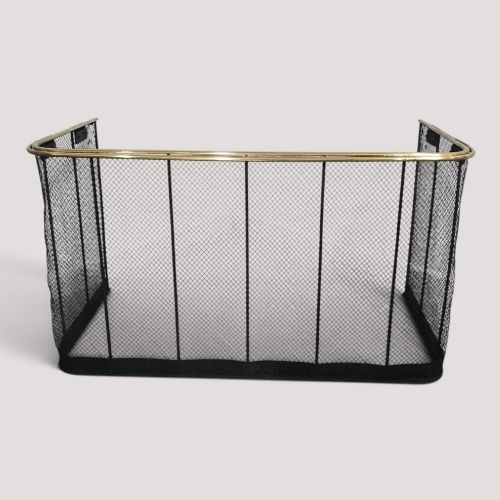
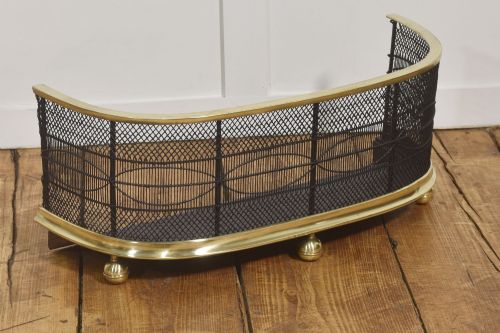
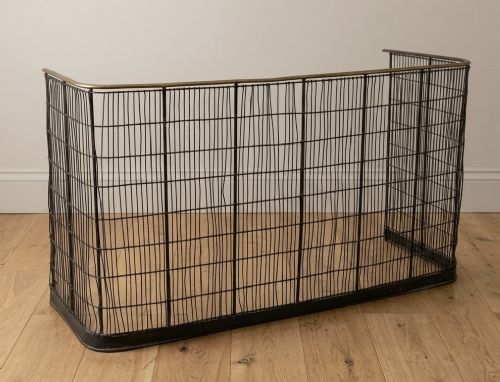
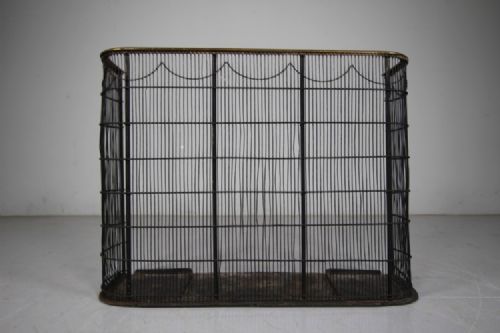
Buyers most frequently encounter Victorian brass and wire mesh designs on this page. These functional guards range from simple bowed frames to serpentine shapes fitted with sturdy iron wire.
Construction and materials
Makers constructed these screens using a combination of structural metal frames and fine protective barriers. Brass and wrought iron form the primary framework, providing the necessary weight and stability for daily use around a hearth.
Wire mesh and woven iron wire panels were then secured within the metal surrounds to catch sparks while maintaining visibility of the fire. Brass rimming and polished top rails added a decorative finish to the functional ironwork.
Current listings feature pieces spanning the Regency, Victorian, and Edwardian periods, utilising brass, iron, and wire mesh.
Assessing craftsmanship and finish
Quality in a vintage nursery fire screen depends on the rigidity of the frame and the tightness of the wirework. Firmer joints and heavier gauge brass or iron separate substantial guards from lighter utilitarian items.
The refinement of the brass top rail and the neatness of the wire mesh attachment indicate the level of care taken during manufacture. Finer pieces demonstrate precise bending in bowed and serpentine frames.
The Vintage Nursery Fire Screen Glossary
- Fender
- A low metal guard placed around the hearth to keep burning logs and coals contained. These often incorporate raised rails.
- Wire mesh
- A flexible grid of interwoven metal strands used to block sparks. This material allows heat to pass through while maintaining a barrier.
- Serpentine
- A gently curved shape resembling a winding snake. This contour appears on the front edge of several guards.
- Clothes rail
- An integrated horizontal bar designed for airing garments. This feature is frequently found on nineteenth century nursery fenders.
Vintage Nursery Fire Screen: Frequently Asked Questions
What is a nursery fire screen?
A nursery fire screen is a protective metal barrier placed around an open fireplace to prevent children from getting too close to the flames. They shield the room from stray sparks while keeping the hearth area secure.
Most examples feature a sturdy metal frame combined with fine wire mesh. Some variations include integrated rails for drying clothes above the warmth of the fire.
How do I date a fire screen?
Dating these pieces involves examining the materials, construction methods, and stylistic cues present in the frame. Nineteenth century examples often feature heavy wrought iron and substantial brass top rails.
Later Victorian and Edwardian pieces frequently utilise refined wire mesh and specific geometric framing. Comparing the metalwork style to established period designs helps narrow down the origin.
Are these screens safe for use?
These historical screens were originally built to provide practical hearth safety in family homes. The heavy iron and brass construction offers a stable physical barrier.
Buyers should inspect the overall structural rigidity and the condition of the mesh before placing any guard near an active fire. Proper placement ensures the surround remains stable during daily use.
What materials were used?
Makers relied primarily on metals that could withstand high temperatures and daily household wear. Brass and iron form the structural backbone of these guards.
Wire mesh and woven iron wire fill the protective panels, held together by steel or brass framing. Polished brass rims and top rails provide a contrasting decorative touch.