

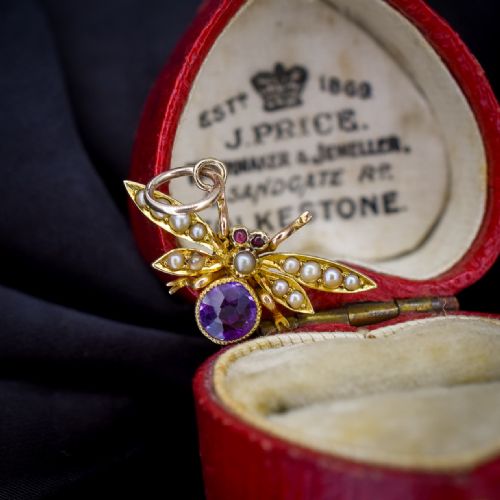


Vintage Novelty Brooch
A vintage novelty brooch captures a playful subject in precious metals and stones, offering miniature sculpture to pin to a lapel.
Vintage Novelty Brooch
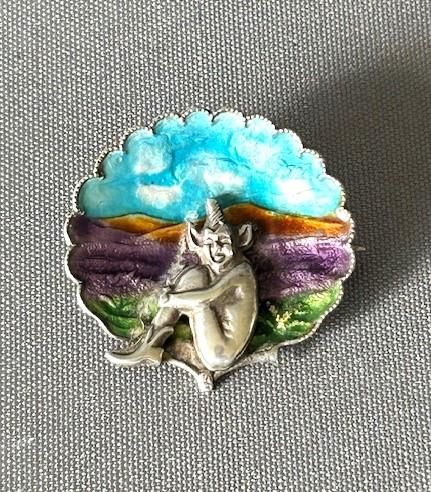
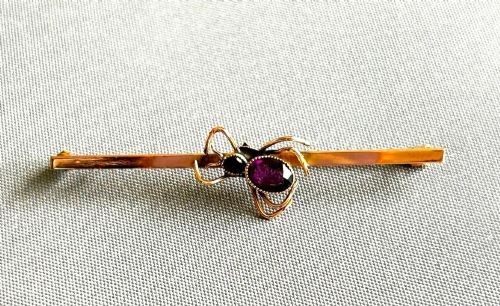
A vintage novelty brooch takes the form of animals, insects, and everyday objects, translating familiar subjects into wearable ornaments. When searching for a vintage novelty brooch, collectors encounter pieces shaped like insects, birds, marine life, and sporting items.
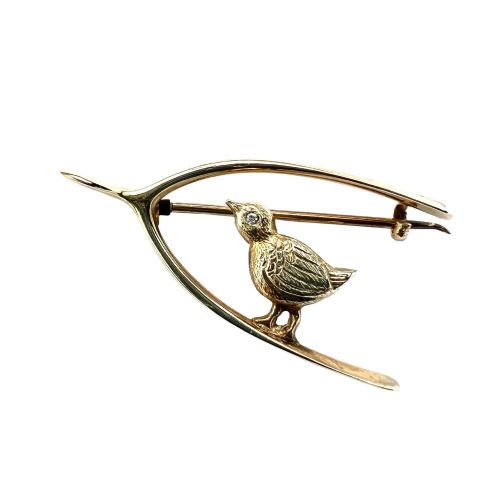
The selection ranges across several eras, featuring Victorian equestrian designs, Edwardian chick motifs, and mid-century modern animal figures. Forms span from simple pins to convertible charm pendants and pieces with moving elements such as working wheels.
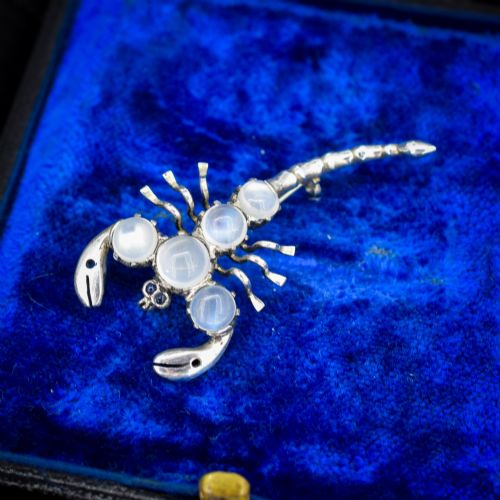
Makers utilised specific motifs to capture character, rendering creatures like scorpions, turtles, ducks, and poodles in miniature. These wearable miniatures combine figurative subjects with the craftsmanship of their respective periods.
Materials and construction
Goldsmiths worked in yellow gold of various carats alongside sterling silver and pressed brass to form the structural bodies of these ornaments. Gemstones including diamonds, rubies, amethysts, peridots, garnets, moonstones, and seed pearls provide colour and textural detail.
Techniques range from hand-soldered wirework and chasing to the setting of precious stones into intricate insect and animal anatomy. Organic materials such as mother-of-pearl and celluloid also appear, shaped to create specific textures within the design.
Vintage Novelty Brooch Retail Price Guide 2026
Typical asking prices for vintage novelty brooch among the pieces listed under this phrase on Sellingantiques today, from the lower quarter to the upper quarter. They describe what is for sale here now, not the wider market.
Certain early cycling brooches feature tiny working wheels that actually turn on their axles.
Distinguishing quality
Quality rests in the precision of the figurative carving and the security of the stone settings across the body of the piece. Naturalistic proportions and expressive details distinguish finer examples from simpler stamped or cast items.
The integration of mechanical parts, such as working wheels on a bicycle form, demonstrates higher levels of miniature engineering. Superior pieces utilise higher carat gold and well-matched gemstones to define the subject.
The Vintage Novelty Brooch Glossary
- Novelty brooch
- A pin designed in the figurative shape of an animal, insect, or distinct object rather than a traditional floral or geometric pattern.
- Stick pin
- A long pin with an ornamental head designed to secure a cravat or lapel, often sharing thematic motifs with larger brooches.
- Seed pearl
- A tiny, naturally small saltwater pearl used in clusters or lines to render delicate textures on animal and insect bodies.
- Celluloid
- An early form of thermoplastic used in mid-century and earlier costume pieces for lightweight, moulded figurative designs.
Vintage Novelty Brooch: Frequently Asked Questions
What periods do these brooches come from?
The pieces span from the Victorian and Edwardian eras through the Art Deco period and into mid-century designs from the 1940s and 1960s.
Each era brought distinct materials and stylistic conventions to the creation of figurative miniature subjects.
Are all novelty brooches made of gold?
No, while many feature nine-carat, fourteen-carat, or fifteen-carat yellow gold, others are constructed from sterling silver, pressed brass, or celluloid.
Precious and semi-precious stones are often incorporated alongside base or precious metals depending on the period.
How were novelty brooches worn originally?
They were pinned to lapels, collars, hats, or scarves as decorative accessories that reflected the wearer's personal interests or sense of humour.
Some examples double as pendants, offering versatility in how the ornament is displayed.
How do I identify the age of a brooch?
Dating relies on stylistic markers associated with specific periods, such as Edwardian openwork, Victorian naturalism, or mid-century modernist lines.
Material choices, gemstone settings, and pin mechanisms also provide clues to the decade of manufacture.