
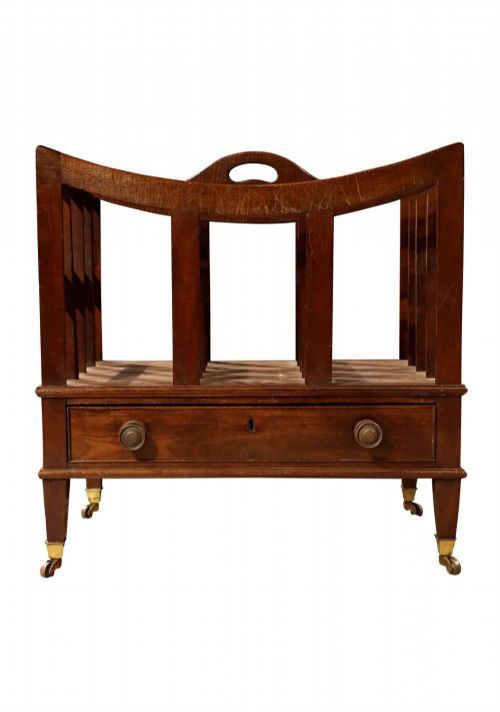


Vintage Newspaper Stand
A vintage newspaper stand keeps your daily reading tidy, ranging from mahogany canterburys to brass racks.
Vintage Newspaper Stand
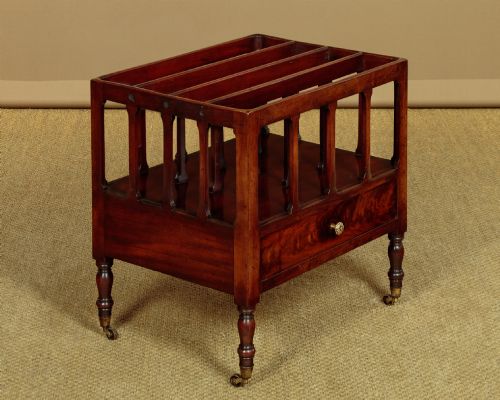
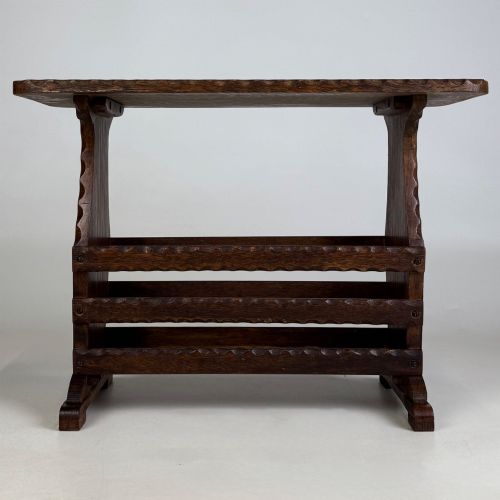
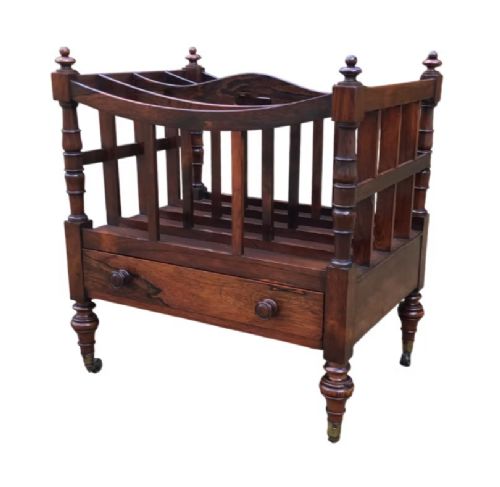
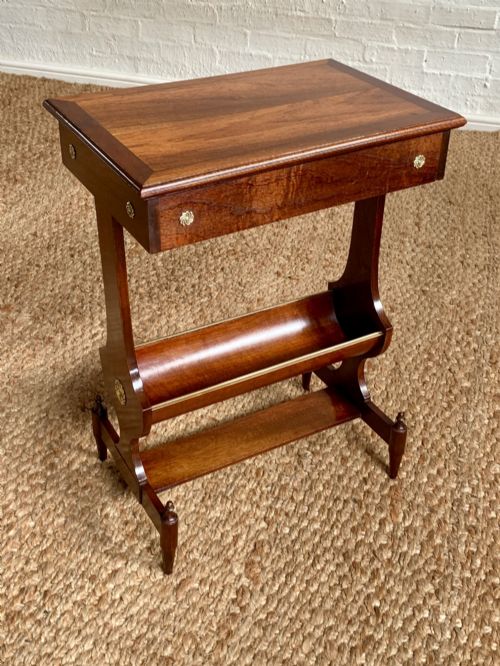
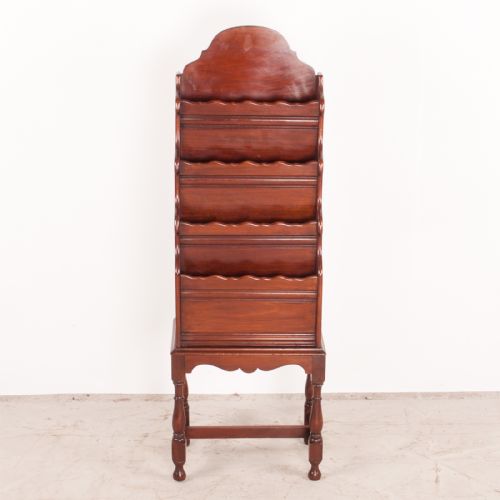
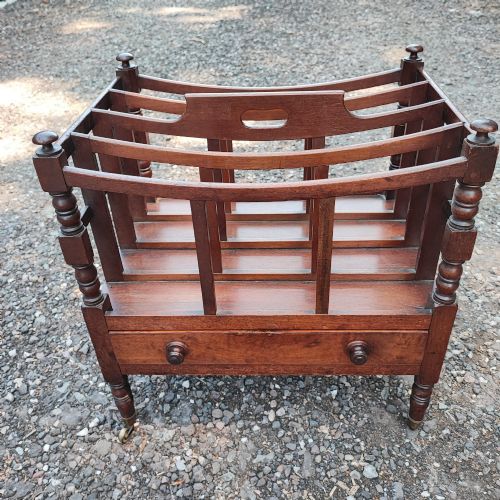
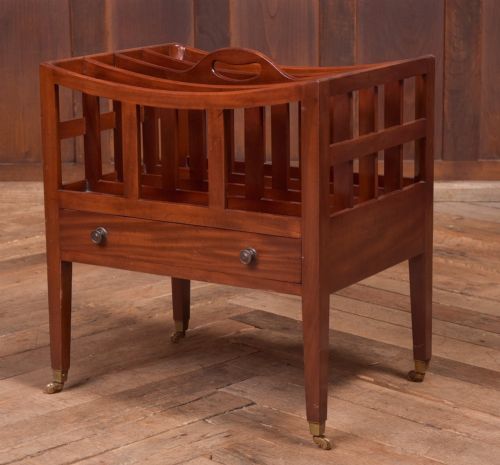
When you search for a vintage newspaper stand, you find pieces designed to hold periodicals, sheets of music, and journals within the home. The selection on this page centres heavily on traditional canterburys alongside dedicated magazine racks and side tables with built-in storage divisions.
Materials and construction methods
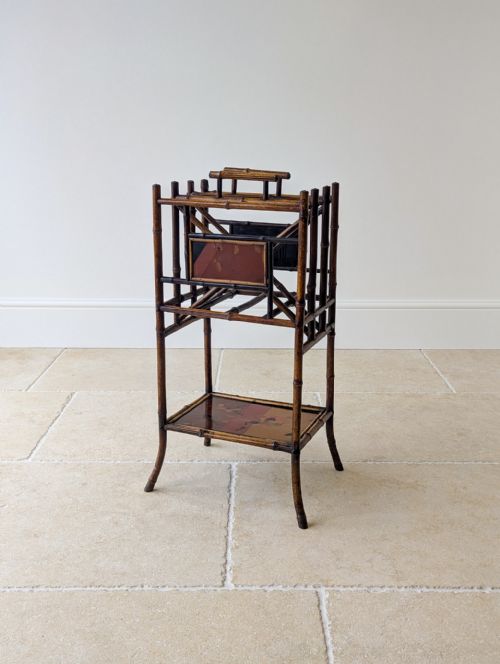
Cabinet makers utilised dense hardwoods such as mahogany, walnut, and rosewood, often shaping them with turned legs, drawers, and carved details. Lighter materials like bamboo and fruitwood also appear, particularly in pieces from the aesthetic movement.
Metal elements including brass and copper feature prominently in stands and racks, providing structural support or decorative handles. Joinery varies from traditional wood framing to riveted metal assemblies designed to bear the weight of paper.
Tiger bamboo stands bring a wonderfully exotic stripe to the Victorian parlour, proving that even a newspaper tidy can roar.
Distinctions in construction and design
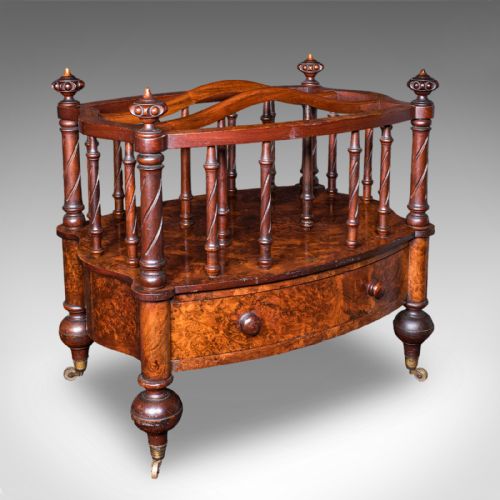
The tier of a piece depends on the choice of timber and the precision of its joinery, with figured veneers and solid mahogany standing apart from simpler secondary woods. Well-executed turned legs, original castors, and integrated drawers elevate the craftsmanship of a canterbury.
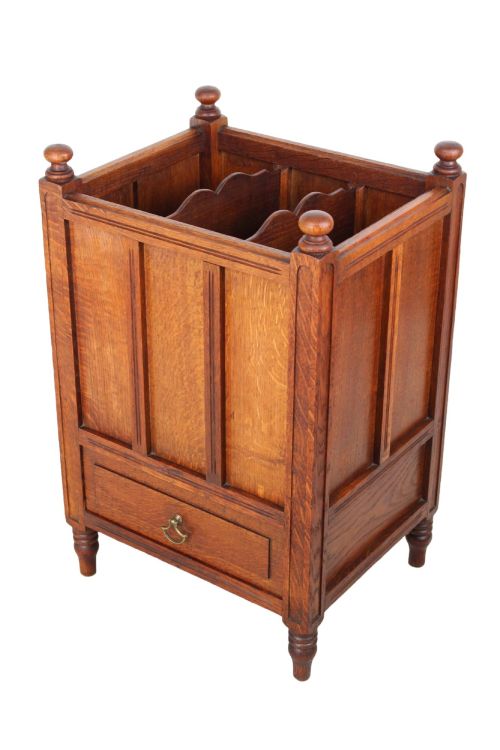
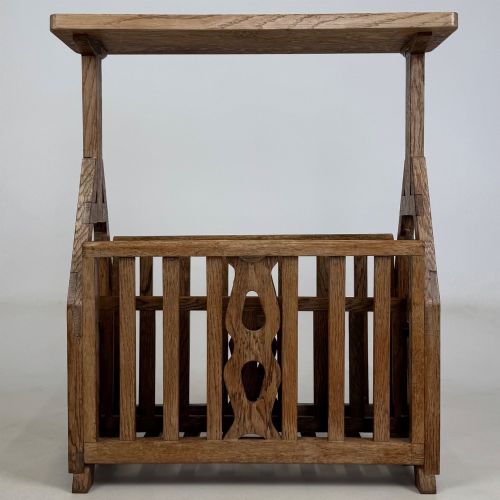
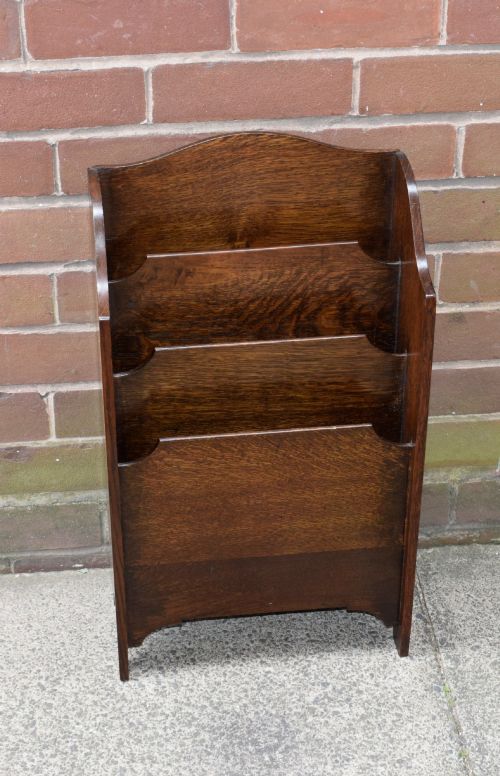
Design complexity also sets examples apart, such as four-division layouts, boat-shaped frames, or metamorphic mechanisms that adapt the stand's configuration. Simpler oak or bamboo magazine racks rely on proportion and clean lines rather than elaborate ornamentation.
The Vintage Newspaper Stand Glossary
- Aesthetic Movement
- A late nineteenth-century design style that emphasised artistic visual value over moral narrative, frequently employing bamboo, japanning, and asymmetrical forms.
- Metamorphic
- Describing furniture designed to transform or fold into different configurations for alternative uses. These pieces adjust their form through hinged sections or sliding joints.
- Regency
- A British architectural and decorative style spanning the early nineteenth century, characterised by classical restraint, elegant curves, and dark polished woods.
- Tidying rack
- A secondary term used for small compartmentalised stands meant to gather loose papers and periodicals in a parlour or study.
Vintage Newspaper Stand: Frequently Asked Questions
What is a canterbury?
A canterbury is a dedicated stand featuring vertical divisions used historically for storing newspapers, sheet music, and books. They typically sit low to the ground near seating.
Many examples include a small drawer underneath the rack and small wheels called castors for easy movement across a room.
How were newspaper stands used?
These stands kept daily broadsheets, journals, and periodicals organised and within reach in sitting rooms and studies. They prevented clutter on tables.
By keeping papers upright in compartments, the stands also protected delicate paper from folding and tearing.
How do I date an oak rack?
Dating relies on stylistic clues like the presence of arts and crafts movement details, Edwardian turned legs, or simpler twentieth-century forms. Construction methods and wood finishes also indicate the period.
Earlier pieces often use solid timber and hand-cut joinery, while later twentieth-century versions display more standardised manufacturing techniques.
Can I use them for modern magazines?
Yes, vintage racks and canterburys accommodate modern periodicals, large magazines, and newspapers in the same manner as historical publications. Their compartments suit contemporary reading materials.
Checking the division width ensures thicker modern formats fit comfortably between the wooden or metal slats.