




Vintage Naval Trunk
A vintage naval trunk is a robust wooden chest designed for travel at sea, offering practical storage with distinct military and maritime history.
Vintage Naval Trunk
When you search for a vintage naval trunk, you are looking at utilitarian storage pieces built for officers and merchants during the nineteenth century and into the early twentieth century. These items include campaign chests, captains trunks, and maritime painted pine chests originating from Victorian and colonial contexts.
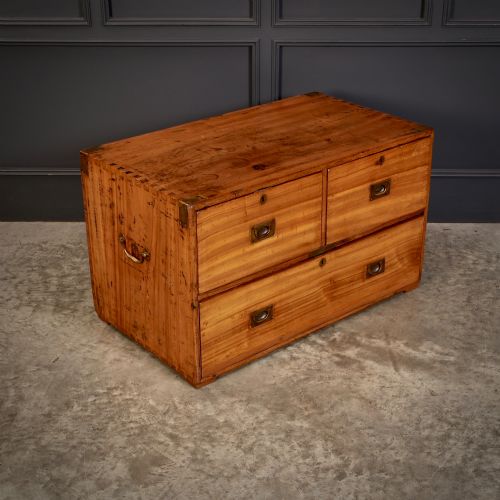
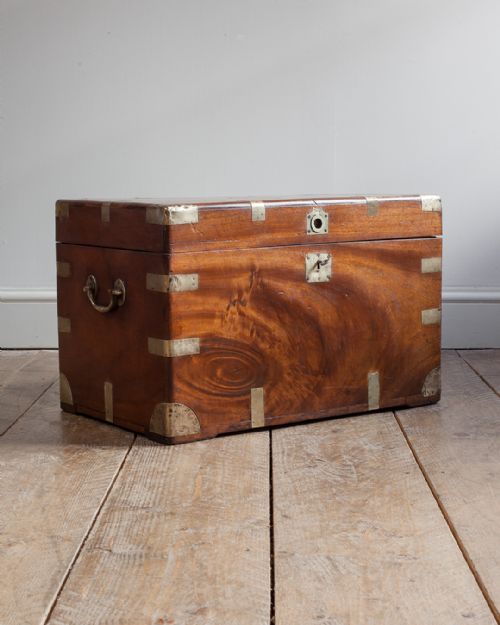
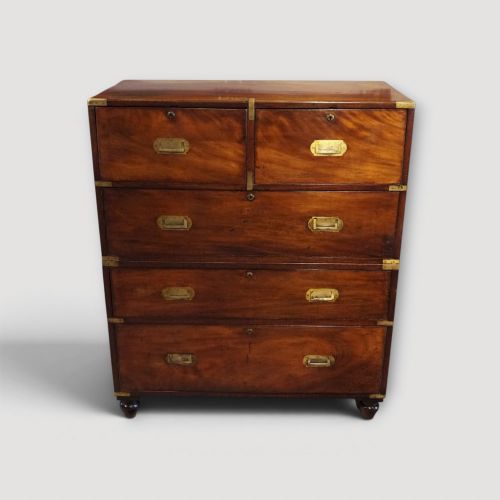
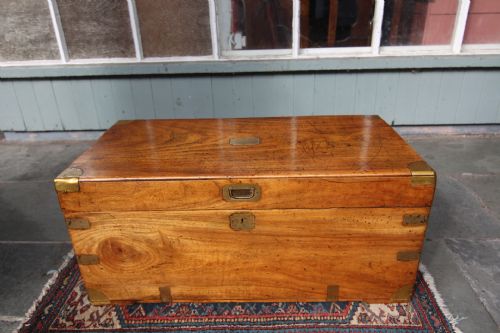
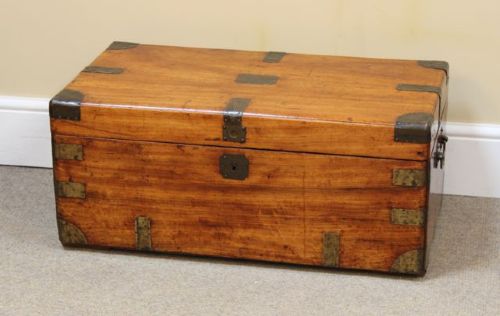
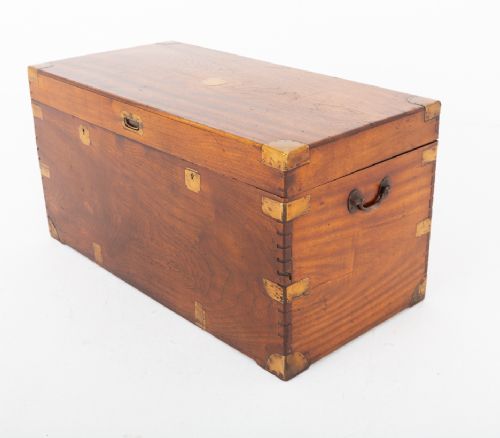
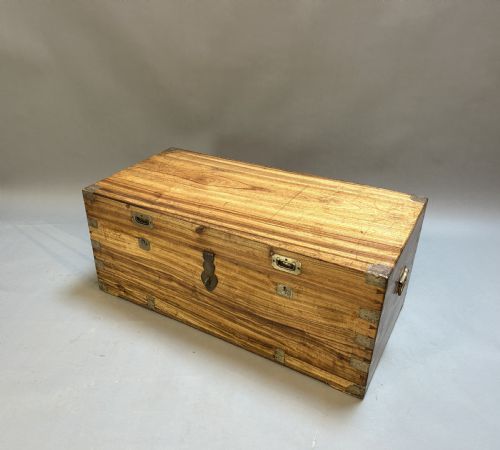
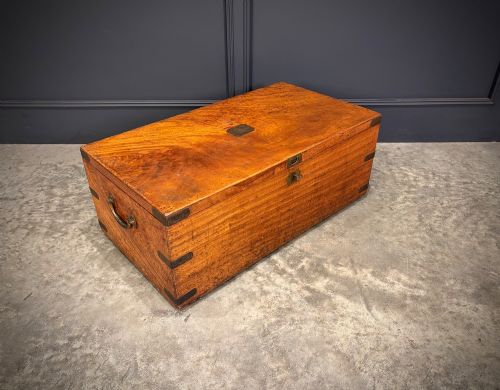
The version you are most likely to meet on this page is constructed from camphor wood, often bound in brass and fitted with hinged lift-up tops or compartmented interiors. These campaign trunks reflect a period when officers required sturdy, modular luggage that could withstand long journeys across the seas.
How they were made
Makers utilised dense timbers such as camphor wood, teak, mahogany, and pine to construct bodies capable of enduring harsh maritime conditions. Camphor wood was particularly favoured for its insect-repellent properties, protecting uniforms and documents during extended voyages.
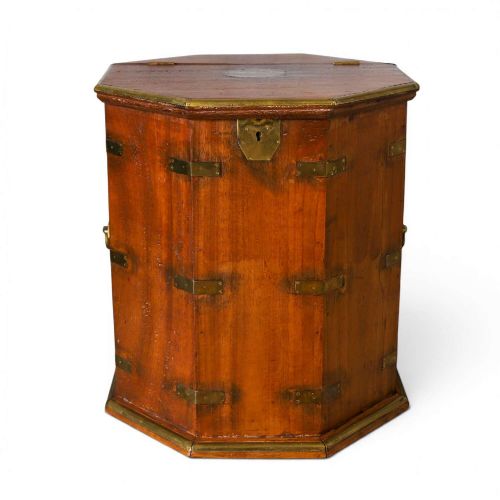
Reinforcement was achieved through the integration of brass fittings, iron bands, and metal studs. Corners were frequently protected with brass brackets to absorb the impact of loading and stacking aboard ships.
Vintage Naval Trunk Retail Price Guide 2026
Typical asking prices for vintage naval trunk among the pieces listed under this phrase on Sellingantiques today, from the lower quarter to the upper quarter. They describe what is for sale here now, not the wider market.
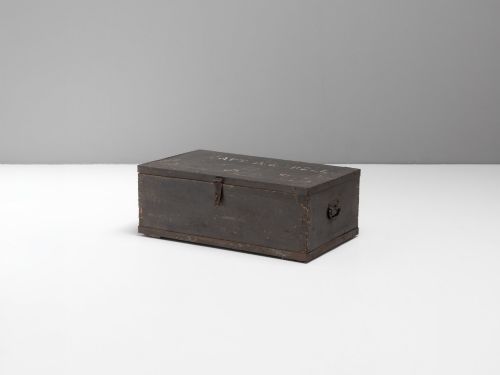
An early nineteenth-century painted pine seaman's chest on this page proudly bears the spirited title Emblem of Liberty.
What varies in quality
The distinction between tiers of quality rests upon the integrity of the original hardware and the selection of timber. Pieces retaining their original brass mountings, flush-fitting handles, and working locks command greater appreciation.
Construction details also define the standard, such as neatly dovetailed joints in the timber and intact fitted interiors with small compartments. Simpler painted pine seaman chests serve a different decorative purpose compared to finely detailed brass-bound camphor wood examples.
The Vintage Naval Trunk Glossary
- Campaign chest
- A modular chest designed to dismantle or travel easily, frequently constructed in sections for military officers on active service.
- Camphor wood
- An aromatic timber native to Asia, utilised for trunks due to its distinct scent and resistance to pests.
- Brass bound
- A descriptive term for wooden chests reinforced with brass strips along the edges and corners to prevent splitting.
- Seaman's chest
- A utilitarian storage box used by sailors to keep personal belongings aboard ship during long voyages.
- Zanzibar chest
- An ornate style of storage chest featuring brass studding and decorative metal plates, associated with East African trade routes.
Vintage Naval Trunk: Frequently Asked Questions
What is a vintage naval trunk used for today?
These trunks serve as functional coffee tables, blanket boxes, or bedroom storage chests in contemporary interiors. Their generous internal capacity accommodates linens, books, and household items while introducing historical character to a room.
Placing one at the foot of a bed or beneath a window provides both a stable surface and hidden storage. The robust construction allows them to endure daily domestic use just as they withstood sea voyages.
How do I care for a camphor wood trunk?
Maintenance requires minimal effort, usually limited to dusting the exterior and occasionally applying a suitable wax to nourish the timber. Keeping the wood away from direct heat sources prevents the panels from drying out or splitting.
Because camphor wood naturally releases an aromatic scent, sealing the interior is unnecessary. Allowing air to circulate periodically helps maintain the condition of the wood and any remaining fabric linings.
Were all naval trunks made for military use?
While many pieces originated as military campaign equipment for officers, others served merchants and civilian sea captains. Teak merchants trunks and maritime painted pine chests fulfilled commercial and civilian travel needs rather than strictly military roles.
Distinguishing between them often depends on the presence of specific brass fittings, recessed handles, or painted inscriptions denoting a ship or owner. Both military and civilian examples share the same utilitarian design principles required for life at sea.
How can I tell the period of a trunk?
Dating relies on examining the materials, construction methods, and hardware styles. Nineteenth-century examples often feature hand-cut dovetails, specific brass corner configurations, and distinctive locks that changed over successive decades.
Victorian pieces frequently display marked attention to brass bound details and fitted internal compartments. Comparing the timber grain and the type of metal fastenings provides clear indicators of the era of manufacture.