






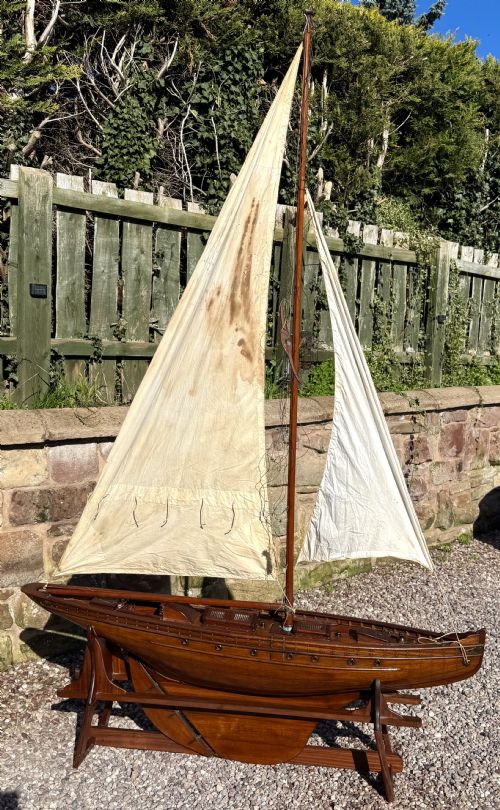


Vintage Nautical Display Boat
A vintage nautical display boat brings the character of nineteenth-century maritime craftsmanship directly into a room.
Vintage Nautical Display Boat
A vintage nautical display boat encompasses decorative objects ranging from large pond yachts on stands to detailed scale models of sailing ships. Collectors searching for a vintage nautical display boat encounter nineteenth-century diorama boxes, shadow box displays, and scratch-built models of schooners and ketches.
The pieces appearing here include substantial wooden hulls, cased clipper models, and carved sycamore luxury yachts mounted on marble bases. Examples span the Victorian and Edwardian eras, alongside maritime folk art and wall-mounted pieces like tiller yokes.
Most entries reflect British and French maritime traditions from the eighteen-hundreds through the early twentieth century. These objects served both as working prototypes and as dedicated decorative items for maritime interiors.
Materials and construction methods
Makers shaped hulls from solid woods including mahogany and sycamore, often applying layers of paint to replicate actual vessel finishes. Rigging utilised fine thread and cordage to recreate the complex tackle of three-mast sailing ships and racing yachts.
Glazed diorama boxes and shadow boxes protected delicate interior models of ships like the Glynllifon or the Hippolyta from dust and damage. Metal components such as brass fittings and iron anchors added realistic weight and operational detail to scale models.
Vintage Nautical Display Boat Retail Price Guide 2026
Typical asking prices for vintage nautical display boat among the pieces listed under this phrase on Sellingantiques today, from the lower quarter to the upper quarter. They describe what is for sale here now, not the wider market.
Object forms range from pond yacht hulls and framed shadow boxes to fully rigged clipper models and rowing oars.
Assessing quality in maritime models
Superior pieces display meticulous attention to maritime architecture, with accurate hull proportions, correct rigging scale, and finely carved wooden details. The presence of original glass cases, intact diorama backgrounds, and period stands elevates the standing of a model.
Workmanship distinguishes mass-produced items from scratch-built pieces created by skilled hands during the Victorian period. Preservation of original painted surfaces, canvas sails, and thread rigging without excessive modern restoration preserves historical integrity.
The Vintage Nautical Display Boat Glossary
- Diorama
- A three-dimensional scene enclosed in a box, often featuring a carved model ship set against a painted maritime backdrop. These shadow box displays frequently hang on walls or sit on mantels.
- Pond yacht
- A large sailing model designed for outdoor lakes and ponds, featuring a wooden hull and cloth sails. Many survive with their original display stands.
- Ketch
- A two-masted sailing vessel where the smaller rear mast sits forward of the steering rudder. Model makers favoured this configuration for balanced proportions.
- Scratch-built
- A model constructed entirely from raw materials without the aid of a commercial kit. These pieces reflect the individual skill of the maker.
Vintage Nautical Display Boat: Frequently Asked Questions
Where should I place a large pond yacht?
Position large pond yachts away from direct sunlight and strong heat sources to prevent wood from warping or paint from cracking. A stable floor stand or a sturdy console table supports the considerable weight of these models safely.
Ensure the display area has adequate clearance from foot traffic, particularly for models approaching several feet in height. Placing them in rooms with stable humidity levels protects both the wooden hull and the metal fittings.
What is the difference between a pond yacht and a scale model?
Pond yachts were built primarily to be sailed on water, possessing functional hulls and removable keels or ballast weights. Their construction prioritises buoyancy and wind catch over microscopic interior detail.
Scale models focus on architectural accuracy, replicating every deck fitting, anchor, and mast configuration of a real ship. These pieces usually reside permanently on display stands or inside protective glass cases rather than visiting the water.
How can I tell a Victorian model from a later piece?
Victorian and Edwardian pieces typically exhibit hand-forged metal hardware, older types of wood joinery, and patinated oil paints. Materials like sycamore and early mahogany reflect nineteenth-century workshop practices.
Twentieth-century pieces from the nineteen-twenties and thirties often incorporate machine-cut components and different adhesive methods. Examining the style of rigging thread and the wear on hull paint helps establish the likely period of creation.