





Vintage Nautical Barometer
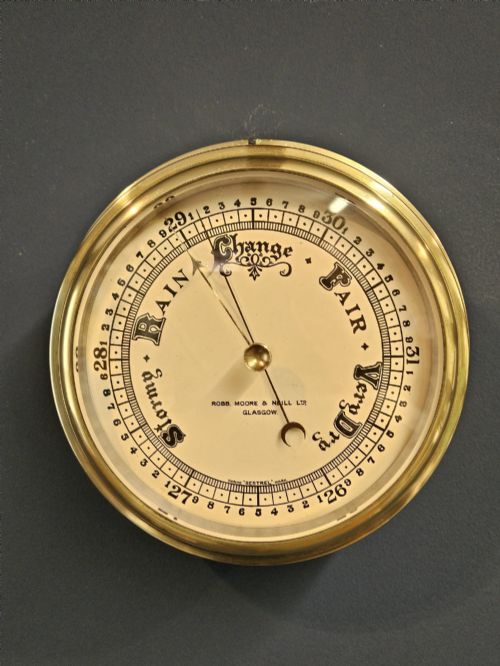
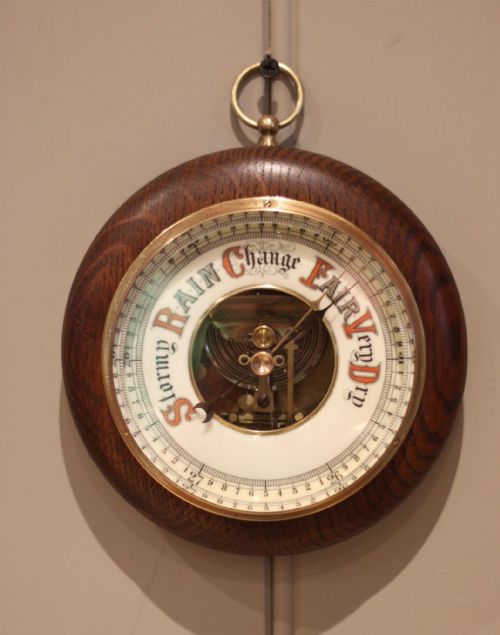
These vintage nautical barometer pieces are robust meteorological instruments housed in maritime timber and brass housings, offering both function and historical charm.
Vintage Nautical Barometer
When you search for a vintage nautical barometer, you encounter instruments designed to read atmospheric pressure for sea travel and domestic use. The selection spans periods from the nineteenth century through the Edwardian era and the 1930s.
The most common forms on this page include bulkhead barometers, marine stick barometers, and banjo clock barometers. These pieces originate from distinct periods such as the Victorian and Edwardian eras, reflecting maritime heritage.
Makers such as Bate of London, Negretti and Zambra, and James Murray appear in the evidence alongside bulkhead clocks and cased barocyclonometers. Each piece demonstrates the practical application of weather tracking in historical maritime contexts.
Materials and construction
The construction of these instruments relies heavily on brass and glass combined with dense timbers such as mahogany, rosewood, walnut, and oak. Bone details occasionally appear on dials or scales, providing clear contrast for readings.
Cabinetmakers and instrument makers utilised turned wood housings and heavy brass bezels to protect delicate internal mechanisms from moisture at sea. Metal components are often polished or chromed, particularly in bulkhead and paired clock configurations.
Vintage Nautical Barometer Retail Price Guide 2026
Typical asking prices for vintage nautical barometer among the pieces listed under this phrase on Sellingantiques today, from the lower quarter to the upper quarter. They describe what is for sale here now, not the wider market.
Some models include typhoon indicators, proving that previous generations worried about the weather with far more dramatic terminology than we do today.
Assessing quality
Quality in these instruments is determined by the precision of the mechanical movement and the crispness of the engraved scale plates. Signed works by established makers demonstrate superior technical execution compared to unmarked commercial pieces.
The choice and joinery of the timber housing also distinguish finer examples, where carved walnut or figured rosewood frames show careful attention to detail. The integration of auxiliary instruments, such as paired clocks or specialised barocyclometer scales, elevates the sophistication of the piece.
Bate of London·Negretti and Zambra·James Murray
The Vintage Nautical Barometer Glossary
- Bulkhead barometer
- A sturdy maritime instrument designed to be mounted directly to the wall of a ship cabin. These units typically feature heavy brass bezels and secure screw fastenings.
- Marine stick barometer
- A sensitive column barometer designed to compensate for the rocking motion of a ship at sea. It uses a restricted tube to prevent surging of the mercury.
- Aneroid barometer
- A meteorological instrument that measures pressure without liquid, using a flexible metal capsule. This design allowed barometers to become more compact and portable.
- Barocyclonometer
- A specialised meteorological instrument used to detect tropical storms and typhoons. It combines barometer readings with wind calculation scales.
- Hypsometer
- An instrument used to calculate altitude by measuring the boiling point of liquid. This scientific device often includes aneroid barometer functions for meteorological work.
Vintage Nautical Barometer: Frequently Asked Questions
How do I mount a bulkhead barometer safely?
Bulkhead barometers require sturdy fixings into wall studs or appropriate masonry due to the heavy brass and timber construction. Ensure the mounting is level to allow internal components to function correctly.
Position the instrument away from direct heat sources and excessive vibrations to maintain mechanical accuracy over time.
What is the difference between an aneroid and a stick barometer?
An aneroid barometer utilises a sealed metal capsule that expands and contracts with atmospheric pressure changes. This dry system allows for compact housing in circular or bulkhead formats.
A marine stick barometer relies on a column of mercury within a wooden trunk, engineered with restricted bores to remain stable on moving vessels.
How should I clean the brass on my barometer?
Brass bezels and housings benefit from gentle dusting with a soft, dry cloth to prevent the accumulation of grime. Avoid harsh chemical polishes that can strip historical patina from the metal.
If the glass requires cleaning, apply a mild glass cleaner to a cloth rather than spraying directly onto the instrument bezel.
Can these historical barometers still forecast weather accurately?
These instruments were manufactured as precision scientific tools and many retain their functional mechanical movements. Regular calibration against known local pressure readings helps maintain their operational reliability.
They serve as both working meteorological instruments and decorative historical objects within a home or office setting.