







Vintage Monks Table
These vintage monks table designs are versatile dual-purpose pieces that combine seating with a convertible surface for small spaces.
Vintage Monks Table
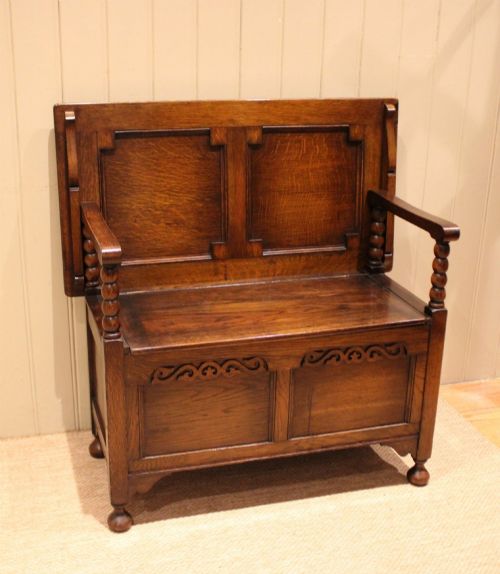
A vintage monks table typically takes the form of a monks bench, settle, or hall seat with a clever fold-over top. When the back lowers, the seat transforms into a table, offering practical utility in hallways and compact rooms.
The selections span the nineteenth century through the early decades of the twentieth century, encompassing Edwardian, Victorian, and later revival periods. Alongside standard benches, the listings include oak armchairs, refectory tables, farmhouse tables, and mantel clocks.
Buyers frequently encounter dark or golden solid oak construction featuring carved details. Regional variations and stylistic revivals, such as Jacobean, Art Nouveau, and Art Deco, appear regularly across the inventory.
How they were made
Cabinet makers relied primarily on solid oak, walnut, pine, and general timber to construct these heavy wooden frames. Joints were joined with traditional techniques to support the dual function of folding tops and lifting seats.
Fabric upholstery sometimes supplements the wooden construction, appearing on seating elements to add comfort. Surface finishes range from dark patinated oak to brighter golden tones achieved through polishing.
Vintage Monks Table Retail Price Guide 2026
Typical asking prices for vintage monks table among the pieces listed under this phrase on Sellingantiques today, from the lower quarter to the upper quarter. They describe what is for sale here now, not the wider market.
Monks benches double as secret repositories, where generations of family members tucked away stray gloves, love letters, and perhaps the occasional smuggled biscuit.
What varies in quality
The calibre of timber selection dictates much of the physical presence, with dense solid oak commanding greater appreciation than softer pine or mixed timbers. Heavier gauge wood ensures structural stability during the repetitive motion of folding the tabletop.
Carving depth and execution separate standard production from superior craftsmanship. Crisp, deeply chiselled ornamentation on panels and armrests demonstrates greater skill than shallow or mechanical stamping.
The mechanical ingenuity of the pivot or hinge mechanism defines practical execution. Smooth movement in the fold-over top reflects careful historical joinery.
The Vintage Monks Table Glossary
- Monks bench
- A convertible piece of furniture featuring a hinged back that folds down over the arms to form a table top. This clever design saved space in historical homes.
- Settle
- A wooden bench with high backboards, solid arms, and a closed base to keep out drafts. They were traditionally placed near hearths in large halls.
- Jacobean Revival
- A nineteenth and early twentieth century style copying seventeenth century English furniture. It is characterised by dark oak, geometric moulding, and heavy turned legs.
- Refectory table
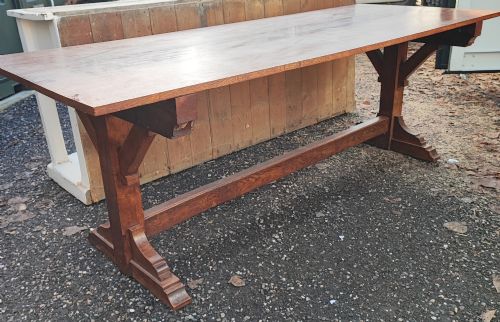
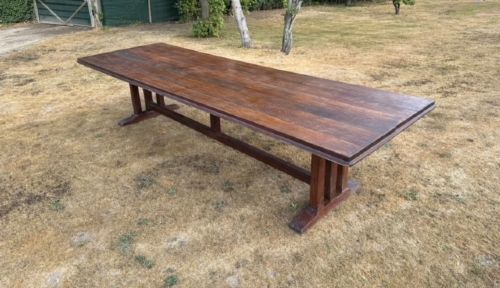
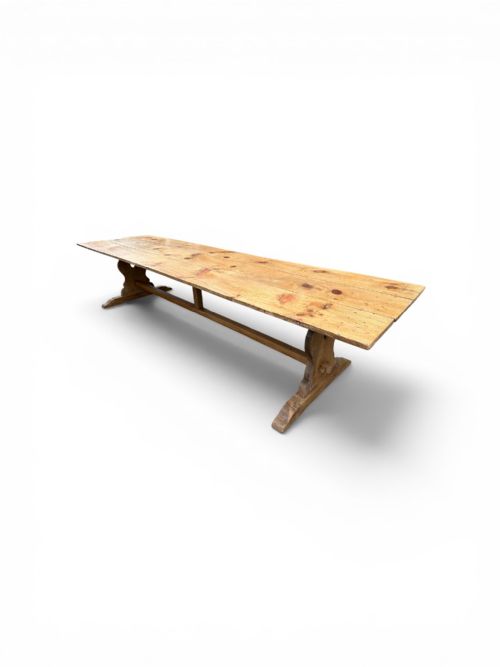
- A long dining table originally used in monastic dining halls. Examples found here are adapted for domestic dining and interior use.
- Tortoiseshell
- The mottled shell of certain sea turtles used historically as an ornamental veneer or inlay material. It appears on decorative items associated with the period.
Vintage Monks Table: Frequently Asked Questions
What is a monks table used for?
These pieces function as both a comfortable seat and a convenient table. Lowering the backrest creates a flat surface for dining or writing.
They were traditionally placed in halls or compact rooms where space efficiency mattered. The lift-up seat often provided concealed storage underneath for household items.
How do I date an oak monks bench?
Dating relies on examining the woodwork styles, hardware, and construction methods. Pieces showing Jacobean Revival carving often date from the late nineteenth or early twentieth century.
Earlier examples from the nineteenth century display hand-cut joinery and deeper patination. Twentieth century variants sometimes incorporate Art Nouveau or Art Deco motifs.
Are these tables made of solid wood?
The inventory largely consists of solid oak, walnut, and pine construction. Cabinet makers utilised heavy timber to ensure the frame could withstand frequent conversion.
Some examples also utilise general timber alongside fabric and metal elements. Solid construction provides the necessary weight for stability when the table top is in use.
Where should I place a monks bench?
These items suit hallways, living rooms, and dining spaces due to their compact footprint. Their dual functionality makes them practical against a wall as a seating area.
They pair well with rustic farmhouse aesthetics or traditional interiors. Ensuring adequate clearance around the piece allows the back to fold down smoothly.