



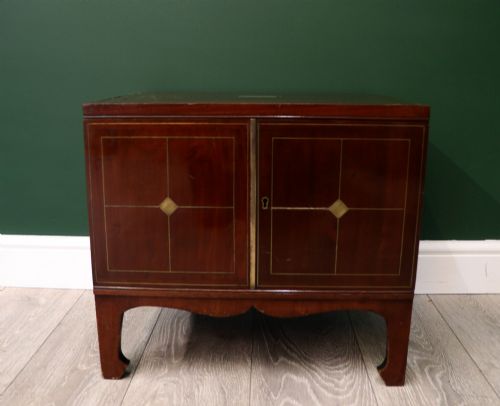
Vintage Military Storage Chest
A vintage military storage chest provides robust utility and portability, built for officers on the move during the nineteenth and early twentieth centuries.
Vintage Military Storage Chest
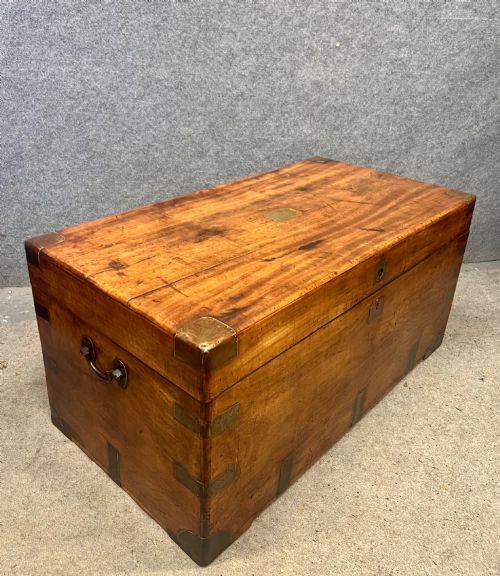
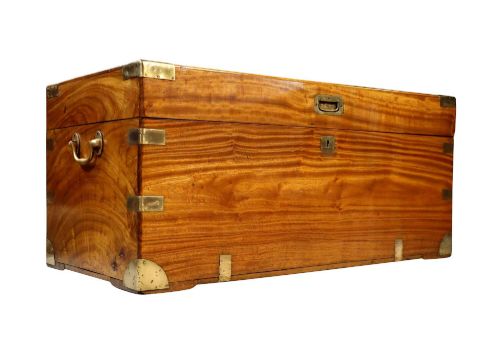
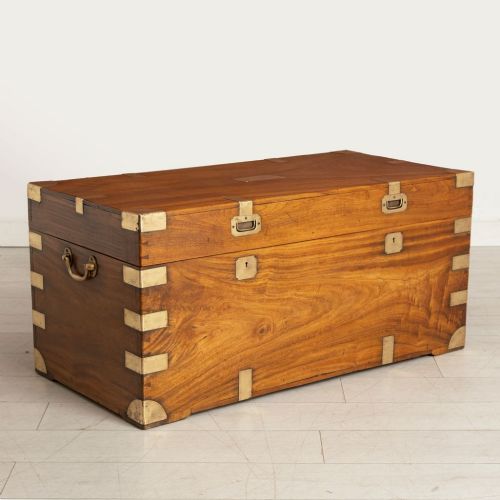
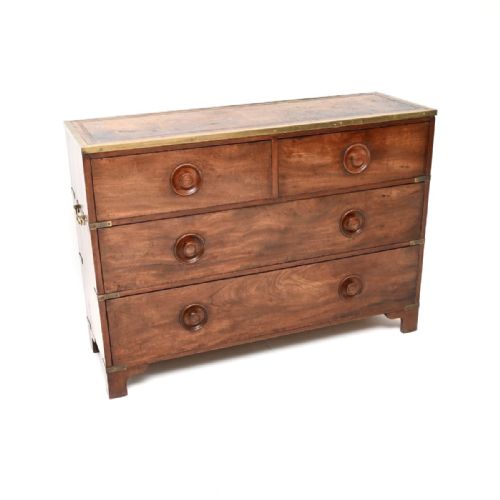
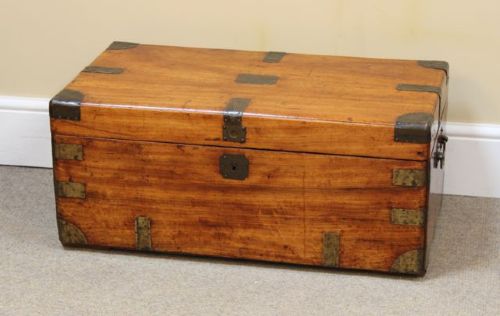
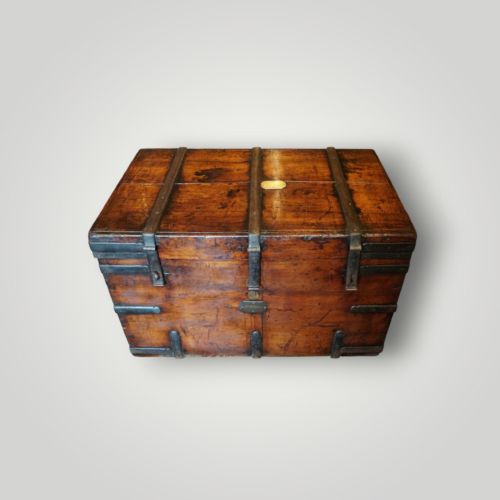
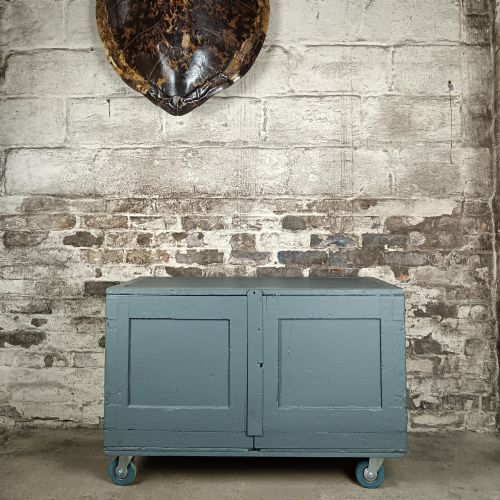
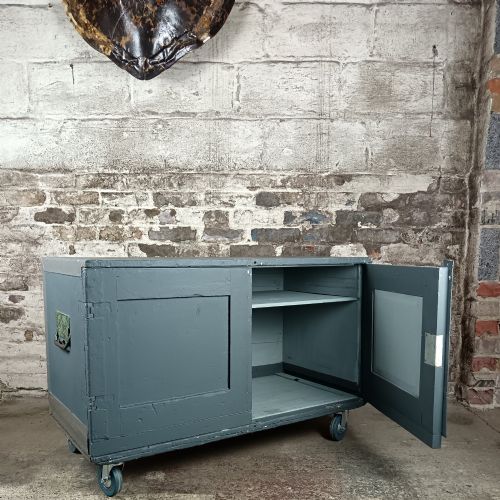
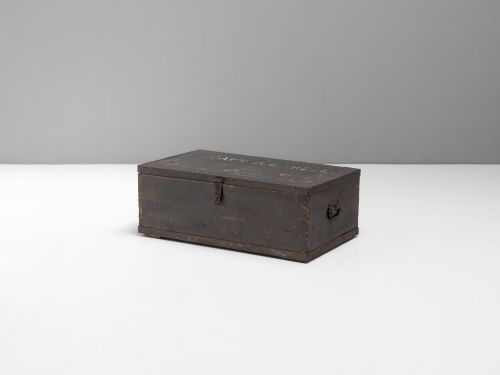
A vintage military storage chest is a heavy-duty portable container built to transport an officer's personal belongings, uniforms, and equipment across long distances. These pieces span periods from the mid-nineteenth century to the early twentieth century, taking forms such as trunks, blanket boxes, two-part chests of drawers, and cabinets.
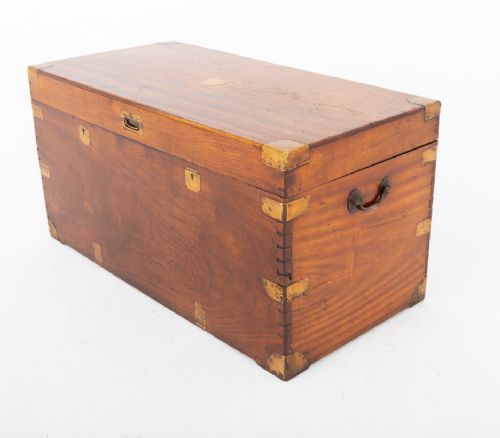
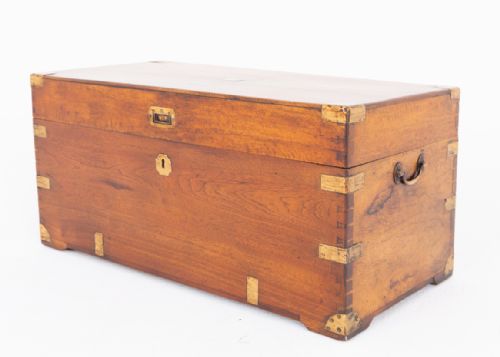
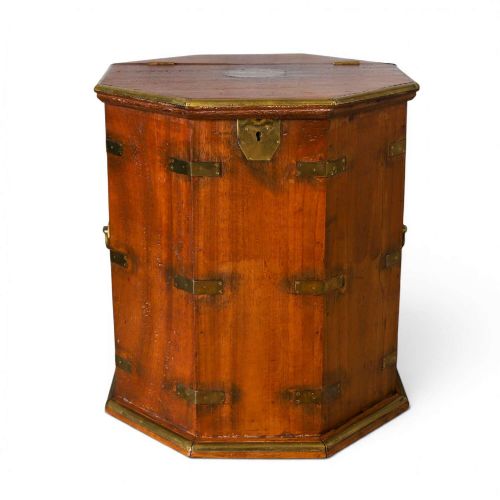
Camphor wood and mahogany dominate the offerings on this page, often reinforced with brass corners, straps, and hardware to withstand rough travel. Buyers will frequently encounter chests designed in modular sections that separate for easier loading onto ships, trains, and carts during campaigns.
Materials and construction
Carpenters utilised dense, resilient timbers such as camphor wood, mahogany, teak, and walnut to resist humidity and heavy impacts during transit. Camphor wood served a dual purpose by naturally repelling insects from stored uniforms.
Metal reinforcement defined the construction, with brass and iron banding protecting vulnerable edges and corners from repeated knocks. Recessed brass hardware ensured that handles and flush key escutcheons did not catch on ropes or tight packing spaces.
Many drawer chests were built in two separate stacking sections to facilitate lifting and transport by pack animals or soldiers. Dovetail joints and internal bracing provided the structural rigidity required for active service.
Some chests retain the original travel labels from military transport across continents.
Quality differences
Quality rests in the integrity of the original hardware, the thickness of the timber, and the precision of the joinery. Superior examples retain matching brass fittings, working locks with original keys, and uncompromised structural frames.
The sophistication of the internal layout distinguishes higher-tier pieces, such as those with fitted secretary drawers, secret compartments, or specialised pigeonholes. Original patination and untouched surface finishes hold greater merit than heavily restored or later replacement components.
Allen of London
The Vintage Military Storage Chest Glossary
- Campaign chest
- A modular chest of drawers designed to split into two or more sections for military transport. These pieces utilised recessed hardware to avoid snagging.
- Camphor wood
- An aromatic hardwood utilised for nineteenth-century trunks because its natural scent kept insects away from stored garments. It provides a distinct grain and warm tone.
- Brass bound
- The application of brass straps, corners, and protective plates to the exterior edges of a chest. This technique added impact resistance during active service.
- Recessed handle
- A pull handle set into a flush cavity in the wood or metal. This design prevented the hardware from catching on ropes or tight spaces.
- Two-part chest
- A cabinet or chest of drawers constructed as two independent stacking units. This division halved the weight and bulk for travelling officers.
Vintage Military Storage Chest: Frequently Asked Questions
What is a campaign chest?
A campaign chest is a portable piece of furniture built for military officers on active service. These items separated into modular sections to facilitate transport across difficult terrain.
Constructed from durable woods and reinforced with brass, they combined domestic convenience with rugged durability for life in the field.
Why use camphor wood?
Camphor wood offered natural resistance to insects and dampness during long sea voyages and tropical postings. Its strong aroma protected military uniforms and woolen garments while stored inside the trunk.
Carpenters valued the timber for its stability and rich grain pattern, making it a primary choice for nineteenth-century military containers.
How do I date a military chest?
Dating relies on examining the timber species, construction methods, and the style of the brass hardware. Pieces from the mid-nineteenth century often display simple brass banding and camphor construction, while later Victorian and Edwardian examples incorporate different woods and lock mechanisms.
Historical inscriptions, regimental stamps, or maker plaques also help narrow down the period of manufacture.
How do I live with one?
These chests function well as coffee tables, blanket boxes, or bedside storage units in modern homes. Their flat tops and sturdy construction provide practical surfaces while offering hidden internal storage.
Placing them away from direct heat sources helps preserve the old timber and original brass hardware against splitting or tarnishing.