






Vintage Middle Eastern Art
These vintage Middle Eastern art pieces capture historic landscapes, architecture and portraits, offering collectors authentic regional craftsmanship and period aesthetics.
Vintage Middle Eastern Art
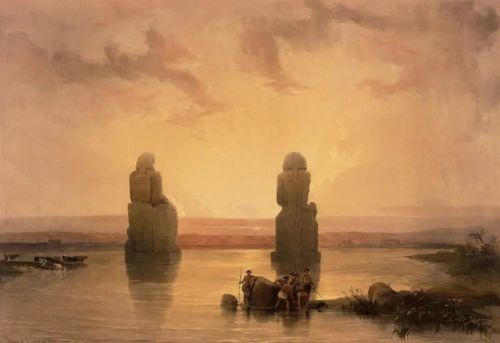
Vintage Middle Eastern art encompasses paintings, watercolours, framed textiles and architectural dioramas originating from the nineteenth and twentieth centuries. These works include landscapes, seascapes, portraits and detailed architectural studies reflecting diverse regional traditions.
Buyers frequently encounter works executed in oil paint, watercolour, gouache and pencil on paper or canvas. Framing often incorporates traditional woodworking techniques such as mother-of-pearl and bone inlay.
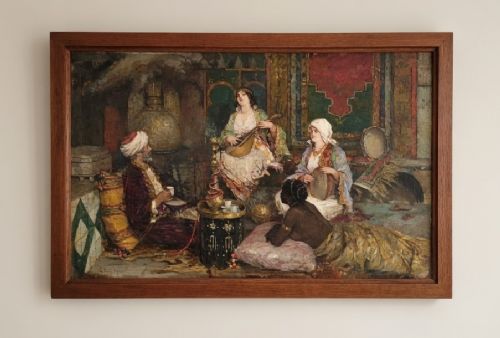
The selection ranges from Victorian Orientalist interpretations to modern Iraqi works and mid-century impressionist village scenes. Each piece records specific cultural aesthetics from periods spanning the late nineteenth century to the mid-twentieth century.
Materials and construction
Artworks utilise traditional pigments including oil paint and watercolour applied to paper, canvas, board and panel supports. Draftsmanship relies on pencil and gouache to delineate architectural and landscape details.
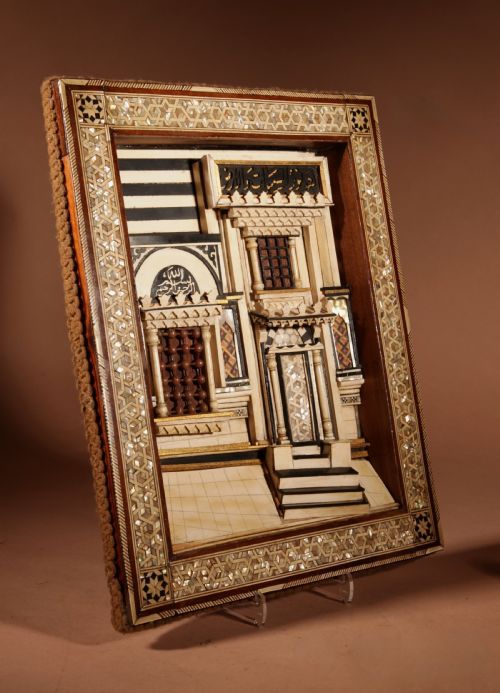
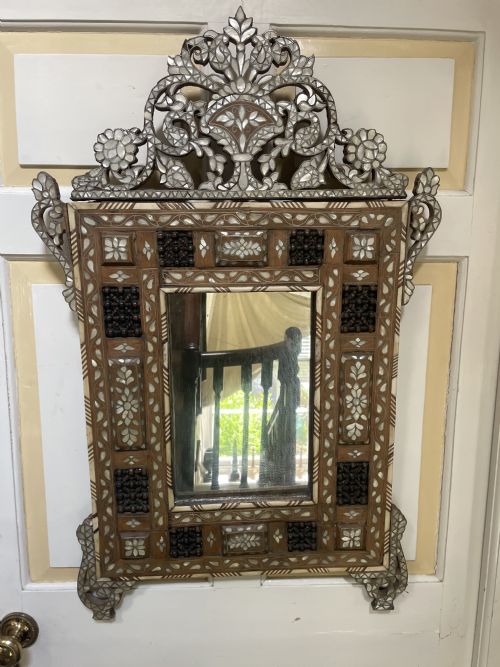
Frames and structural elements employ hardwoods such as walnut and fruitwood, frequently embellished with intricate mother-of-pearl, bone and nacre-shell inlay. Textiles feature gold embroidery applied directly to fabric grounds.
Vintage Middle Eastern Art Retail Price Guide 2026
Typical asking prices for vintage middle eastern art among the pieces listed under this phrase on Sellingantiques today, from the lower quarter to the upper quarter. They describe what is for sale here now, not the wider market.
Listings feature paper, wood, glass, watercolour, oil paint, mother-of-pearl, bone and canvas across the nineteenth and twentieth centuries.
Evaluating quality and execution
Quality rests upon the precision of the draughtsmanship, the handled depth of the pigment and the structural integrity of the support. Finer paintings demonstrate assured brushwork and compositional balance.
Craftsmanship in the accompanying frames varies significantly, distinguishing simple mouldings from intricately inlaid wooden panels featuring detailed nacre-shell and bone work.
Gabriel Puig Roda·V. Zirakian·Flores Cadiz·Faeq Hassan·Otto Pilny·Abdul Kadir Al Rassam
The Vintage Middle Eastern Art Glossary
- Gouache
- An opaque water-based paint that produces dense, flat areas of colour. It is frequently combined with watercolour in works on paper.
- Orientalism
- Artistic styles produced by Western or regional artists depicting themes from Middle Eastern cultures. The approach often focuses on architecture, landscapes and traditional attire.
- Nacre-shell
- The iridescent inner layer of mollusc shells, commonly known as mother-of-pearl. It is utilised for decorative inlay on wooden frames.
- Diorama
- A three-dimensional architectural model or relief representing a building facade or scene. Examples on this page display Moorish revival influences.
Vintage Middle Eastern Art: Frequently Asked Questions
What periods do these artworks represent?
The selections span from the nineteenth century through the mid-twentieth century, encompassing Victorian interpretations, the Edwardian era and mid-century movements.
Dates are determined by stylistic markers, signatures, and material analysis of the supports and frames.
How should these paintings be framed?
Many pieces retain their original ebonised or inlaid wooden frames, which complement the period aesthetic and protect the edges of the canvas or paper.
Preserving original framing maintains historical context, though appropriate conservation mounting ensures long-term stability for works on paper.
What subjects appear in these works?
Common subjects include Arabian landscapes, village scenes, coastal seascapes, architectural facades and individual portraits.
Artists documented both observed regional environments and imaginative Orientalist compositions popular during the nineteenth and twentieth centuries.
How do I identify modern Iraqi art?
Modern Iraqi works are identified through artist signatures, biographical documentation and stylistic developments associated with mid-twentieth-century workshops.
These paintings often employ impressionist or realist techniques distinct from earlier European Orientalist interpretations.