
Vintage Metal Umbrella Holder
A vintage metal umbrella holder keeps hallway floors dry while bringing industrial and domestic character to your entrance.
Vintage Metal Umbrella Holder
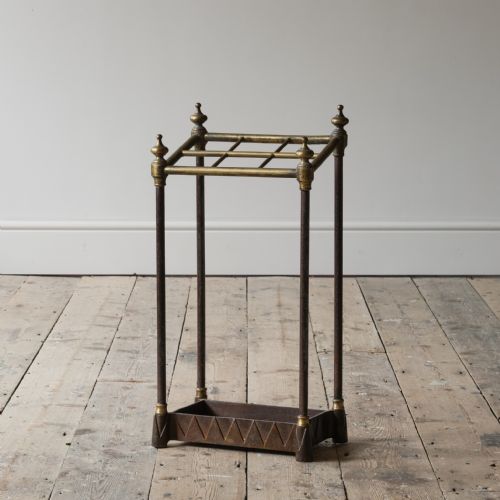
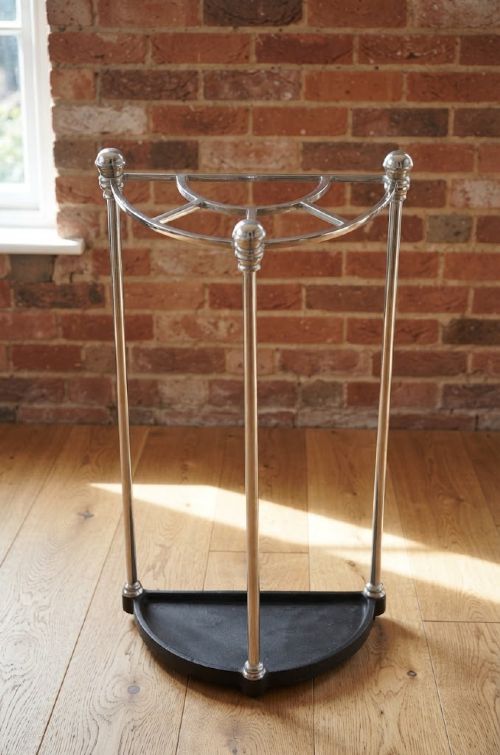
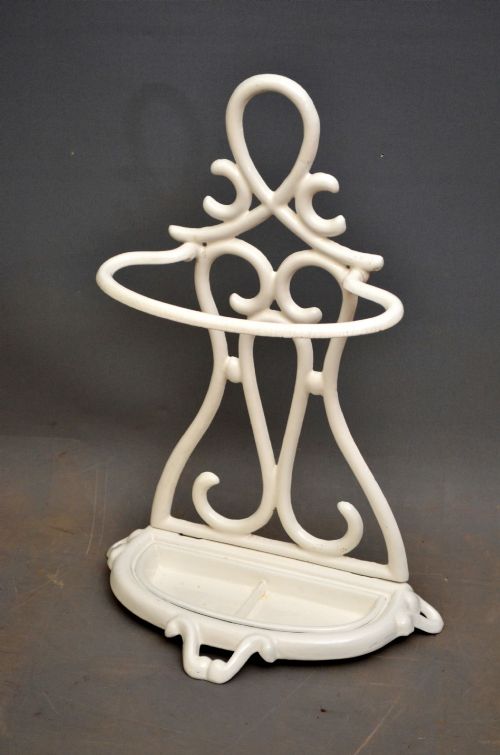
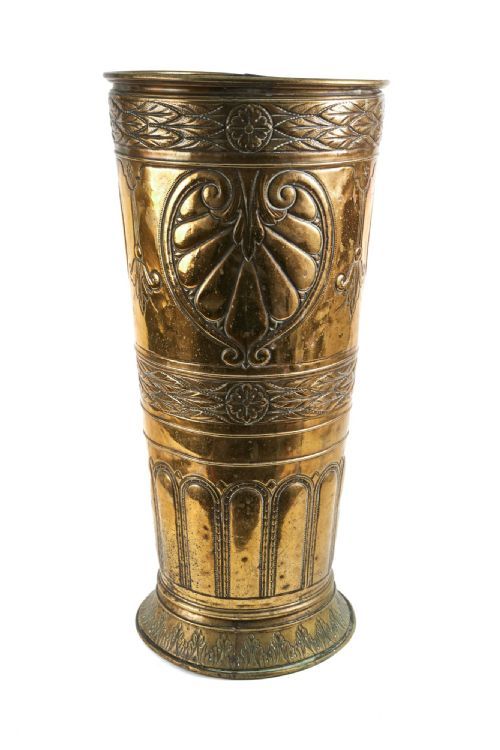
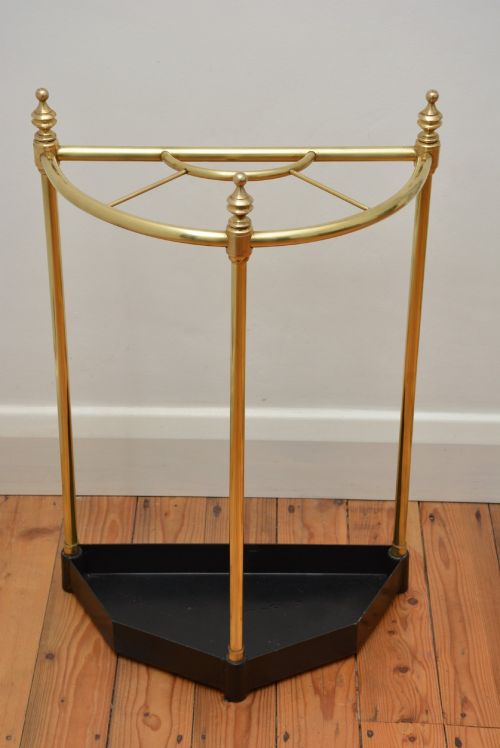
A vintage metal umbrella holder is a utilitarian hallway accessory designed to store wet walking sticks, canes and umbrellas. These pieces range from compact half-moon shapes designed to sit tight against a wall to large, freestanding vessels intended for country house vestibules.
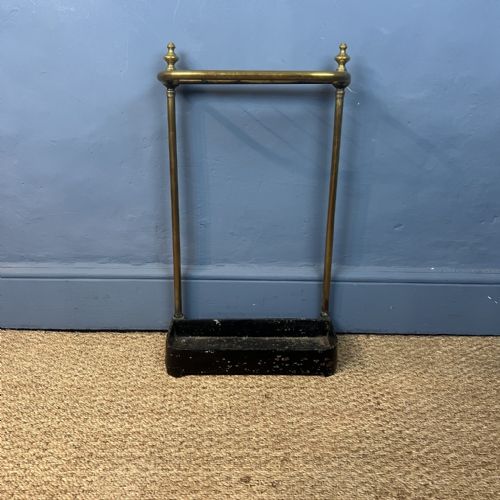
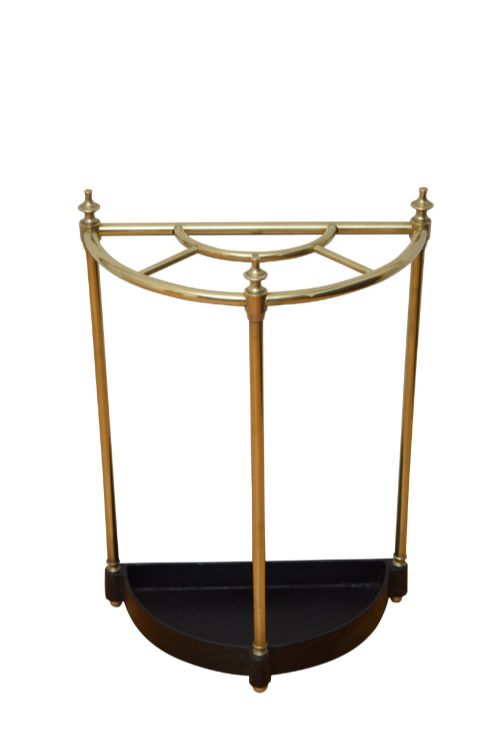
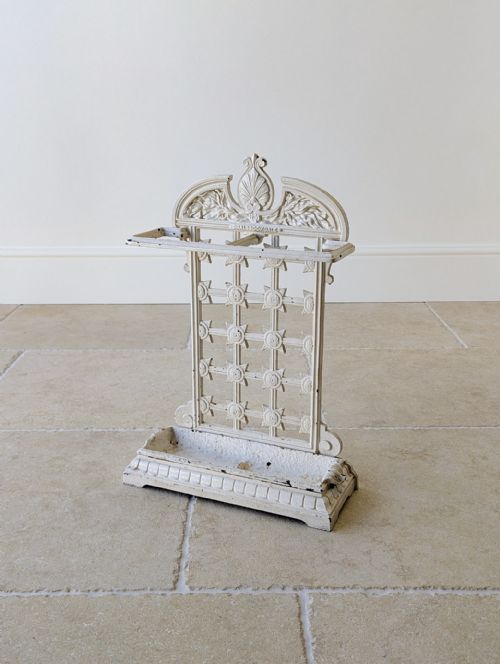
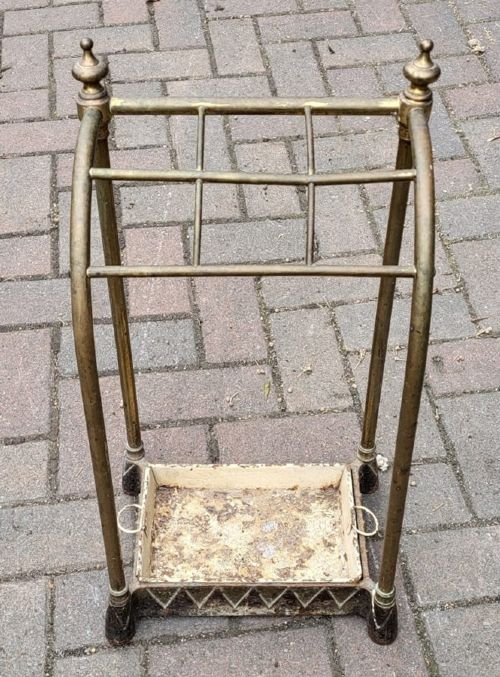
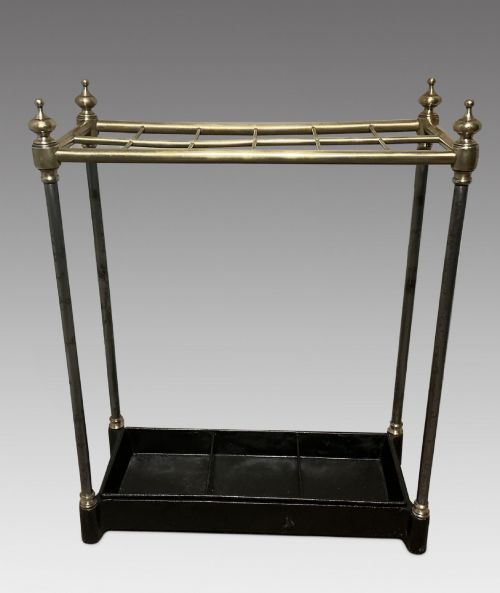
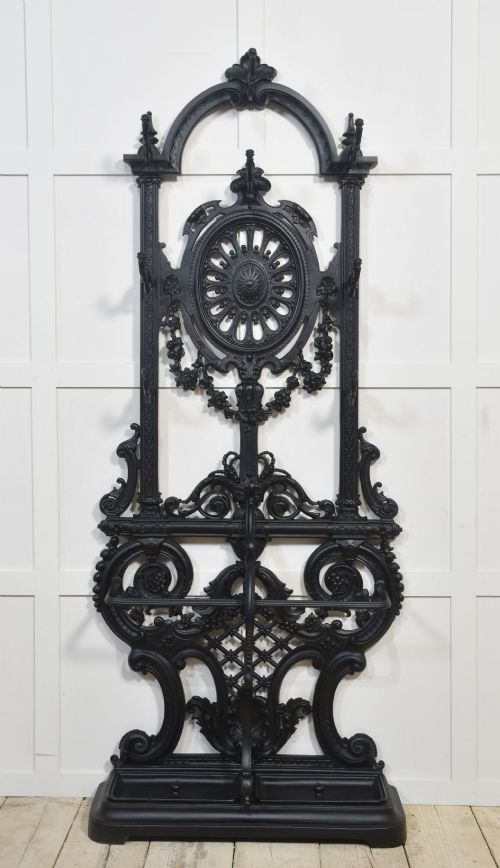
You are most likely to meet cast iron and brass examples on this page, often dating from the Victorian and Edwardian eras. Many incorporate original metal drip trays at the base to catch rainwater from the stored sticks.
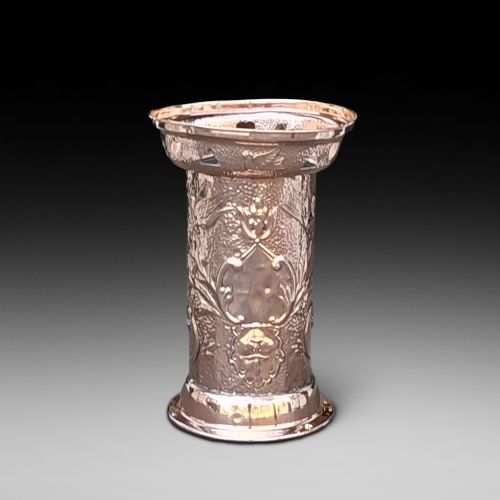
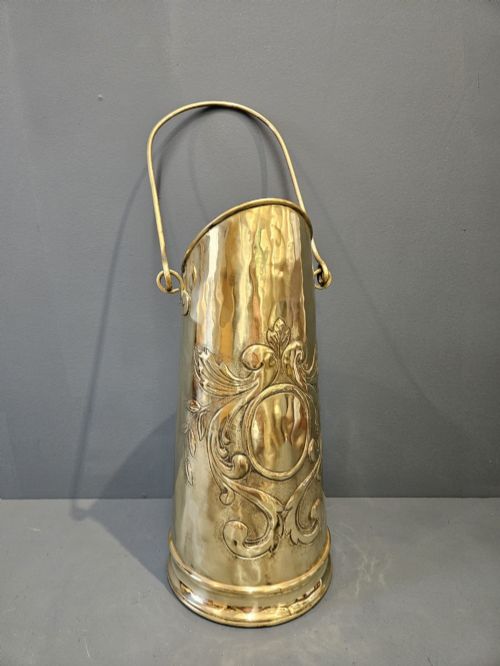
The selection also includes copper and nickel-plated variations representing later design movements such as Art Nouveau and Art Deco. These forms shift from heavy, decorative hallway furniture to cleaner geometric shapes.
How they were made
Foundry work dominates the construction of these pieces, utilising cast iron for heavy structural frames and intricate openwork patterns. Brass and copper sheets were beaten, rolled and joined, often combined with cast iron bases or steel elements to add necessary weight at the bottom.
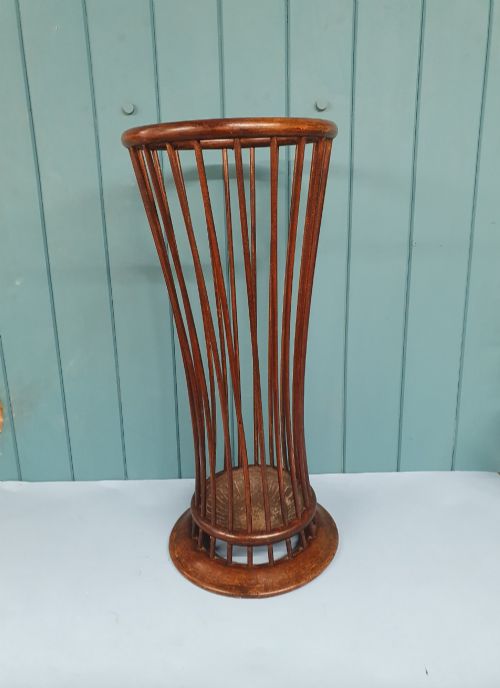
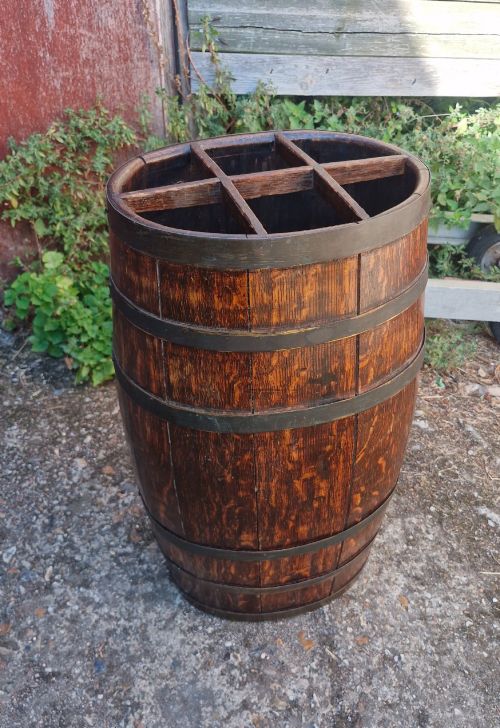
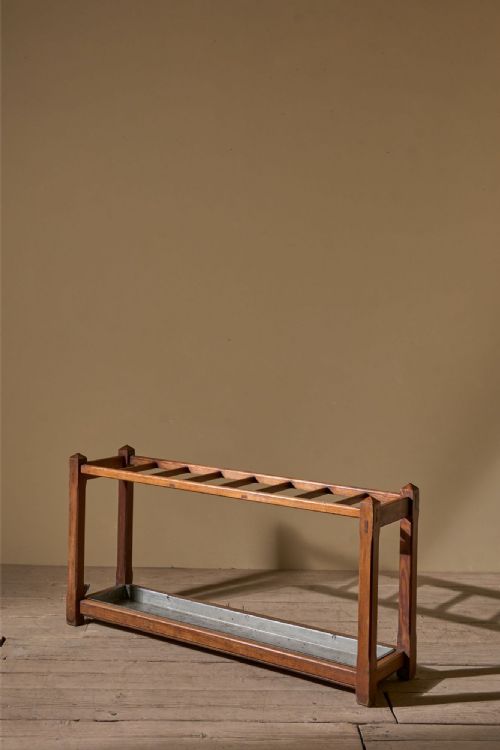
Surface finishes include white enamel coatings, painted surfaces and polished brass or nickel plating. Makers frequently integrated wooden components such as oak barrels or frames bound by metal hoops to hold the wet umbrellas.
Several stands double as milk churns or repurposed barrels, proving Victorians would drop an umbrella into practically any waterproof vessel.
What varies in quality
The integrity of the original metal drip tray largely dictates the completeness and utility of the piece, as these removable liners frequently went missing over decades of use. Weight and thickness of the casting also separate robust foundry pieces from lighter domestic items.
Detailing in the casting or metalwork defines the visual standard, distinguishing mass-produced utilitarian holders from sculptural examples with refined brass loops, pierced decoration and marked foundry attribution.
Coalbrookdale
The Vintage Metal Umbrella Holder Glossary
- Demi-lune
- A half-moon shape allowing the stand to sit flush against a hallway wall. This profile proves particularly useful in narrow entrance passages.
- Drip tray
- A removable metal basin positioned at the floor of the stand to catch water runoff. It protects underlying flooring from moisture damage.
- Cast iron
- An iron-carbon alloy poured into moulds to create rigid, heavy structures. It allows for intricate openwork patterns common in Victorian hall stands.
- Stick stand
- An alternative term for an umbrella holder that also accommodates walking canes and riding crops. These items often feature internal division rings.
Vintage Metal Umbrella Holder: Frequently Asked Questions
Where should I place an umbrella holder?
Position your stand in a porch or entrance hallway close to the front door for convenience when entering the house. Ensure the floor beneath can tolerate occasional moisture despite the presence of a drip tray.
Keep the stand clear of direct heating sources to protect any combined wooden elements like oak barrels from drying out and splitting.
How do I clean a brass umbrella stand?
Dust the metal regularly with a soft, dry cloth to prevent surface grime from accumulating in recessed details. Avoid harsh chemical cleaners that strip the historic patina accumulated over decades.
If polishing is necessary, use a mild brass cleaner applied sparingly with a cloth, taking care not to get abrasive residue on any painted or enamelled surfaces.
Are these stands suitable for modern umbrellas?
Most historic stands accommodate traditional long-handled umbrellas and walking sticks comfortably within their internal divisions or loops. Shorter folding umbrellas may slip through wider decorative scrollwork patterns unless placed carefully.
Check the height and division count in the listing details to ensure the stand suits the specific types of umbrellas you use daily.
How do I date a metal umbrella stand?
Examine the materials, fastening methods and stylistic motifs such as Art Nouveau whiplash lines or Victorian Gothic revival ornament. Cast iron foundry marks or registry numbers stamped on the metal often provide a specific year of production.
Heavy cast iron frames with elaborate foliate designs typically point to nineteenth-century production, while cleaner nickel-plated finishes indicate twentieth-century manufacture.