


Vintage Metal Storage Unit
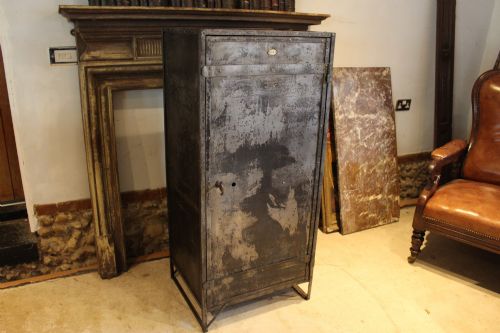
A vintage metal storage unit brings heavy industrial utility into domestic rooms, offering robust industrial storage with genuine age.

Vintage Metal Storage Unit
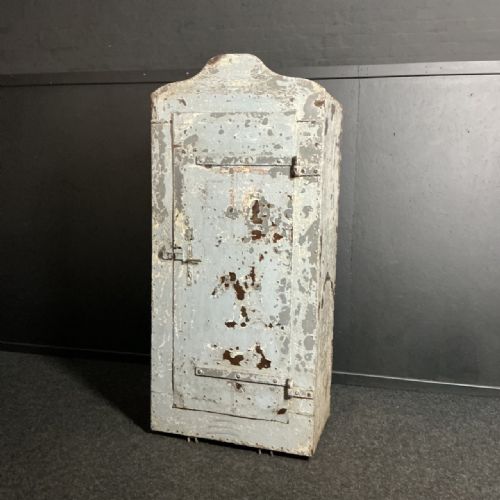
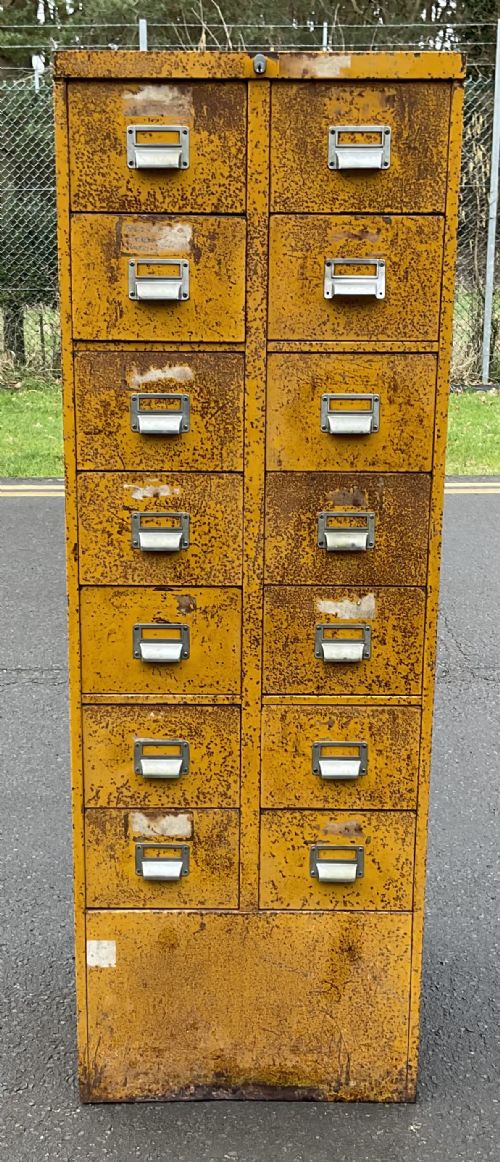
When you search for a vintage metal storage unit, you encounter industrial cabinets, filing drawers, and bakers racks originating from the nineteenth and early twentieth centuries.
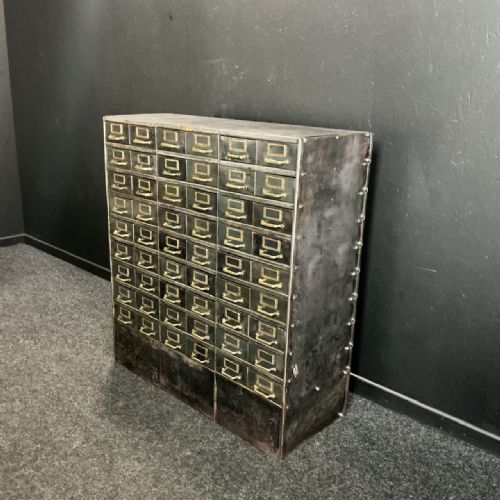
The most common examples on this page are French and English industrial cupboards, bakers racks, and banks of drawers dating across the Victorian era through the 1930s.
These items move easily from utilitarian workshops and bakeries into modern kitchens and living spaces, serving practical storage needs with distinct historical character.
How they were made
Construction relies heavily on sheet steel, wrought iron, and cast iron, often shaped with scroll-work or assembled into rigid frameworks for heavy daily use.
Surfaces frequently show original painted finishes, paint remnants, or distressed bare metal resulting from decades of workshop or kitchen deployment.
An airman sideboard brings aviation riveting straight into the dining room.
What varies in quality
Quality rests in the integrity of the original construction, where heavier gauge sheet metal and substantial ironwork distinguish robust workshop furniture from lighter domestic adaptations.
The character of the surface finish dictates distinction, with untouched original paint remnants and authentic industrial patina holding greater visual weight than later overpainting.
The Vintage Metal Storage Unit Glossary
- Sheet steel
- Flat rolled steel sheets used extensively in industrial cabinets and lockers. Thickness varies according to the original intended commercial application.
- Aviator style
- A twentieth-century aesthetic utilising aluminium panels riveted together. This look references aircraft construction popularised in the 1930s.
- Bank of drawers
- A modular stack of multiple storage drawers housed within a single heavy frame. These pieces originated in offices, engineers' workshops, and retail settings.
Vintage Metal Storage Unit: Frequently Asked Questions
How do I clean a metal storage unit?
Gently dust the surface with a dry cloth to preserve existing paint remnants and oxidation. Avoid harsh chemical cleaners that strip historical finishes.
Apply a microcrystalline wax sparingly if you wish to seal exposed steel and prevent further flaking without altering the genuine patina.
Are these units suitable for kitchens?
Many of these pieces served originally as field kitchen dressers, bakers racks, or storage cupboards in commercial settings. Their durable surfaces handle heavy crockery and dry goods easily.
Ensure adequate ventilation if placing older iron items in damp environments to maintain the stability of the original metal.
How can I tell the age of the metal?
Nineteenth-century examples frequently employ heavier wrought iron and hand-riveted sheet metal construction. Early twentieth-century pieces incorporate pressed steel and specific industrial paint formulations.
Examine the fastenings and assembly methods, as machine-threaded bolts and uniform sheet steel generally point towards the 1920s and 1930s.
Can these cabinets support heavy loads?
Industrial storage units were built to withstand rigorous commercial, engineering, and bakery use. Their structural iron and steel frameworks handle substantial weight with ease.
Distribute heavier items across lower shelves or drawers to maintain overall balance and stability on uneven domestic flooring.