



Vintage Metal Plant Holder
When you handle a vintage metal plant holder, you hold a sturdy vessel designed to bring living greenery indoors with period character.
Vintage Metal Plant Holder
Buyers searching for a vintage metal plant holder encounter a variety of practical vessels designed to house indoor greenery, from jardinières to coal buckets repurposed for foliage. The selection spans the Victorian and Edwardian eras through to the early twentieth century, showing periods like 1880, 1900, and 1910.
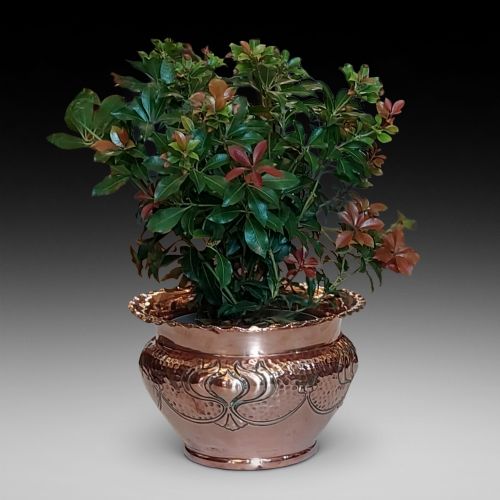
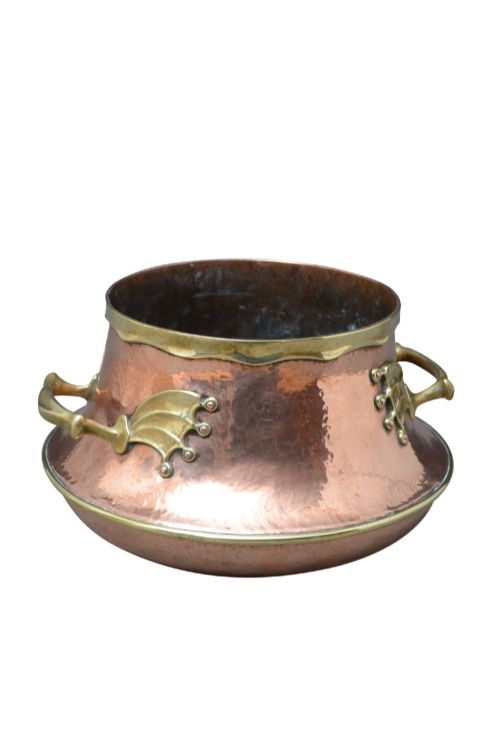
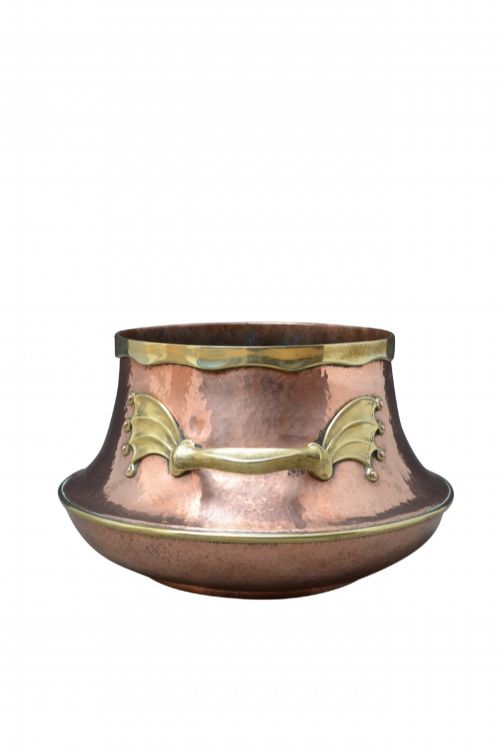
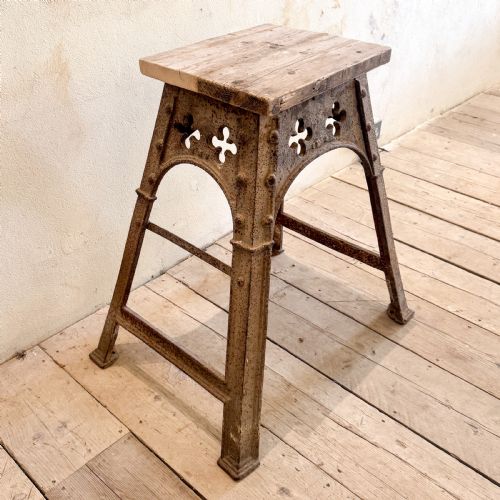
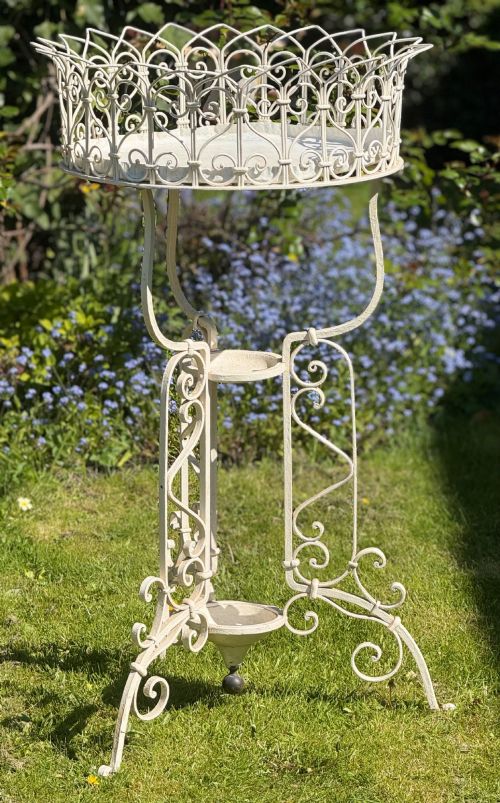
The forms on this page range from heavy brass and copper vessels resting on stands to wirework conservatory plant stands and industrial metal pieces. Most examples favour brass or copper construction, often taking cylindrical or oval shapes suited for domestic display.
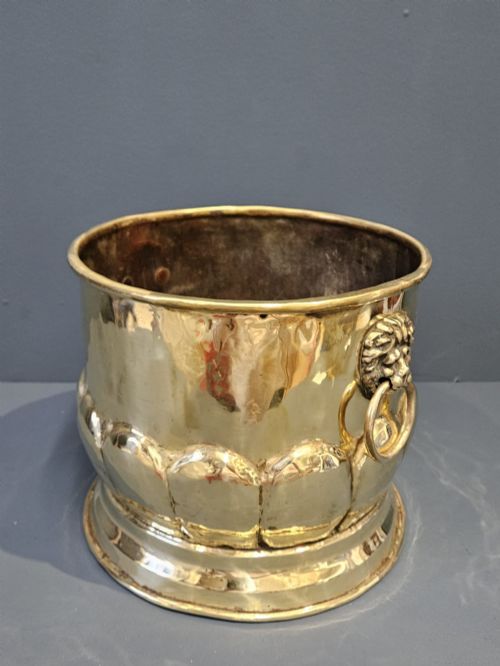
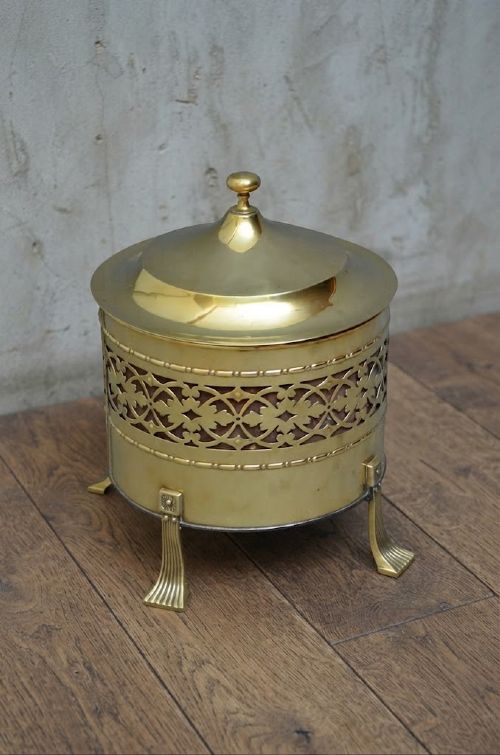
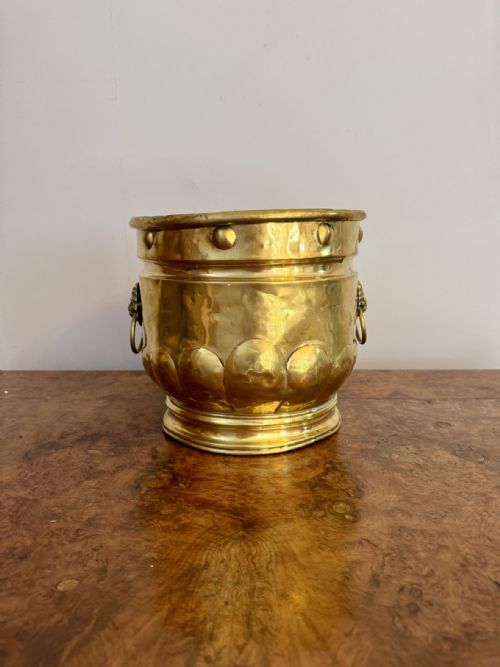
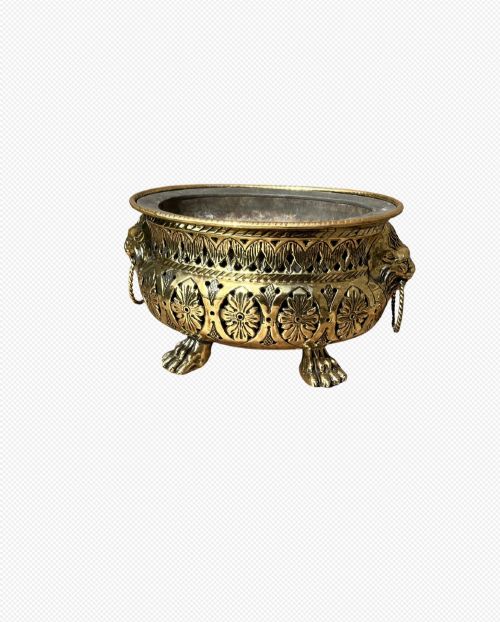
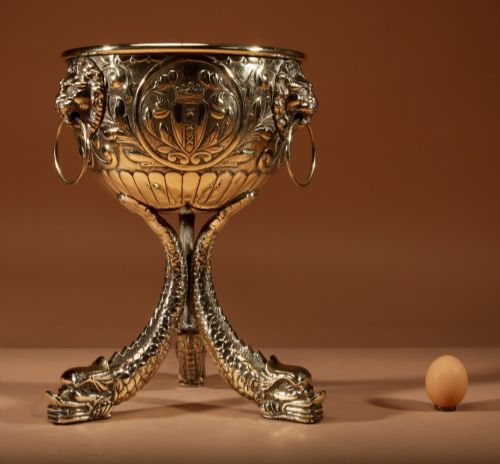
Origin and style vary widely across the selection, featuring Art Nouveau curves, Arts and Crafts handiwork, Gothic details, and Louis XV style mounts on timber frames. Pieces often arrive with specific decorative touches such as lion mask handles, crests, or pierced fretwork designs.
Materials and construction methods
Makers utilised sheet brass, heavy copper, cast iron, and wrought iron to build these durable plant containers. Many vessels employ repoussé or embossed decoration, hammering or pressing patterns directly into the metal surface.
Some examples feature pierced fretwork or intricate wirework structures designed for conservatories, while others incorporate cast elements like lion mask handles and ormolu mounts fitted to timber bodies.
Techniques such as dinanderie work and surface hammering appear on copper and brass bodies, creating textured finishes that catch the light within a room.
Vintage Metal Plant Holder Retail Price Guide 2026
Typical asking prices for vintage metal plant holder among the pieces listed under this phrase on Sellingantiques today, from the lower quarter to the upper quarter. They describe what is for sale here now, not the wider market.
Some heavy copper vessels double nicely as waste bins when not housing ferns.
Distinctions in quality and execution
Quality rests upon the thickness of the metal sheet, the crispness of repoussé detailing, and the integrity of any applied mounts or stands. Superior vessels display deeply embossed motifs and securely joined seams rather than shallow stamping.
The presence of original matching stands, distinct stylistic forms like Art Nouveau curves, and robust handles elevate a piece above standard utility items.
J Sankey and Sons
The Vintage Metal Plant Holder Glossary
- Jardiniere
- An ornamental pot or stand designed to hold a plant or flower arrangement. These vessels sit on tables or floor-standing metal frames.
- Repousse
- A metalworking technique where the artisan hammers the design from the reverse side to form a raised pattern on the front. This creates tactile relief on brass and copper surfaces.
- Dinanderie
- A medieval term revived for ornamental objects made of brass, bronze, or copper. It describes decorative vessels shaped and embossed by hand.
- Cachepot
- An ornamental container used to conceal an ordinary flowerpot. These watertight receptacles protect indoor surfaces from moisture.
- Ormolu
- Gilt bronze mounts applied to furniture or decorative objects. They provide polished metallic accents on wooden bodies.
Vintage Metal Plant Holder: Frequently Asked Questions
What is a jardiniere?
A jardiniere is a decorative container designed to hold potted plants or cut flowers indoors. They function primarily as ornamental vessels for domestic display.
Historically, these pots sat on tables, hearths, or dedicated stands to elevate greenery within nineteenth-century rooms.
How do I care for metal plant holders?
Metal plant holders require gentle cleaning to preserve their original surface finishes and patinas. Avoid abrasive polishes that strip historical ageing.
Use a plastic liner inside the metal vessel to catch water drainage and protect the historic interior from moisture damage.
Where were these plant holders used?
These vessels populated Victorian and Edwardian drawing rooms, hallways, and glasshouses. They brought outdoor foliage into domestic interior spaces.
Wirework versions suited humid conservatories, while heavy brass and copper bowls adorned reception rooms and fireplace hearths.
How do I identify an Edwardian piece?
Edwardian items often display lighter aesthetic movements like Art Nouveau curves or simpler domestic utility forms. They date from the early years of the twentieth century.
Construction techniques in this period frequently combine pressed sheet brass with organic floral motifs characteristic of the era.