


Vintage Metal Log Holders
Vintage metal log holders bring practical warmth and character to a hearth, combining robust utility with period craftsmanship.
Vintage Metal Log Holders
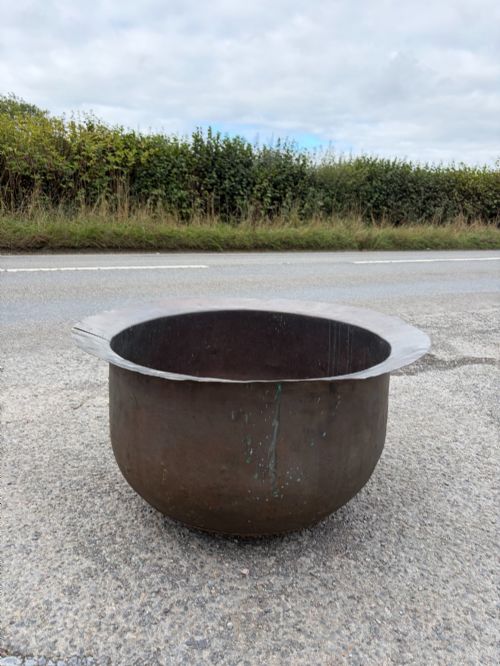
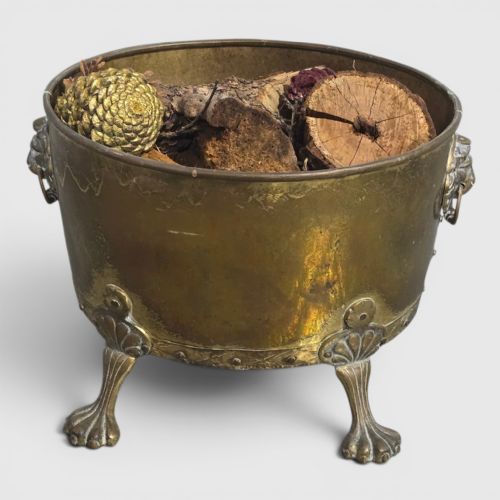
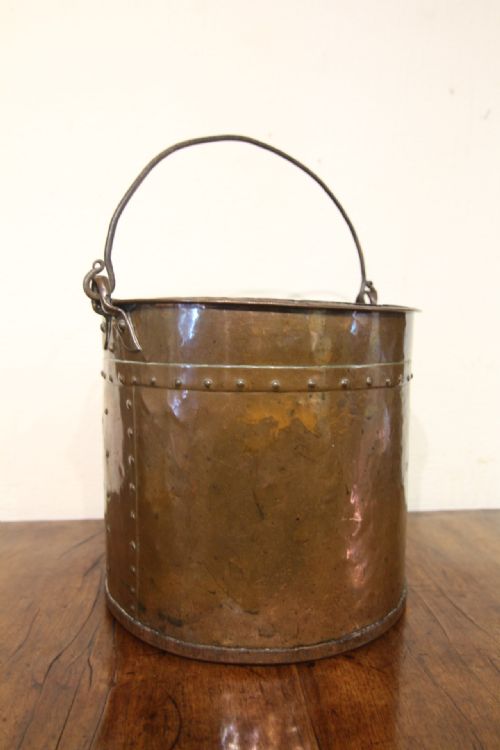
Vintage metal log holders span the nineteenth and early twentieth centuries, encompassing Victorian, Edwardian, and Arts and Crafts examples. When searching for vintage metal log holders, buyers frequently encounter heavy copper and brass vessels originally made as coal buckets, jardiniere planters, or cauldrons. These pieces often double as fireside storage containers for logs through their generous proportions and sturdy construction.
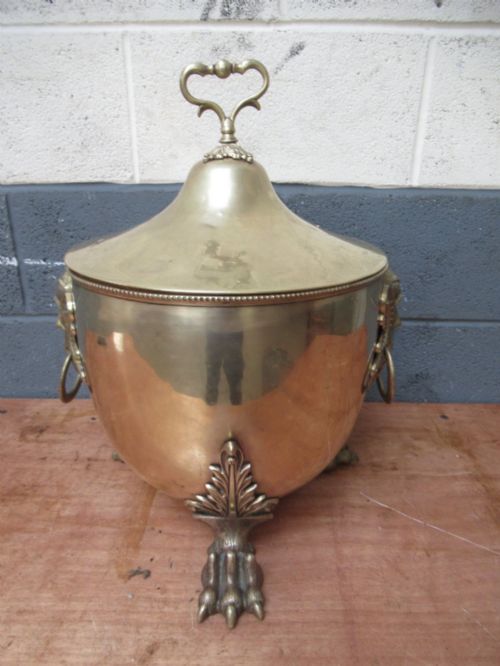
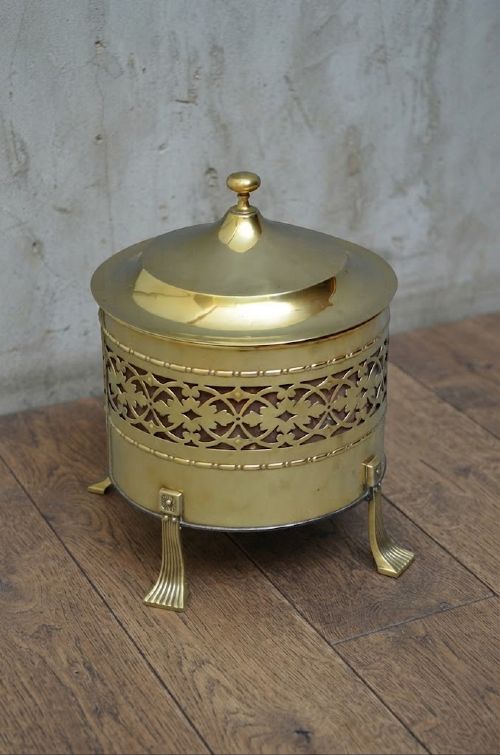
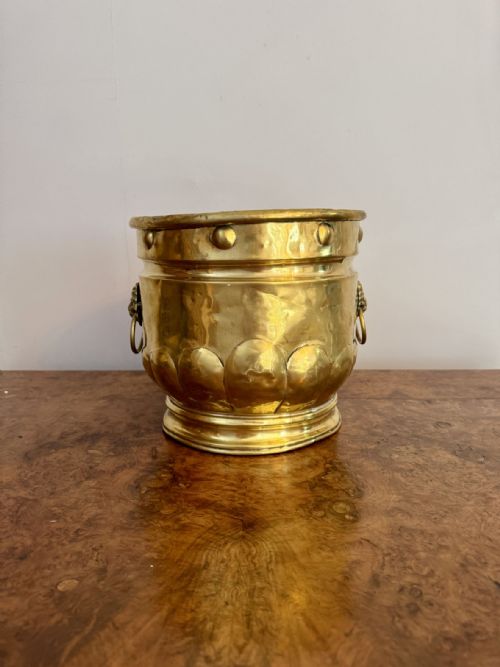
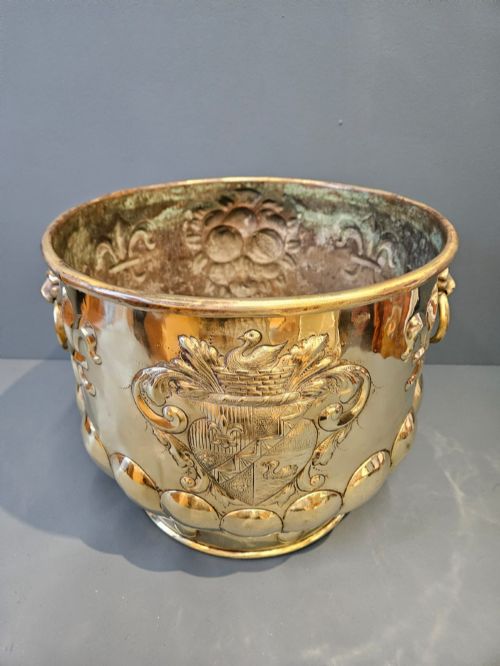
The selection ranges from riveted nineteenth-century copper pots and iron-framed bins to embossed brass jardiniere vessels and helmet-shaped scuttles. Many items originate from domestic firesides or utility spaces, adapting naturally to hold firewood beside an active hearth. The forms vary from simple oval copper bins to elaborate Art Nouveau designs and wrought iron framework.
Materials and construction methods
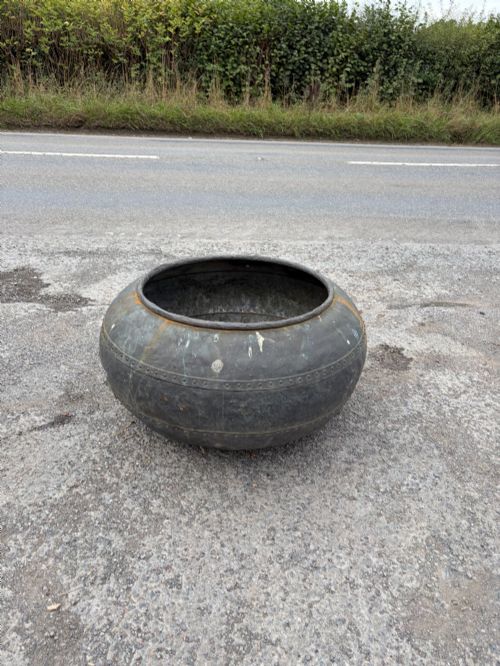
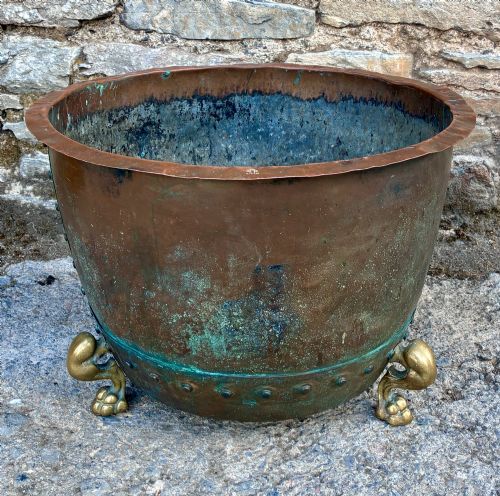
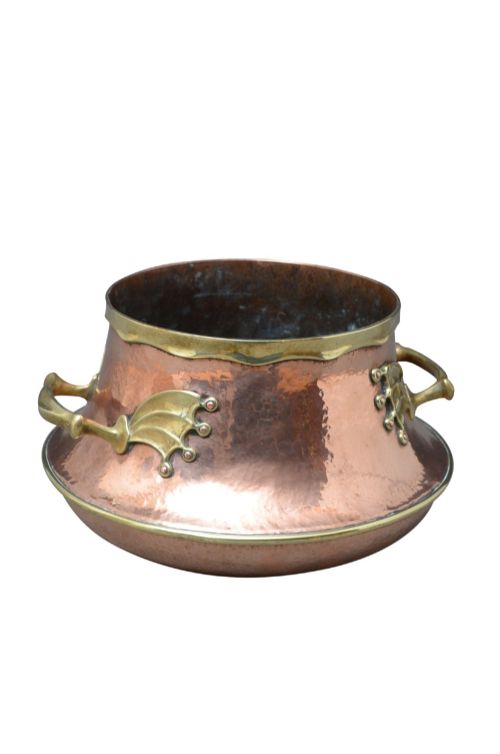
Makers utilised heavy-gauge copper, brass, and wrought iron, forming vessels through hand-hammering, riveting, and sheet metal fabrication. Copper bodies are frequently joined with visible rivets or reinforced with brass bands to withstand heavy loads of fuel. Swing handles made from wrought iron or cast brass provide necessary leverage for carrying heavy timber.
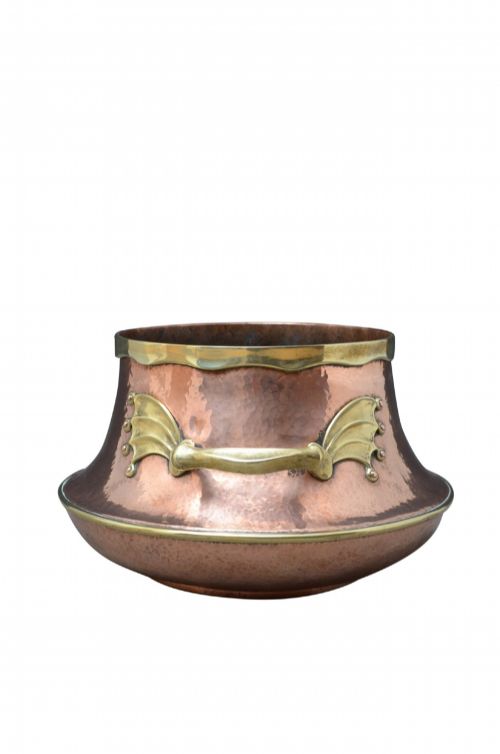
Details such as fretwork, embossed crests, and copper-to-brass contrast define the decorative finish of Victorian and Edwardian items. Iron frames secure large copper bodies, while hand-forged fire dogs and baskets rely on traditional blacksmithing techniques like heating and bending.
A nineteenth-century footbath occasionally finds new life holding heavy oak logs by the hearth.
Distinguishing quality and character
Quality rests in the heaviness of the metal gauge, the crispness of hand-applied embossing, and the integrity of riveted joints. Superior examples display substantial weight in the copper or brass body, ensuring the vessel maintains its structural form under the pressure of logs.
Subtleties like hand-hammered texturing, original wrought iron handles, and integrated brass trim elevate the visual presence of a piece. Pieces showing deliberate design effort, such as Arts and Crafts or Art Nouveau detailing, stand apart from simpler utilitarian items.
The Vintage Metal Log Holders Glossary
- Jardiniere
- An ornamental pot or stand for holding plants, frequently repurposed as a fireside log bin due to its robust metal construction. These vessels often feature decorative brass or copper bodies.
- Helmet scuttle
- A traditional coal container featuring a flared, asymmetrical mouth resembling a helmet, designed for pouring fuel cleanly onto a fire. They typically include a swing handle and a smaller steadying handle at the rear.
- Riveted
- Joined together using metal bolts hammered flat at the ends to secure heavy sheets of copper or iron. This technique ensures durable construction on large nineteenth-century vessels.
- Fire dogs
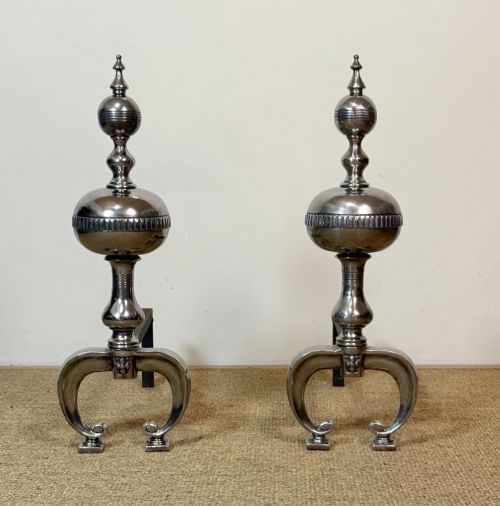
- Andirons used to support logs in an open fireplace, elevating the wood to allow air circulation underneath. Pairs are often forged from iron or brass to match hearth furnishings.
Vintage Metal Log Holders: Frequently Asked Questions
How do I clean old copper log bins?
Clean copper surfaces gently with warm soapy water and a soft cloth to preserve the aged patina. Avoid harsh chemical abrasives that strip away the historical character.
Dry the metal thoroughly after washing to prevent water spots and tarnishing. Let natural handling maintain the surface depth over time.
Were these containers originally meant for logs?
Many metal vessels were originally manufactured as coal buckets, cauldrons, or jardiniere planters rather than specifically for wood. Their generous proportions and durable metal construction make them well-suited for modern firewood storage.
Nineteenth-century households adapted various utility containers for hearthside fuel management. Today's buyers utilise these multi-purpose vessels interchangeably for logs and kindling.
How do I date a brass log bin?
Examine the construction methods, such as hand-riveted seams, cast brass feet, and handle attachments. Machine-rolled edges and specific decorative motifs like Art Nouveau styling offer clues to the manufacturing decade.
Victorian pieces often display heavier gauges of metal and embossed detailing. Edwardian examples tend toward lighter fretwork designs and refined brass rims.
Can I use these outdoors?
Copper and brass withstand sheltered outdoor conditions well, developing a gradual atmospheric patina. Direct exposure to persistent dampness may accelerate corrosion on iron components and handles.
Protecting iron frames from standing water preserves the structural integrity of the piece. Most buyers prefer keeping these items indoors beside a hearth.