


Vintage Metal Garden Pots
These vintage metal garden pots bring heavy cast iron and riveted copper into the open air, holding plants and water with a weathered strength.

Vintage Metal Garden Pots
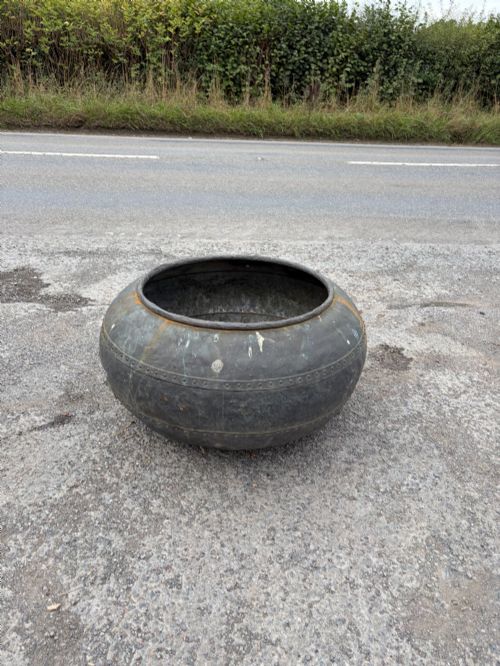
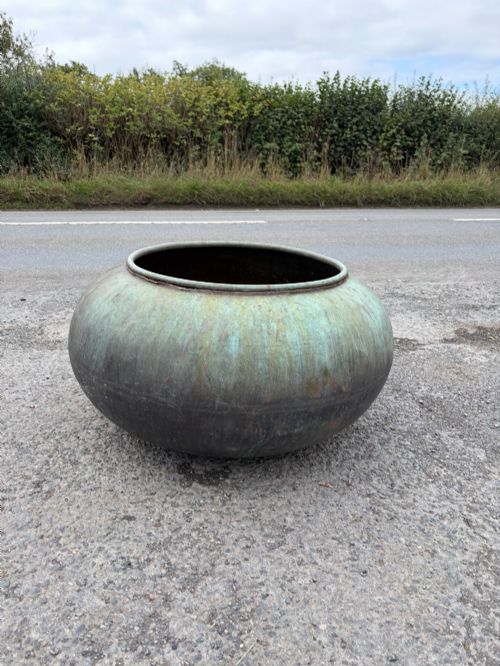
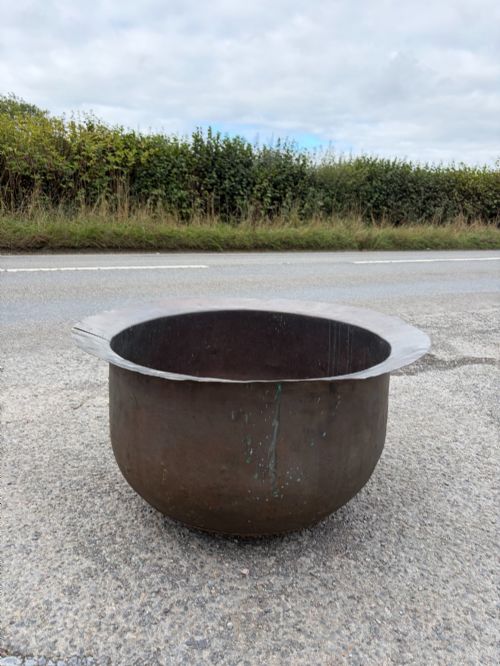
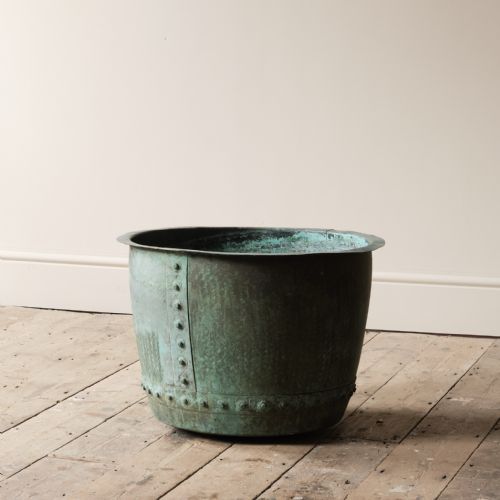
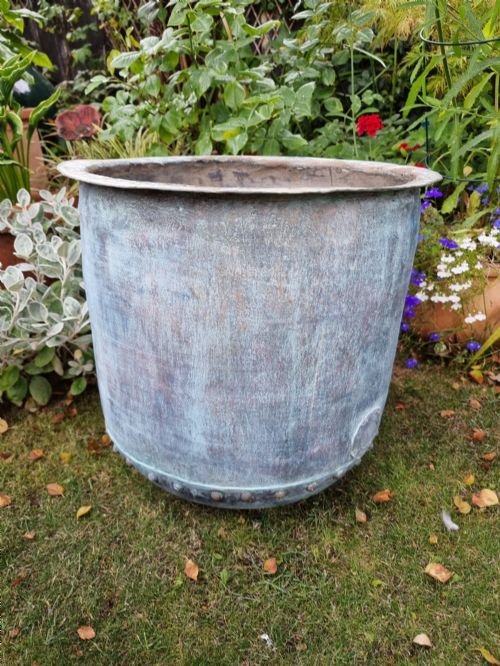
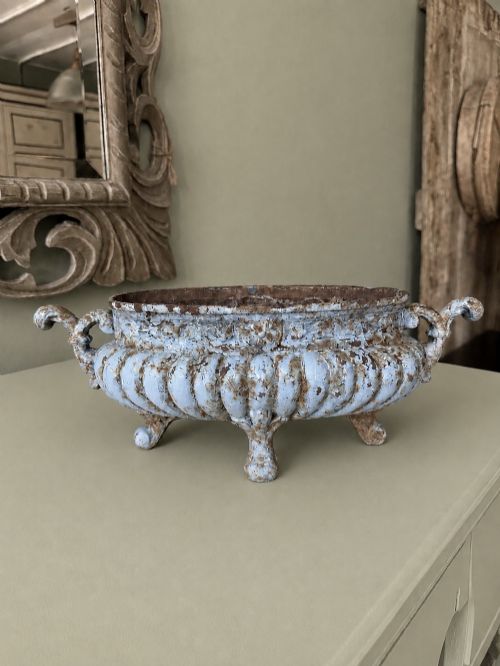
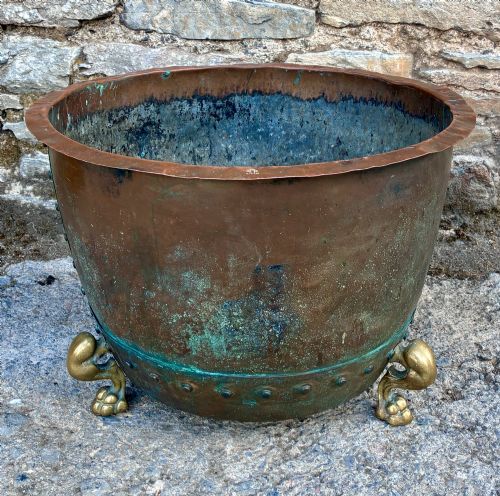
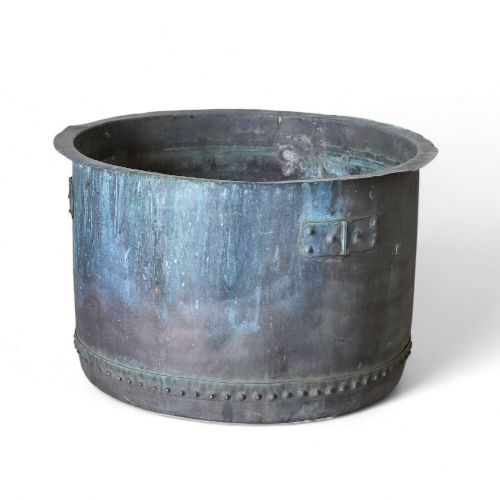
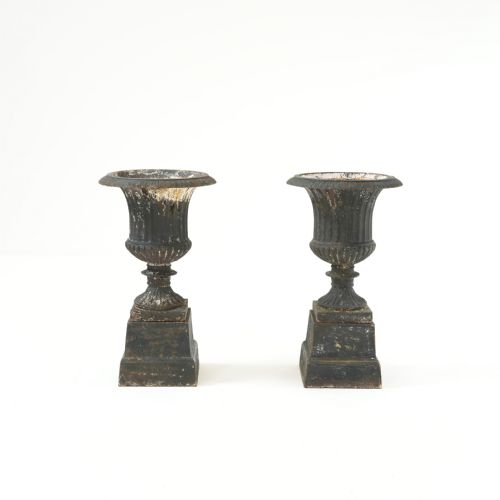
Vintage metal garden pots include heavy cast iron campana urns, classical jardinieres, and large riveted copper vessels used to hold plants and shrubs. These pieces arrive from nineteenth-century English and French gardens, country houses, and potting sheds.
Buyers seeking vintage metal garden pots frequently encounter robust cast iron urns alongside large copper cauldrons and log bins adapted for outdoor planting. Form follows function through Victorian utility and rustic farmhouse traditions.
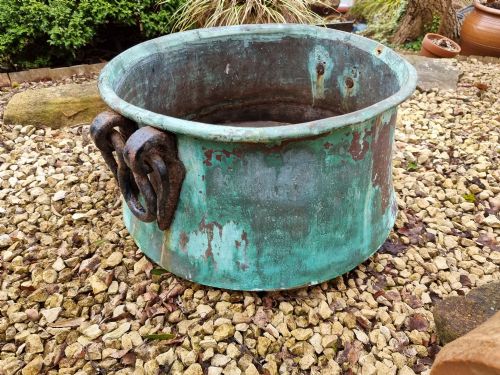
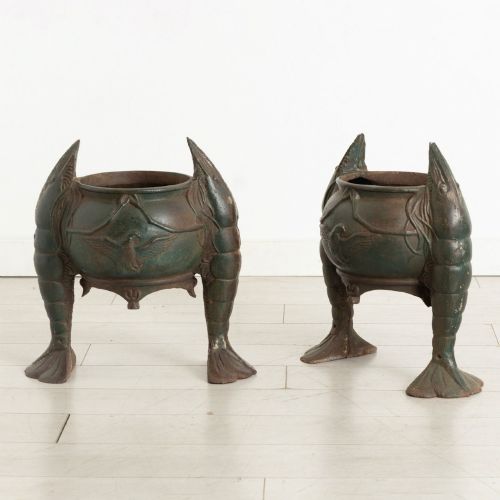
The selection ranges from small cast iron planters shaped like shrimp to extra-large copper planters and galvanised metal tubs. Many examples feature original distressed paint finishes or natural verdigris accumulated over decades.
How they were made
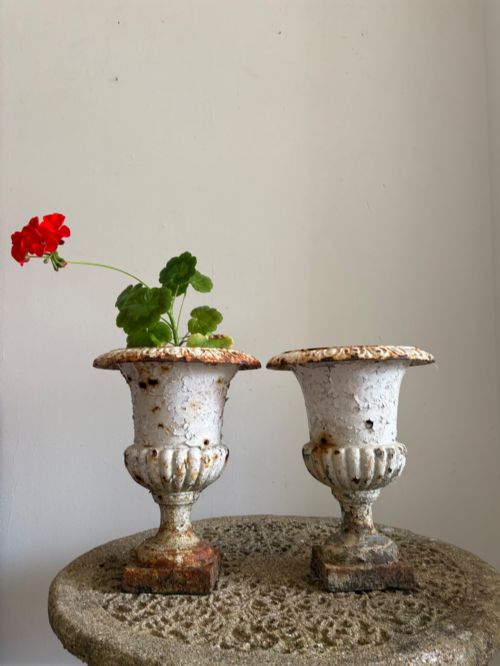
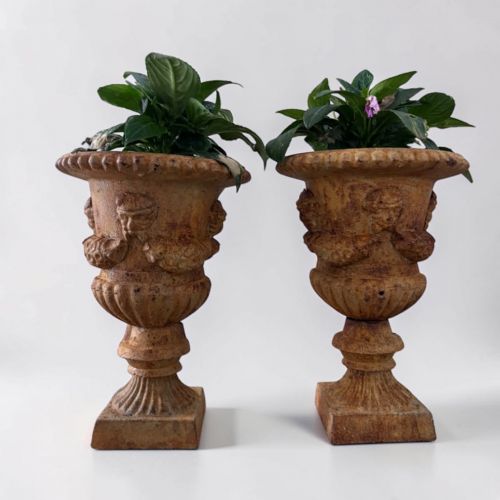
Foundry workers shaped cast iron into classical campana urns and fluted garden planters using traditional moulds during the nineteenth century. Artisans also constructed large copper vessels by hand-riveting sheet metal together around sturdy rims.
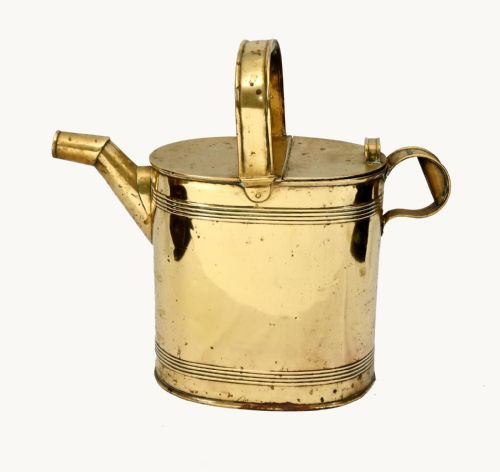
Makers utilised brass, wrought iron, and zinc to form watering cans, strapwork planters, and log bins with enduring structural integrity. Protective paint layers and natural oxidation processes subsequently created deep patinas on the metal surfaces.
Listings feature nineteenth-century copper pots alongside Victorian cast iron urns and galvanised metal log baskets from nineteen twenty.
What varies in quality
Quality rests in the heaviness of the casting, the crispness of classical details on campana urns, and the integrity of hand-riveted seams on copper pots. Pieces retaining original paintwork or deep natural verdigris show superior ageing.
Proportion and scale separate standard utility vessels from finely modeled garden ornaments such as lead planters on claw feet or matched pairs of cast iron urns.
Andrew Handyside
The Vintage Metal Garden Pots Glossary
- Campana Urn
- A bell-shaped garden vessel on a pedestal base. These cast iron forms derive from classical antiquity.
- Verdigris
- A green patina formed naturally on copper, brass, or bronze through atmospheric weathering. This layer protects the underlying metal.
- Jardiniere
- An ornamental pot or stand designed to hold flowers or plants. They appear in cast iron and ceramic.
- Riveted Copper
- Metal sheets joined securely by metal pins hammered into place. This technique gave nineteenth-century boilers and cauldrons their strength.
- Strapwork
- Ornamental work composed of flat, narrow strips of metal. Wrought iron versions provide structural support and linear decoration.
Vintage Metal Garden Pots: Frequently Asked Questions
How do I protect cast iron urns in winter?
Cast iron garden pots withstand outdoor conditions well, but trapped freezing water can crack the metal body. Elevating vessels on feet prevents moisture retention during cold months.
Keeping soil levels slightly below the rim and ensuring drainage holes remain clear reduces frost damage risks significantly.
Can copper garden pots stay outside all year?
Riveted copper pots handle outdoor exposure by developing a protective verdigris finish over time. Their sturdy metal construction endures seasonal weather shifts without losing structural form.
Positioning them on stable gravel or paving keeps the base dry and preserves the hand-riveted seams.
What is the difference between an urn and a planter?
Urns typically feature a footed pedestal base and a flared, bell-shaped bowl designed for classical display. Planters encompass a wider variety of straight-sided or tub-like vessels used for direct planting.
Both forms served utilitarian and decorative roles in Victorian and Edwardian gardens.
How do I clean verdigris off copper pots?
The green verdigris layer acts as a natural barrier protecting the underlying copper from further corrosion. Most collectors prefer to preserve this aged patina rather than scrub it away.
Gentle washing with warm water removes surface dirt without disturbing the historic finish.