

Metal Outdoor Planters
Metal outdoor planters bring enduring character to a garden through robust cast iron urns, copper display pots, and wrought iron plant stands.

Metal Outdoor Planters
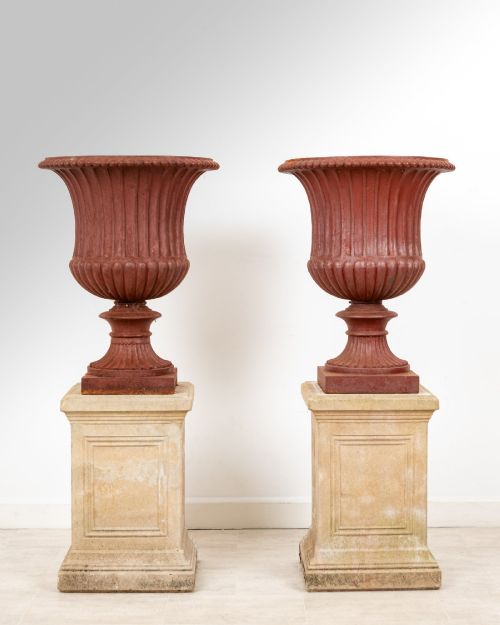
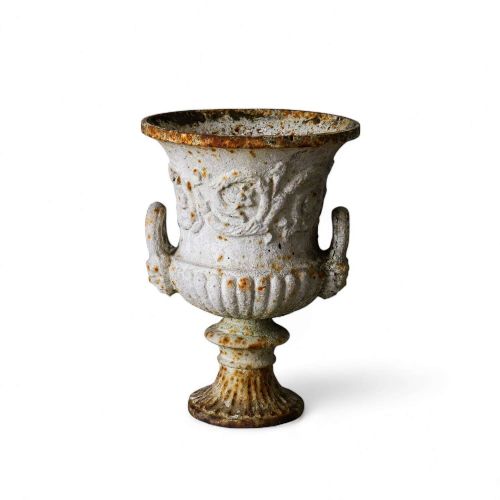
Metal outdoor planters encompass a range of garden vessels designed to hold greenery and flowers in domestic grounds, courtyards, and terraces. Buyers searching for metal outdoor planters encounter substantial Victorian cast iron campana urns, French display pots, and tiered plant stands.
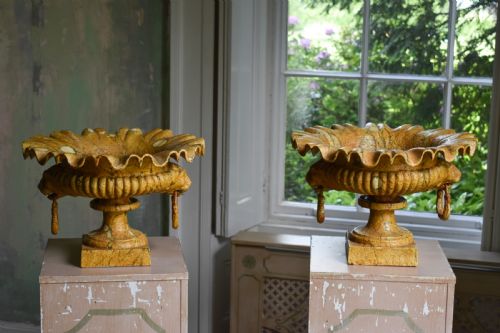
Vessels appear individually or in matched pairs, frequently accompanied by pedestals or stone plinths to elevate the planting. Forms range from low garden bowls and wirework racks to monumental bronze temple vases.
Materials and Techniques
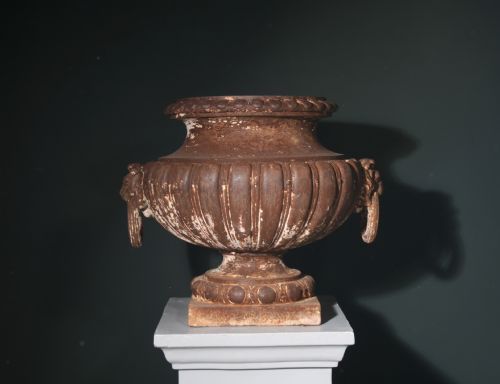
Makers utilised durable metals including cast iron, wrought iron, copper, lead, bronze, and zinc to withstand exposure to the elements. Cast iron pieces were produced using foundry moulds, yielding crisp classical motifs such as acanthus leaves and fluted bowls.
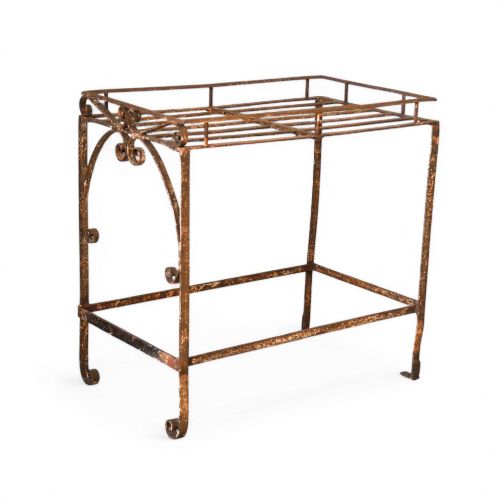
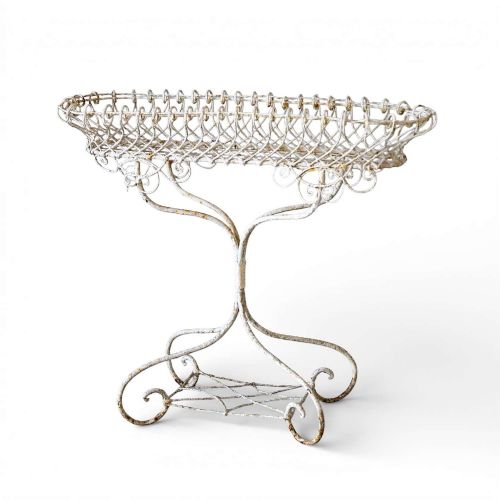
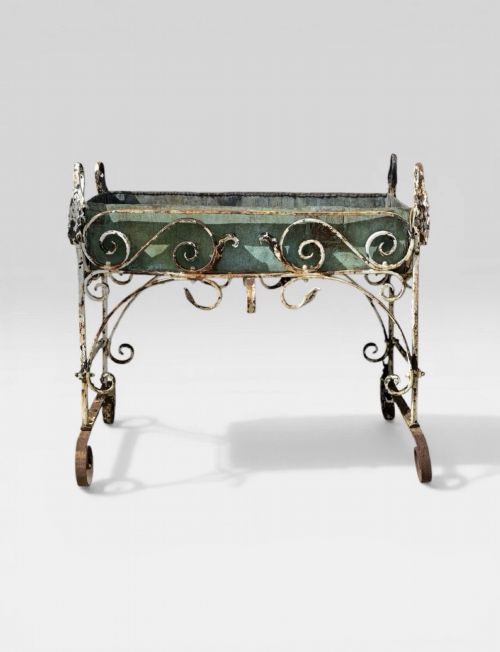
Wrought iron plant stands and baskets relied on hand-forged scrollwork, lattice construction, and wirework assembly. Copper and lead pots were formed through sheet manipulation and soldering, while bronze vessels involved intricate casting techniques.
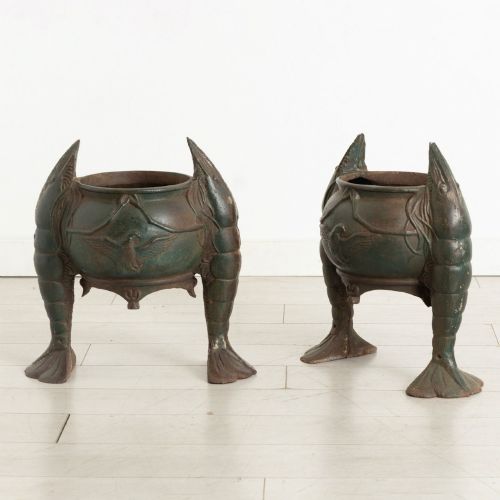
Victorian makers occasionally cast iron garden planters in the distinct shape of a shrimp.
Substance and Finish
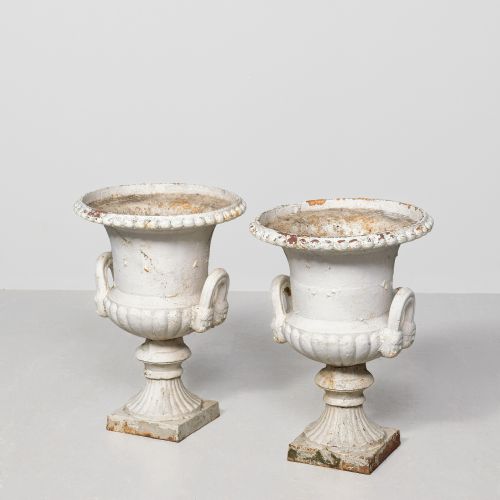
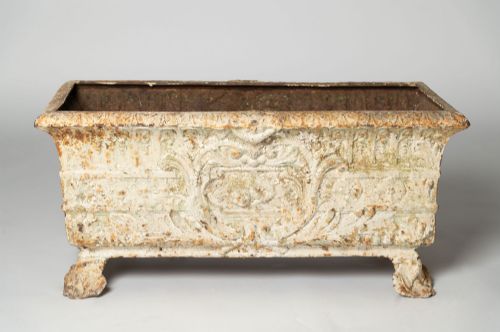
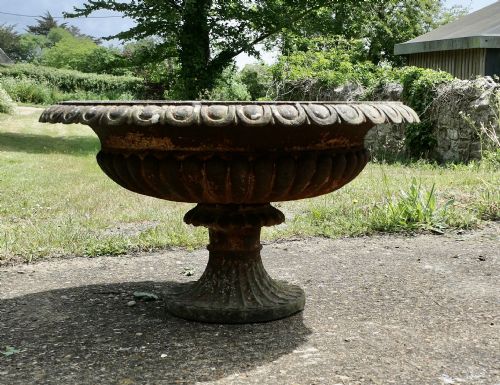
Quality rests in the weight of the metal, the clarity of the cast ornament, and the integrity of the original construction. Superior cast iron urns display sharp definition in classical acanthus leaves and relief work rather than softened, worn edges from degraded moulds.
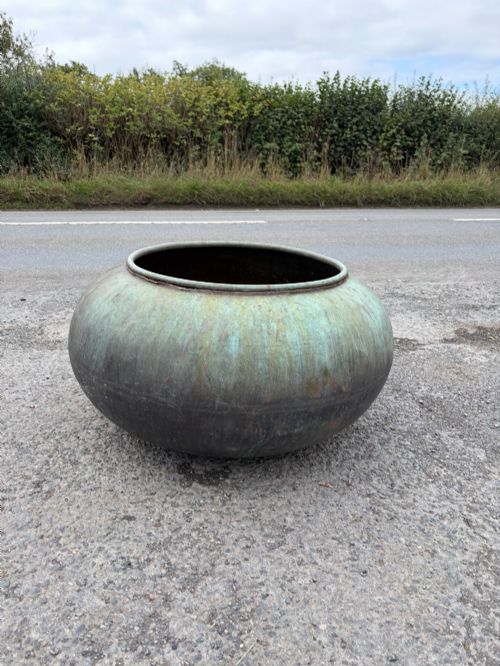
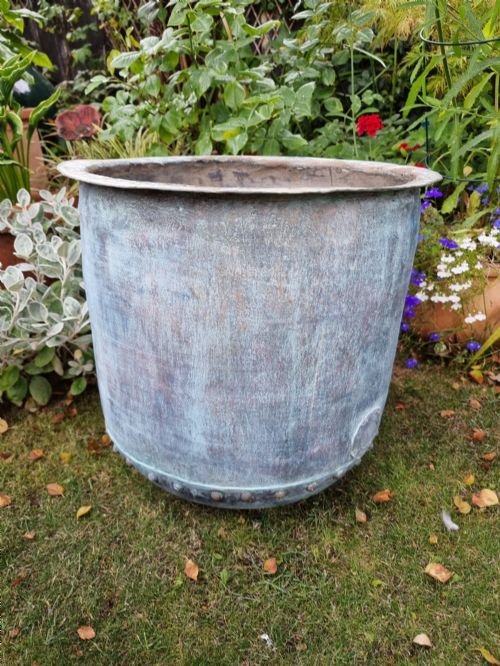
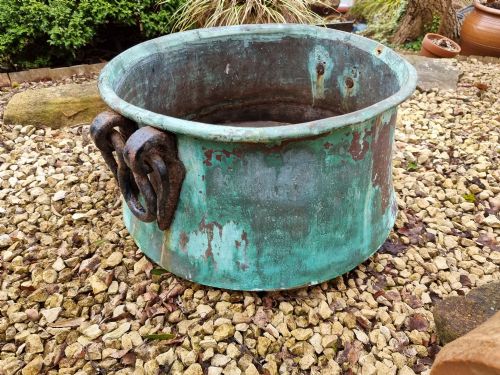
Surface patination plays a significant role, where natural verdigris on copper or original distressed paint on cast iron adds depth. Estate-made wrought iron items show careful attention to scrollwork and structural stability in their joints and baskets.
VAL D'OSNE FOUNDRY·Andrew Handyside
The Metal Outdoor Planters Glossary
- Campana
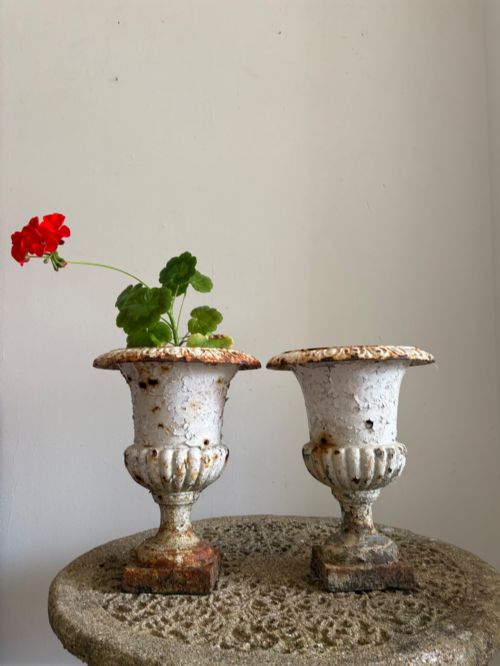
- A bell-shaped garden urn with a flaring rim, commonly cast in iron during the nineteenth century. These classical vessels sit on pedestal bases.
- Jardiniere
- An ornamental pot or stand designed to hold plants and flowers, often manufactured from cast iron or ceramic. They appear as freestanding garden planters or table urns.
- Tazza
- A shallow bowl on a high foot, styled after ancient drinking vessels and utilised as a formal garden urn. These sit upon pedestals in nineteenth-century settings.
- Verdigris
- A green patina formed naturally on copper, brass, or bronze through atmospheric oxidation. This weathered finish is valued for its historic appearance on garden metalwork.
- Wirework
- Metal construction formed from welded or twisted wire, creating lightweight plant stands and tiered display frames. Victorian examples often incorporate decorative scroll details.
Metal Outdoor Planters: Frequently Asked Questions
What plants suit cast iron urns?
Large cast iron urns suit robust perennials, trailing ivies, and small shrubs that complement their weighty proportions and classical styling. Their thermal mass protects root systems from sudden temperature fluctuations.
Drainage holes at the base ensure excess water escapes, preventing root rot in damp weather.
How do I protect metal planters in winter?
Metal planters left outside benefit from being raised slightly off the ground on pot feet to prevent moisture retention underneath. Emptying wet soil from cast iron urns during freezing periods prevents ice expansion from cracking the metal.
Applying protective oils or wax helps maintain painted or rusted surfaces against harsh winter conditions.
How do I identify a nineteenth-century urn?
Nineteenth-century iron urns typically exhibit heavy casting, sand-textured surfaces from the moulding process, and classical motifs like acanthus leaves. Maker stamps or foundry marks can sometimes be found near the base or rim.
Weight and construction methods, such as bolted multi-piece assembly, separate antique foundry work from modern reproductions.
Can copper pots stay outside all year?
Copper garden pots withstand outdoor exposure, developing a protective green verdigris patina over time. The metal resists structural corrosion, though extreme cold can warp thin-walled vessels if filled with wet earth.
Lining the interior with protective material helps preserve the metal while accommodating seasonal planting.