

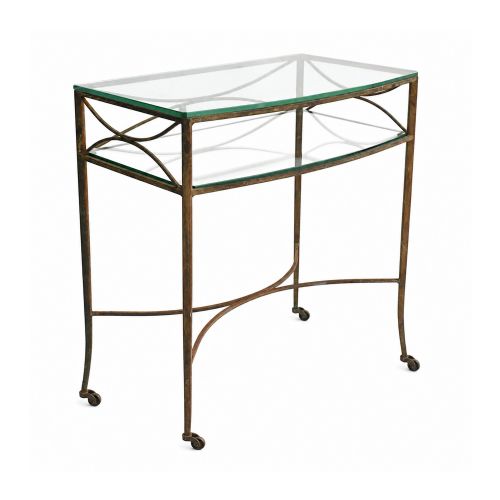
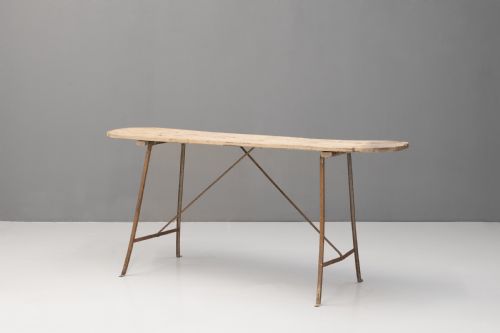


Vintage Metal Console
A vintage metal console brings architectural strength and a surface of marble, glass or timber into a hallway or living room.
Vintage Metal Console
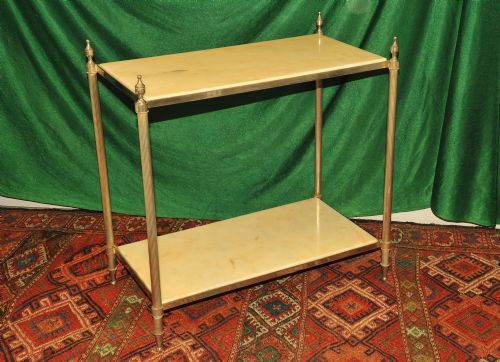
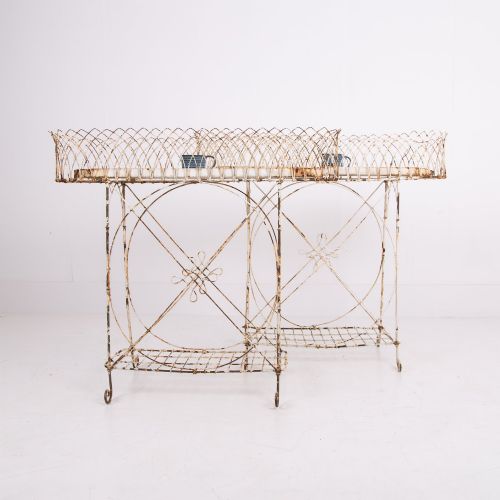
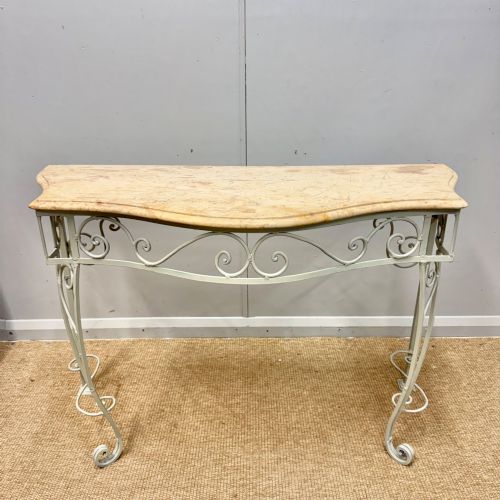
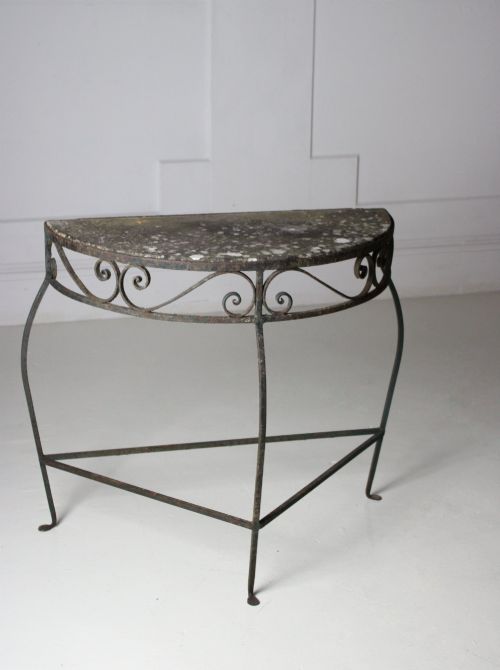
When you search for a vintage metal console, you are looking at narrow tables designed to stand against a wall, often combining a rigid metal frame with a contrasting top. The examples met on this page span the Victorian and Edwardian eras through to the 1920s and 1930s, taking forms such as console tables, garden tables and side tables.
The construction brings together sturdy iron, cast iron, wrought iron or steel with surfaces of marble, glass, pine and burr walnut. Stylistic influences range from industrial and rustic farmhouse to French country, Art Deco and neoclassical revival, providing varied options for interior spaces.
How they were made
Makers integrated mixed media by securing heavy stone and timber surfaces directly onto metal supports, utilising the inherent strength of iron to hold substantial weight without bulky legs.
Vintage Metal Console Retail Price Guide 2026
Typical asking prices for vintage metal console among the pieces listed under this phrase on Sellingantiques today, from the lower quarter to the upper quarter. They describe what is for sale here now, not the wider market.
Listings for a vintage metal console span the 19th century through the 1930s, featuring materials like wrought iron, marble, glass, pine and burr walnut.
What varies in quality
The standard of a piece depends heavily on the refinement of the metalwork, distinguishing simple utilitarian utility frames from pieces featuring elaborate curves, brass details or integrated mirrors. Better examples display careful casting and forging that integrate the frame cleanly with high-grade stone or figured wood tops.
Material selection also dictates the tier of the object, moving from straightforward garden tables in plain iron to sophisticated indoor consoles finished with burr walnut veneers, marble slabs or Art Deco styling.
The Vintage Metal Console Glossary
- Console table
- A table designed to stand flat against a wall, frequently secured with brackets or balanced on slender legs. These narrow tables suit hallways and reception rooms.
- Cast iron
- Iron poured into a mould to create rigid structural components or decorative frames. It offers immense compressive strength.
- Wrought iron
- Iron beaten and worked into shape by hand with tools, yielding fibrous textures and pliable strength. It permits intricate scrollwork and curves.
- Burr walnut
- Timber taken from the warted growths of walnut trees, displaying complex and swirling grain patterns. It is used as a decorative veneer on fine furniture.
Vintage Metal Console: Frequently Asked Questions
Where should I place a metal console?
These narrow tables suit hallways, corridors and living rooms where floor space is limited. Their shallow depth allows them to sit against walls without obstructing pathways.
They provide a practical surface for lamps, mirrors and decorative objects while adding architectural character to plain walls.
How do I care for a marble top?
Marble surfaces require gentle cleaning with mild, non-acidic soap and warm water to protect the polished finish. Avoid harsh chemical cleaners that can etch or dull the stone.
Using coasters and placemats helps prevent moisture rings and staining on vintage stone.
Are these tables heavy to move?
The weight depends largely on the materials used in the frame and top. Tables featuring cast iron bases and solid marble slabs are exceptionally heavy and require two people to lift safely.
Lighter versions made with tubular steel or wooden tops are easier to reposition within a room.
How do I date an iron console?
Dating relies on observing manufacturing techniques, such as the smoothness of cast iron surfaces and the style of decorative motifs. Edwardian and Victorian pieces often show distinct revival or industrial characteristics.
Comparing the construction methods to known period pieces helps narrow down the era of production.