



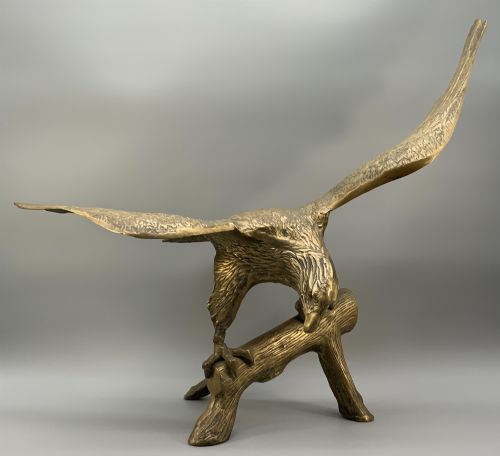
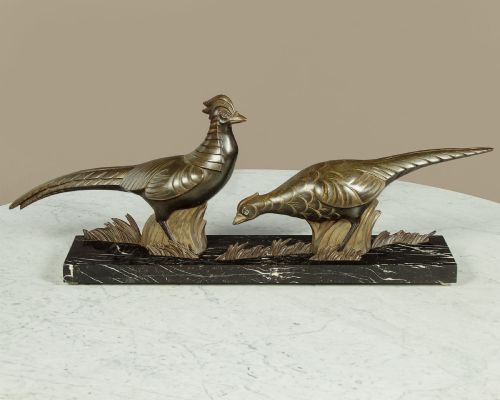
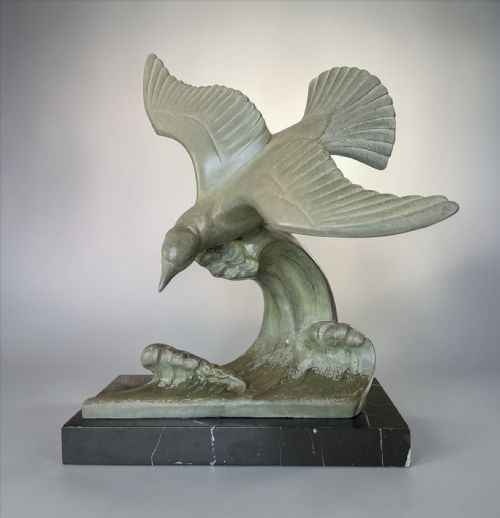
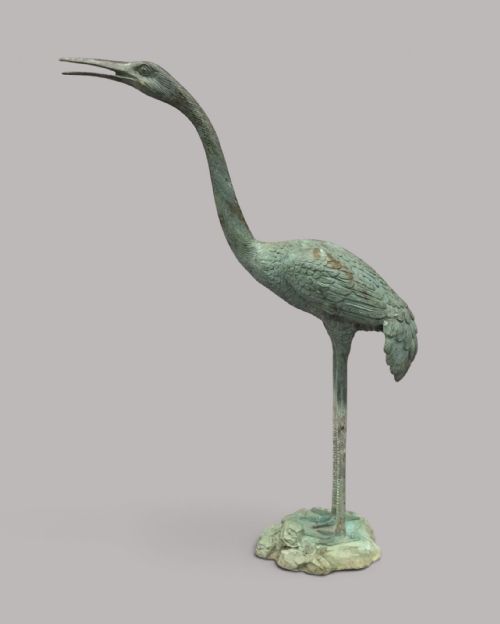
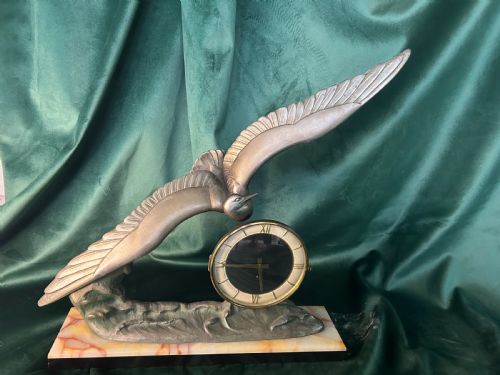


Vintage Metal Bird Sculpture
These vintage metal bird sculpture pieces bring character to a room, ranging from playful Austrian bronzes to striking Art Deco figures.
Vintage Metal Bird Sculpture
The pieces appearing on this page most frequently reflect the clean lines of the Art Deco era or the naturalistic detail of Austrian and Vienna bronze studies. Domestic interiors benefit from smaller cabinet pieces and bookends, whilst larger cast iron and bronze examples suit outdoor placement.
How they were made
Foundry techniques dominate this category, utilising metals such as cast bronze, cast brass, cast iron, and spelter shaped through traditional casting methods. Many smaller decorative subjects receive hand-applied polychrome pigments known as cold painting.
Mounting and presentation play a significant role in their construction, with figures frequently secured to contrasting plinths made of marble or onyx. Surface finishes vary from weathered patinas on exterior ironwork to silver plating and polished nickel bronze.
Vintage Metal Bird Sculpture Retail Price Guide 2026
Typical asking prices for vintage metal bird sculpture among the pieces listed under this phrase on Sellingantiques today, from the lower quarter to the upper quarter. They describe what is for sale here now, not the wider market.
Objects range from utilitarian items like bird scarers and weathervanes to fine decorative sculptures, bookends, and mantel clocks.
What varies in quality
The distinction between ordinary and exceptional work rests upon the crispness of the casting and the sensitivity of the chisel work applied after the metal leaves the mould. Superior examples retain intricate feather detailing and balanced proportions that capture the authentic posture of the bird.
Surface preservation dictates much of the appeal, particularly on cold painted or silver plated items where original pigment or plating remains intact. The quality of associated natural stone plinths and the presence of maker signatures also elevate specific pieces above standard production.
Frederique Cederlund-Ozanne·Herzig
The Vintage Metal Bird Sculpture Glossary
- Cold painted bronze
- A method where bronze figures receive paint details without high-temperature firing. This technique was widely practiced in Austrian workshops to create colourful animal studies.
- Spelter
- An alloy of zinc and lead often used as a cheaper alternative to bronze. It frequently serves as a base material for patinated decorative figures from the early twentieth century.
- Okimono
- A Japanese term for a decorative object intended for display in a room. These bronze sculptures often depict lifesize or scaled wildlife with meticulous realism.
- Weathervane
- A movable device mounted on roofs to indicate wind direction, historically fashioned from sheet metal and iron. Folk art versions often feature silhouette birds of prey.
- Patina
- The surface sheen and colour acquired by metal through age and handling. A natural patina develops distinct tones that distinguish antique metalwork from modern reproductions.
Vintage Metal Bird Sculpture: Frequently Asked Questions
How do I clean a bronze bird sculpture?
Dust the surface gently with a soft, dry brush to prevent accumulation in recessed feather details. Avoid chemical polishes that strip away the historical patina.
Wax can be applied very sparingly to protect exterior or handling surfaces, provided the piece has a sealed metallic finish rather than cold painted pigments.
Can cast iron bird statues stay outside?
Cast iron garden statues withstand outdoor placement well, though unprotected metal will naturally develop surface oxidation over time. Weathered patinas often enhance the rustic appeal of iron garden ornaments.
Moving delicate or painted pieces indoors during freezing winter months prevents structural stress and protects fragile finishes.
What is Vienna bronze?
Vienna bronze refers to small, highly detailed metal sculptures produced in Austrian foundries around the turn of the twentieth century. These figures typically depict animals and birds with lifelike charm.
The workshop process involved meticulous hand-chiselling followed by cold painting, making each finished animal study unique.
How do I spot a reproduction?
Examine the weight, casting seams, and underside of the metal to understand its period of origin. Older pieces exhibit natural wear patterns and construction methods consistent with historical foundry work.
Modern copies often lack the sharp feather definition and hand-finished details characteristic of early twentieth century production.