



Vintage Measuring Scale
A vintage measuring scale measures weight and precision, bringing industrial utility and tactile metalwork into a modern interior.
Vintage Measuring Scale
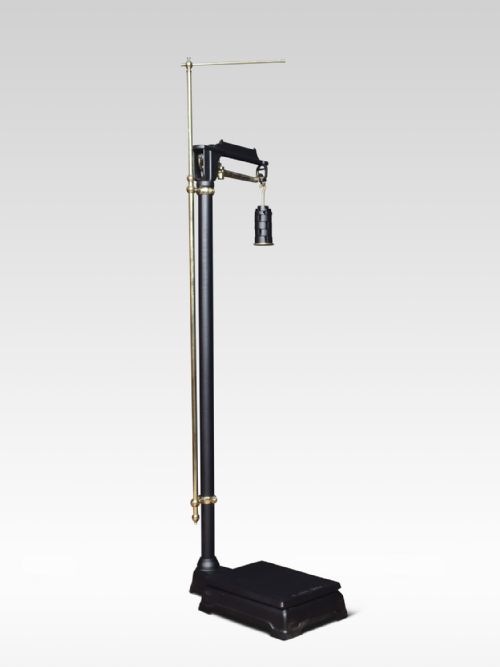
A vintage measuring scale encompasses balance scales, beam scales, doctors scales, and bushels, originating from periods such as the Victorian and Edwardian eras alongside the nineteenth and twentieth centuries.
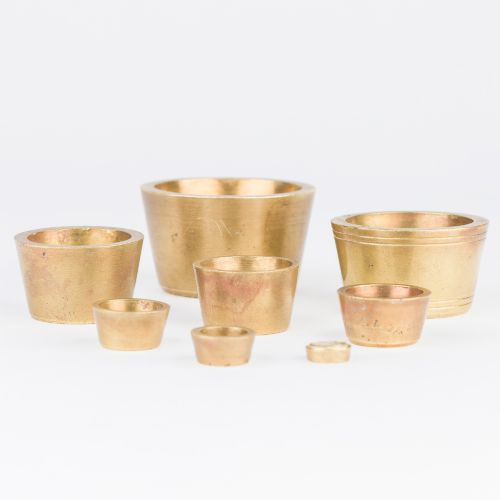
Buyers encounter precise scientific instruments, calibration weights, and heavy industrial devices fashioned from brass, cast iron, and mahogany.
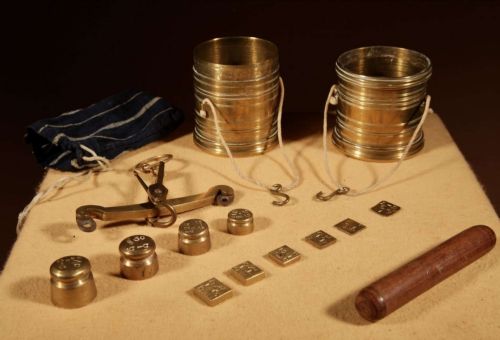
The selection ranges from Dutch brass bushel sets and cased chondrometers to standard weights and verification balances tied to specific cities and counties.
How they were made
Maker workshops utilised durable brass, cast iron, and rich mahogany to construct robust frames, delicate beams, and protective storage cases.
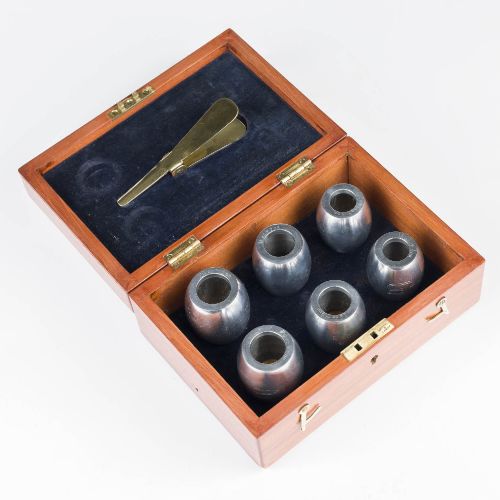
Precision components incorporate fitted glass lenses, textile velvet linings, and precision metal stamps denoting regional verification standards.
The inventory records regional inspector weights from Liverpool, Northamptonshire, Blackpool, and Lancaster.
What varies in quality
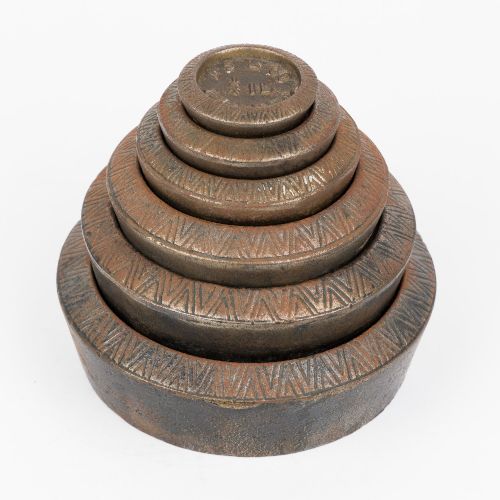
The standard of a vintage measuring scale depends on the completeness of its sets, particularly whether entire collections of stacking or standard weights remain together.
Superior examples display crisp maker inscriptions, regional verification stamps from specific boroughs, and original wooden or glass housings that survive intact.
De Grave Short And Co·W And T Avery·Fairbanks Scale Co·Casartelli Manchester
The Vintage Measuring Scale Glossary
- Bushel balance
- A precise weighing apparatus designed for dry volume measurements. Dutch examples demonstrate distinct regional joinery and brass casting techniques.
- Verification balance
- A heavy scale utilised by official inspectors to check commercial weights. These pieces carry municipal inscriptions and robust iron or brass construction.
- Imperial weights
- Standardised units of measurement made from brass or iron. Complete sets often feature stacking configurations stamped with regional authorities.
- Linen tester
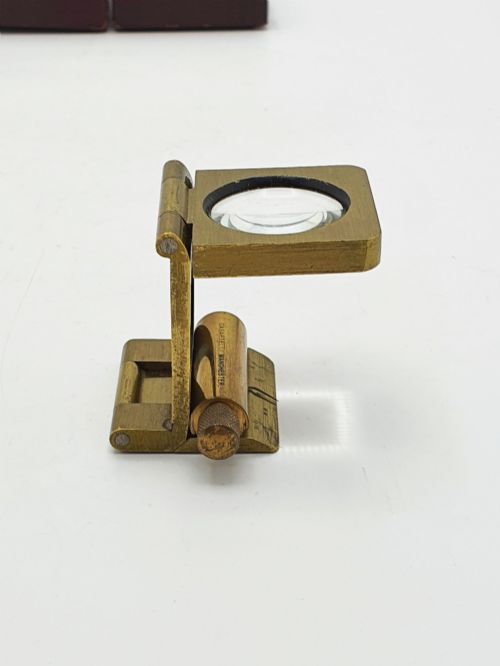
- A folding magnifier incorporating a measuring scale. These small optical instruments utilise brass frames to inspect textile thread counts.
Vintage Measuring Scale: Frequently Asked Questions
What is a vintage measuring scale used for?
These items served a practical function in trade, scientific analysis, and official municipal verification. They determined precise weights for goods, grain, and coinage.
Today, collectors display them as sculptural desktop or shelf objects that reflect industrial history and mechanical ingenuity.
How do I date a vintage measuring scale?
Dating relies on stylistic markers, materials, and stamped inscriptions naming specific periods such as the Victorian or Edwardian eras. Many pieces bear dates or maker names tied to historical British boroughs.
Associated wooden cases and accompanying brass weight sets also provide stylistic clues regarding their decade of manufacture.
Are weight sets included with the scales?
Many listings include complete or partial sets of brass stacking weights, troy ounce weights, or avoirdupois standards. Some weights remain housed in fitted wooden boxes.
Checking individual descriptions clarifies whether a balance retains its original matching weight components.
How should I display a vintage measuring scale?
These heavy brass and cast iron objects suit placement on sturdy wooden surfaces, sideboards, or open shelving. Their metallic surfaces contrast effectively against natural wood.
Keeping them away from damp environments preserves the finish of the brass, wood, and velvet components.