





Vintage Measure Glass
These vintage measure glass pieces range from Georgian dram measures to Art Deco cocktail shakers, offering utility and history for the collector.
Vintage Measure Glass
When you search for vintage measure glass, you encounter a diverse array of utilitarian items spanning barware, medical equipment, and scientific instruments. These objects reflect the precise measuring needs of different eras, from household kitchens to professional laboratories and taverns.
You are most likely to meet clear glass beakers, spirit noggin jugs, and medicine glasses on this page, originating from periods like the Victorian era, the Art Deco interwar years, and the Georgian epoch. Their forms vary from simple etched customs beakers to combination pieces featuring brass, leather, and silver-plate.
The assortment captures both domestic hospitality and scientific inquiry, uniting items such as cocktail shakers and linen tester loupes under the common umbrella of calibrated measurement. Each piece bears witness to the practical standards of its original manufacturing period.
Materials and construction
Clear glass forms the primary body of these measuring items, frequently paired with sterling silver mounts, silver-plated collars, or fitted leather cases. Makers utilised durable materials capable of holding liquids or withstanding frequent handling in commercial and domestic settings.
Etched markings and engraved scales provide the functional calibration on the glass surfaces, sometimes complemented by brass fittings or cork stoppers. These manufacturing techniques ensured longevity and accuracy for spirits, medicine, and textiles alike.
Vintage Measure Glass Retail Price Guide 2026
Typical asking prices for vintage measure glass among the pieces listed under this phrase on Sellingantiques today, from the lower quarter to the upper quarter. They describe what is for sale here now, not the wider market.
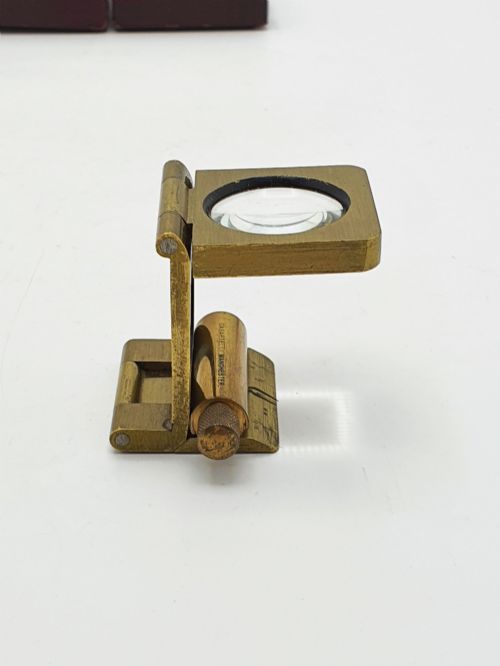
A tiny linen tester loupe from 1905 proves that even thread-counters required brass and glass elegance during the Edwardian working day.
Assessing quality and craftsmanship
Quality in these pieces rests upon the crispness of the glass etching, the weight of the metal mounts, and the preservation of any associated cases or auxiliary materials. Finer examples display clean, legible calibration lines and robust construction that has survived decades of use.
The harmony between the glass vessel and its metalwork separates standard utilitarian items from superior examples. Pieces retaining original leather cases or hallmarked silver elements demonstrate a higher tier of period craftsmanship.
The Vintage Measure Glass Glossary
- Dram measure
- A small drinking vessel designed for precise volumes of spirits. Georgian examples often feature double-ended bowls.
- Whisky noggin
- A small jug used for serving individual portions of whisky. These typically combine a clear glass body with a sterling silver rim and handle.
- Linen tester
- A folding magnifier with an integrated measuring scale used to count threads in fabric. Brass frames are common in these scientific instruments.
- Customs and Excise measure
- An official etched glass beaker utilised by government officials for checking liquid volumes. They exhibit strict governmental calibration standards.
Vintage Measure Glass: Frequently Asked Questions
What are vintage measure glass pieces used for today?
Today these items serve mainly as decorative barware, collector's display pieces, or functional kitchen and bar accessories. Many people enjoy using vintage cocktail shakers and dram measures for modern entertaining.
Others appreciate them purely as historical artefacts of science and trade, displaying them in cabinets or on open shelving.
How do I clean antique glass and silver together?
Cleaning requires separating the materials where possible to protect delicate glass and soft silver-plate or sterling silver. Use warm soapy water on the glass while avoiding harsh abrasives on etched measurement lines.
Polish silver components gently with a dedicated cloth, taking care not to let polish residue accumulate in engraved details.
How can I tell a Victorian measure from a Georgian one?
Victorian pieces often display heavier moulded forms and more ornate decorative metal mounts compared to earlier eras. Georgian items tend to feature simpler, hand-blown characteristics with distinct pontil marks.
Style cues like Art Deco geometric lines or Victorian floral motifs further help anchor pieces to their specific decades.
Why do some measure glasses have leather cases?
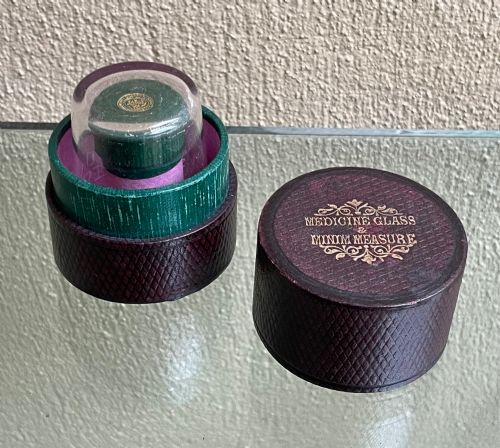
Leather cases protected portable scientific and medical instruments, such as linen testers and medicine glasses, during travel. Apothecaries and inspectors needed to keep their calibration tools safe from scratching and breakage.
Surviving cases add historical context and completeness to the primary glass object.