







Vintage Marquetry Credenza
A vintage marquetry credenza brings refined woodwork and classical proportion into a room, offering both display space and concealed storage.
Vintage Marquetry Credenza
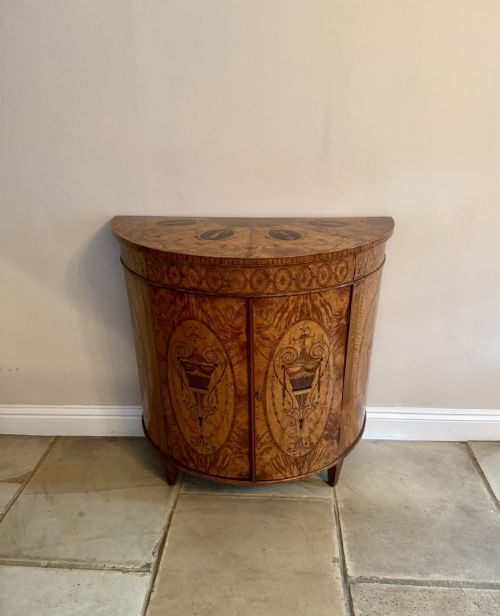
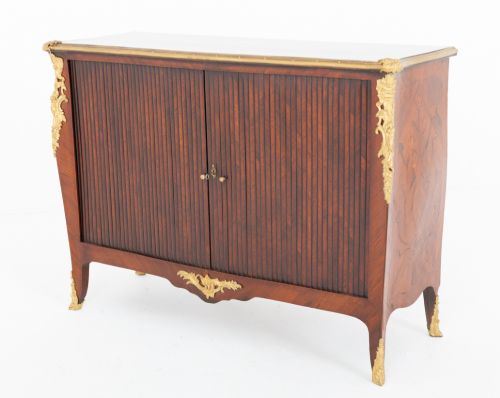
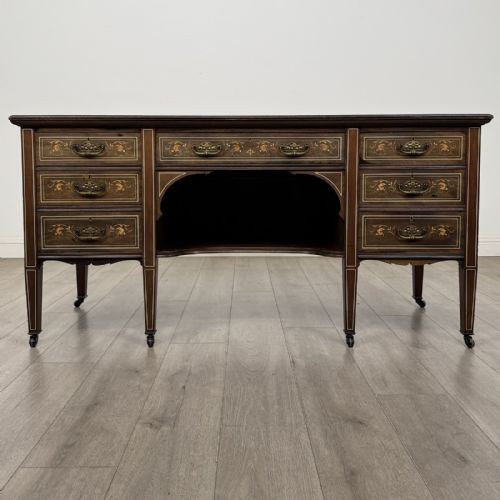
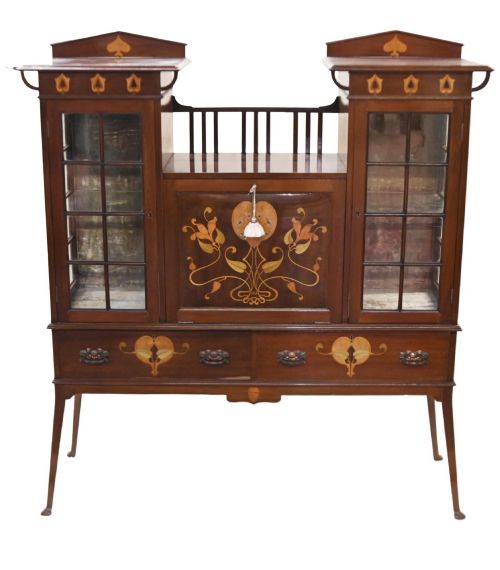
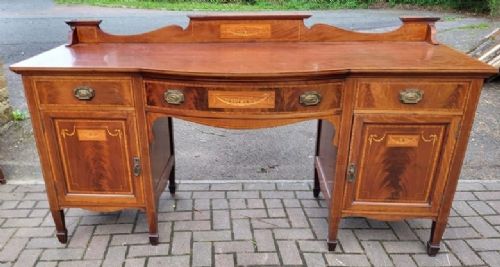
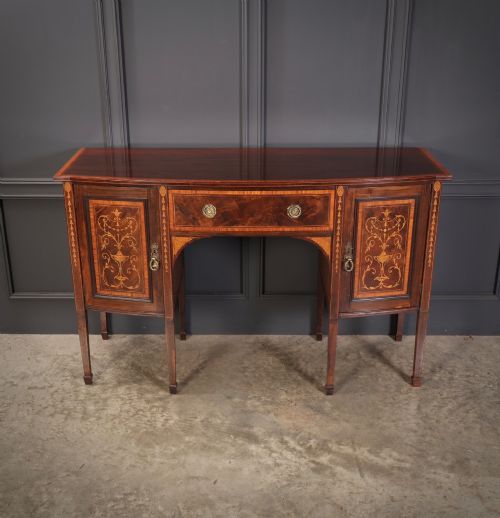
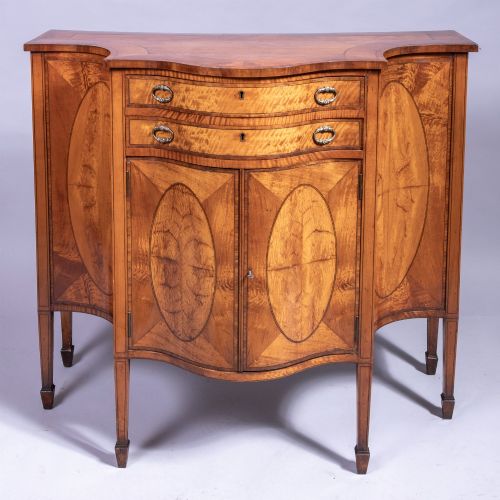
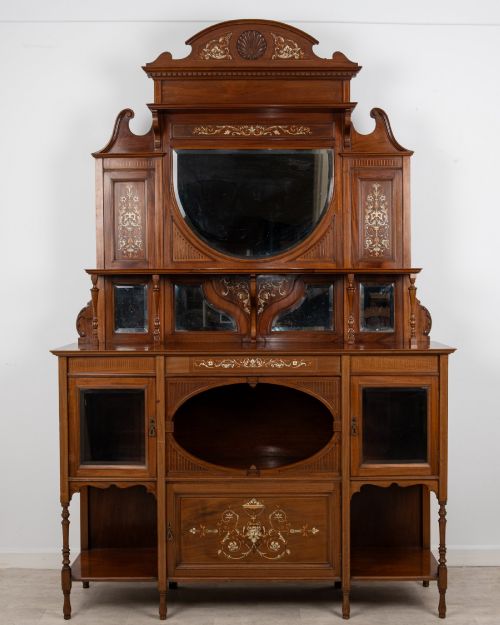
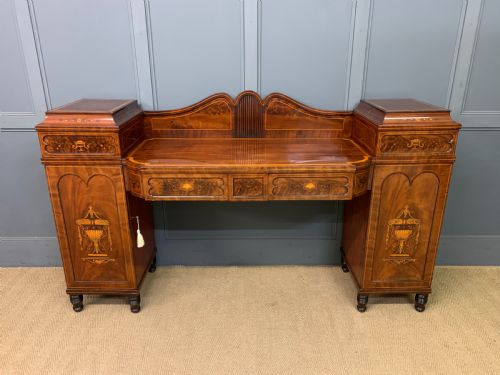
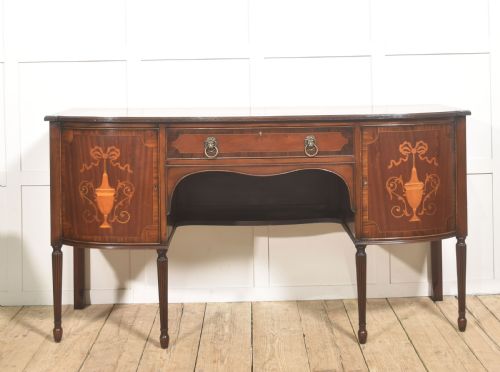
When you search for a vintage marquetry credenza, you encounter a selection of sophisticated timber storage pieces originating primarily from the nineteenth and early twentieth centuries. These encompass Victorian, Edwardian, and Sheraton Revival examples alongside French Louis XV styles, ranging from breakfront sideboards to glazed display cabinets and marble-topped commodes.
The objects on this page serve distinct domestic functions, functioning variously as sideboards, side cabinets, and commodes with doors and shelving. Their origins span English workshops and French ateliers, uniting diverse periods through the common application of intricate inlaid woodwork.
Materials and Construction
Cabinet makers utilised a rich palette of primary timbers including mahogany, walnut, burr walnut, satinwood, and kingwood, often enhanced with contrasting veneers and delicate stringing. These woods provide the foundation for detailed foliate and geometric marquetry patterns.
Metal mounts in brass and ormolu frequently complement the woodwork, while glazed doors and polished marble tops appear on selected French and Victorian examples to add textural contrast.
Vintage Marquetry Credenza Retail Price Guide 2026
Typical asking prices for vintage marquetry credenza among the pieces listed under this phrase on Sellingantiques today, from the lower quarter to the upper quarter. They describe what is for sale here now, not the wider market.
Listings feature woods like burr walnut, satinwood, and kingwood paired with marble tops and brass mounts across Victorian and Edwardian periods.
Design and Execution
The distinction between standard examples and exhibition-quality pieces lies in the precision of the timber selection and the complexity of the veneer work. Finer items display meticulously matched grain, sophisticated serpentine or breakfront carcases, and intricate multi-wood floral motifs that require exceptional skill to execute.
Secondary detailing, such as the quality of the cast ormolu mounts, the integration of glazed panels, and the architectural proportions of the overall design, further elevates the standing of individual cabinets.
Whytock And Reid·Edwards And Roberts·Howard And Sons
The Vintage Marquetry Credenza Glossary
- Marquetry
- Decorative veneer work arranged in pictorial or geometric patterns using various coloured woods. This technique requires precise cutting and fitting of thin timber sections onto a solid carcase.
- Ormolu
- Gilded bronze mountings applied to furniture for decorative accent. These metal elements are typically cast and chased before being secured to corners, feet, or friezes.
- Credenza
- A low cabinet or sideboard designed for storage and display. Originating as a serving table, nineteenth-century iterations often feature central cupboards flanked by curved glass doors.
- Satinwood
- A durable, lustrous yellow-brown timber imported from the tropics. It is frequently employed in Sheraton Revival pieces to provide a bright, contrasting background for darker veneers.
- Commode
- A low French-style chest of drawers or cupboard fitted with doors. These pieces often incorporate shaped marble tops and elaborate mounts.
Vintage Marquetry Credenza: Frequently Asked Questions
How do I identify a credenza?
A credenza is traditionally a low-profile cabinet featuring a central cupboard flanked by side compartments or curved display doors. These pieces sit lower than standard dining sideboards and often include glass panels or mirrored backs.
They function well in living spaces and dining rooms for displaying decorative objects while concealing tableware or books behind panelled doors.
What is the difference between marquetry and inlay?
Marquetry involves covering the entire surface of a furniture piece with assembled veneer pieces that form a pictorial or geometric design. It acts as a complete skin over the carcase timber.
Inlay, by contrast, involves cutting recesses directly into solid wood and inserting contrasting strips or shapes, such as fine stringing lines on a mahogany drawer front.
How do I care for marble-topped cabinets?
Marble surfaces require protection from acidic substances like citrus juices and wine, which can etch the polished stone. Wipe spills promptly using a damp cloth and mild soap.
Apply a neutral stone sealer periodically to maintain the sheen and prevent staining on antique tabletops.
Which periods feature marquetry most often?
Marquetry experiences revivals during the Victorian and Edwardian eras, particularly within Sheraton Revival and French Louis XV revival furniture. Makers of these periods looked back to eighteenth-century aesthetics.
Nineteenth-century craftsmen combined these historical design languages with advanced mechanical cutting techniques to produce highly ornate cabinets.