


Vintage Maritime Wall Decor
Vintage maritime wall decor captures the raw energy of the sea through historic oil paintings, ship models, and navigational instruments.
Vintage Maritime Wall Decor
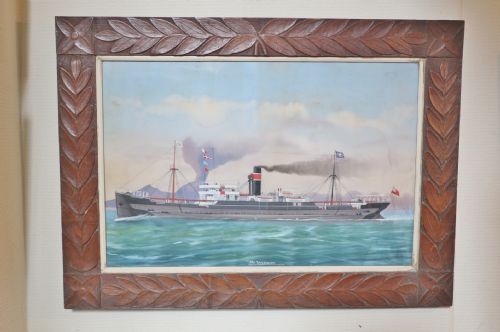
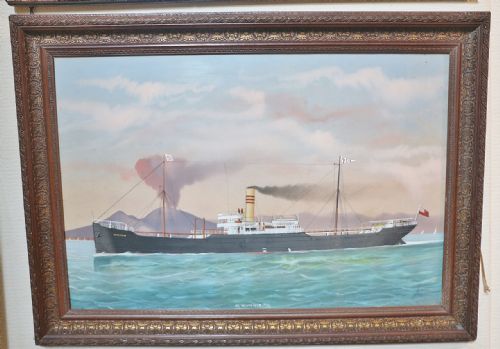
Buyers seeking vintage maritime wall decor encounter a diverse selection of oil paintings, watercolours, and dimensional objects originating from the nineteenth and twentieth centuries. These pieces reflect Britain's rich coastal heritage, recording specific vessels, harbours, and dramatic sea views across distinct periods from the Victorian era to the mid-twentieth century.
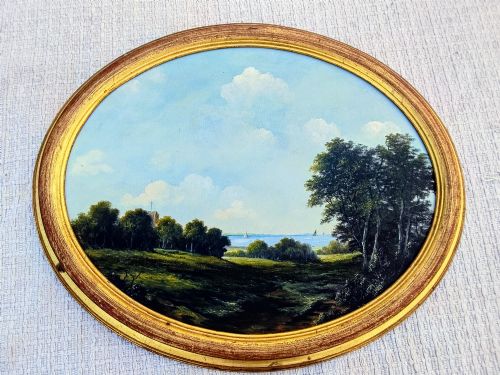
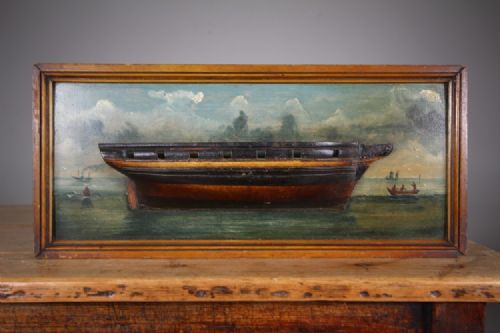
The objects take many forms beyond traditional canvas works, including carved ship builders half hull models, heavy bronze ship badges, industrial pressure gauges, and framed folk art dioramas. Oval sea views and traditional maritime paintings dominate the selection, offering direct visual links to historical shipping and coastal life.
Materials and construction methods
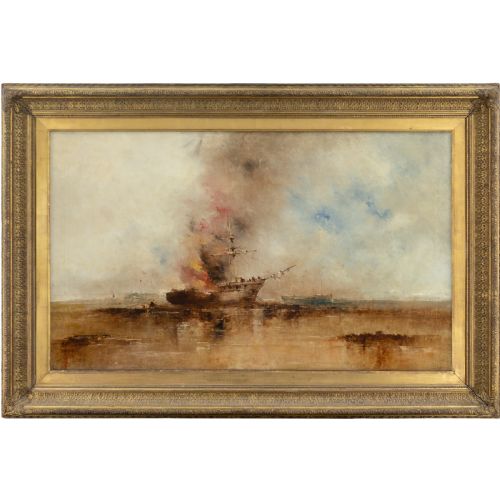
Makers utilised traditional oil paint on canvas and wood panels to capture coastal scenes, often applying heavy impasto to convey the movement of waves and stormy skies. Watercolours on paper also appear, offering finer detail in coastal views and maps.
Three-dimensional wall pieces combine carved wood, brass fittings, glass, and painted canvas to create realistic dioramas and half hull models. Heavy structural elements utilise cast bronze and oak, reflecting the robust materials required for genuine marine service.
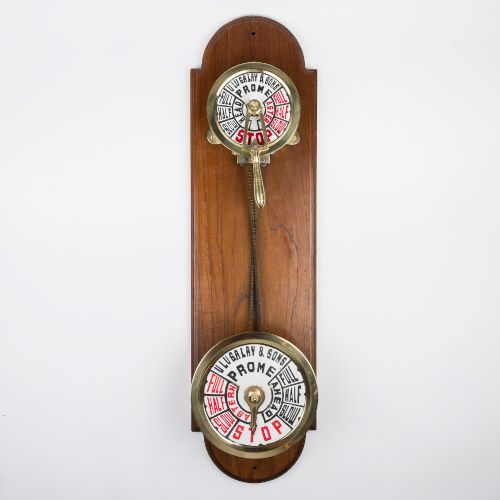
Even landlocked rooms gain a salty breeze when an engine room telegraph hangs proudly beside a nineteenth-century ship painting.
Factors determining quality
Quality rests upon the skill of the artist or maker in capturing accurate nautical details, atmospheric light, and the convincing architecture of vessels. Works by named painters or established ship builders command greater interest through their documented provenance and technical precision.
The condition of original surfaces, frames, and painted finishes heavily influences the overall standard of each piece. Intact nineteenth-century dioramas and well-preserved wooden elements retain higher integrity than heavily restored or later altered examples.
William McAlpine·Ulugary And Sons·Edward Matthew Elliott·Dewrance Of London·Dion Pears·Richard Brydges Beechey·Frank Wood·H Hadfield Cubley·Charles Cameron Baillie·Liverpool Ship Building Co·Johan Jens Neumann·Godwin Bennett·Micheal Matthews
The Vintage Maritime Wall Decor Glossary
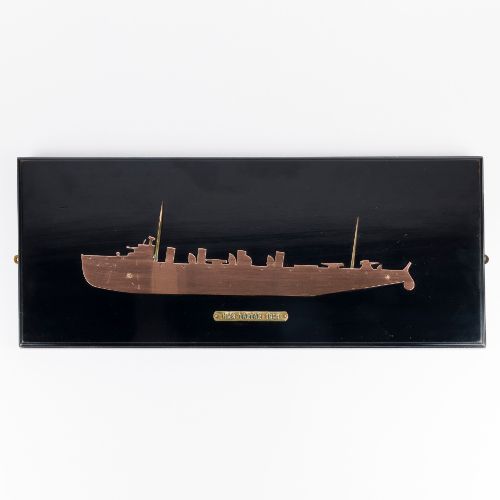
- Half hull model
- A three-dimensional representation of a ship's starboard or port side mounted on a board for wall display. These were traditionally utilised by shipbuilders to visualise hull forms before full construction.
- Diorama
- A shallow three-dimensional display combining painted backgrounds with carved or modelled miniature ships in the foreground. This technique creates a convincing illusion of depth and movement on a wall.
- Tiller yoke
- A horizontal arm attached to a boat's rudder post for steering. Wall-mounted examples retain the functional brass and iron hardware of working vessels.
- Engine room telegraph
- A mechanical communication device used by the pilot to transmit orders to the engine room. These brass and metal instruments double as striking industrial wall ornaments.
Vintage Maritime Wall Decor: Frequently Asked Questions
What periods do these pieces date from?
The pieces span from the eighteenth century through the Victorian and Edwardian eras into the mid-twentieth century. Most items date from the nineteenth and early twentieth centuries.
Makers and artists produced these works during the height of British maritime dominance and coastal expansion. Each period brings distinct artistic styles and manufacturing techniques to the wall decor.
How were half hull models used?
Shipbuilders created half hull models to test and refine vessel designs before committing to full-scale construction. These wooden pieces allowed builders to visualise the hydrodynamic lines of trawlers and sailing ships.
Over time, many of these functional shipyard models found their way into offices and homes as decorative wall pieces. Their carved wooden profiles record the exact architecture of historic working boats.
Are the oil paintings signed by artists?
Many of the oil paintings and watercolours feature signatures from period artists who specialised in marine scenes and coastal landscapes. Names like Frank Wood and Dion Pears appear alongside Victorian and Edwardian painters.
Signed works provide a direct link to the artists who documented specific vessels and harbours. Unsigned pieces rely on their strong stylistic execution and subject matter for attribution.
How should I hang heavy metal ship badges?
Heavy bronze ship badges and cast iron pressure gauges require secure wall fixings rated for substantial weight. Fixing directly into wall studs ensures the hardware supports the dense metal safely.
These robust maritime objects bring industrial texture and genuine naval history to interior spaces. Proper placement highlights their three-dimensional relief and patinated surfaces.