







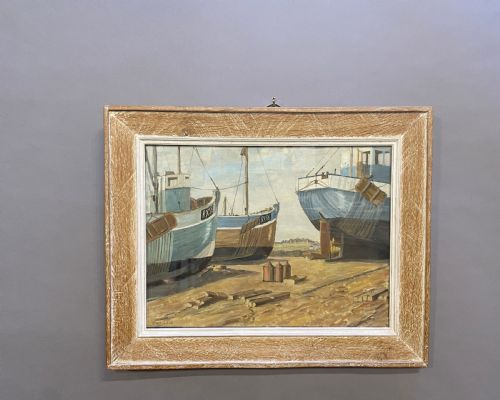

Vintage Maritime Sign
When you search for a vintage maritime sign, you find painted works, framed watercolours, and carved wooden boards recording coastal and river trade.
Vintage Maritime Sign
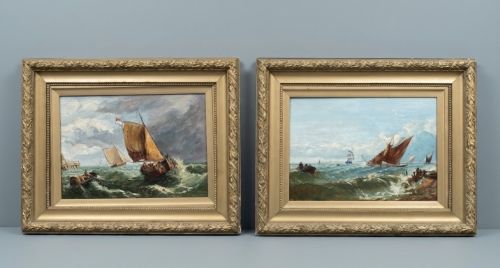
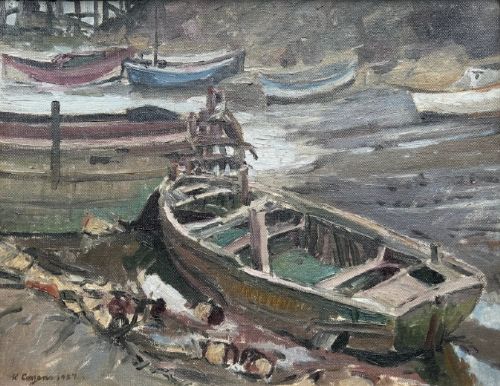
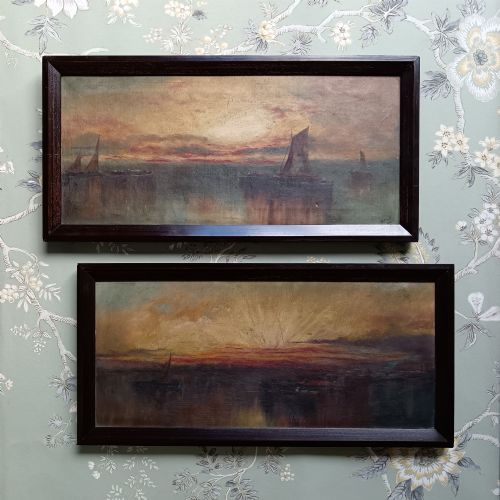
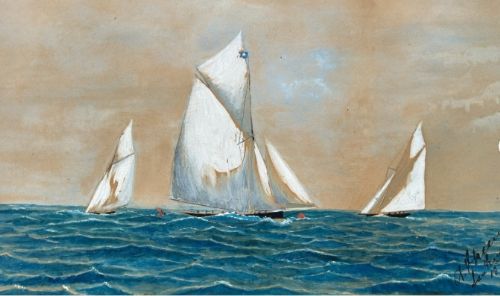
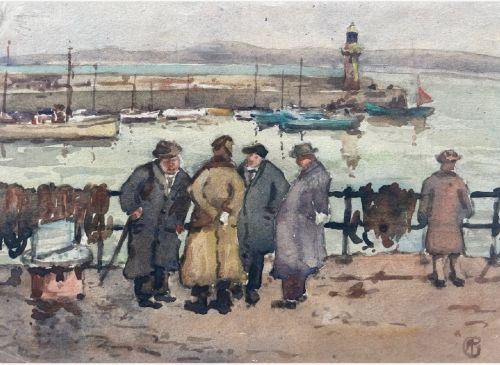
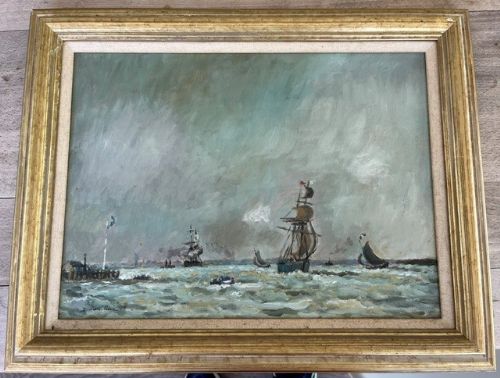
A vintage maritime sign encompasses framed fine art, trade boards, and watercolours depicting harbours, boats, and coastal scenes. The selection ranges from nineteenth-century watercolours to mid-twentieth-century oil paintings and carved wood pieces.
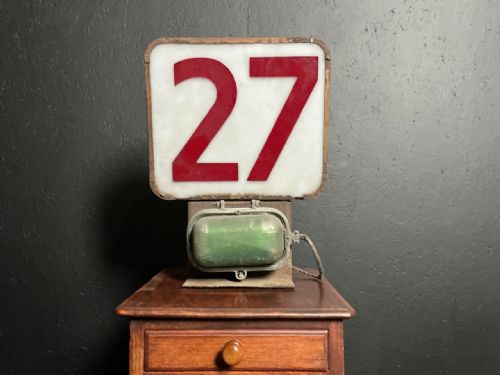
Buyers encounter trade signs alongside maritime paintings and watercolours. These objects capture docks, fishing fleets, and coastal industries across Britain and Europe through various periods.
How they were made
Makers utilised oil paint, watercolour, ink, and pencil on canvas, paper, wood panels, and board. Pigments were applied with brushwork or impasto to render coastal waters, rigging, and harbour walls.
Trade signs and boards were carved from wood and painted by hand. Works on paper and canvas were frequently framed under glass or in gilt mounts to protect the delicate media.
Vintage Maritime Sign Retail Price Guide 2026
Typical asking prices for vintage maritime sign among the pieces listed under this phrase on Sellingantiques today, from the lower quarter to the upper quarter. They describe what is for sale here now, not the wider market.
Subjects range from Whitby and St Ives harbours to Venetian canals and Italian coastal bays.
What varies in quality
Quality rests in the precision of the draughtsmanship and the artist's handling of light and water. Stronger works capture the movement of choppy seas and coastal atmosphere with distinct brushwork.
Materials and preservation dictate the calibre of each piece. Intact original frames, stable paint layers, and clear signatures distinguish finer examples from standard decorative items.
Kenneth Cozens·William Banks Fortescue·William Lionel Wyllie·Bernard Benedict Hemy·George F Pennington·Alfred George Morgan·Fernando Del Basso·Thomas Bush Hardy·Tom Clough·T.S. Wallis·Frank Wood·William Knox·S. J. Lamorna Birch·Norman Janes·Godwin Bennett·Maurice Sijs·Rowland Henry Hill
The Vintage Maritime Sign Glossary
- Watercolour
- A painting method where fine pigment is suspended in a water-based, translucent solution applied to paper. This medium allows for luminous washes representing sea and sky.
- Impasto
- A technique where paint is laid onto a canvas or board in thick layers that stand visibly above the surface. It adds tactile texture to waves, clouds, and harbour structures.
- Etching
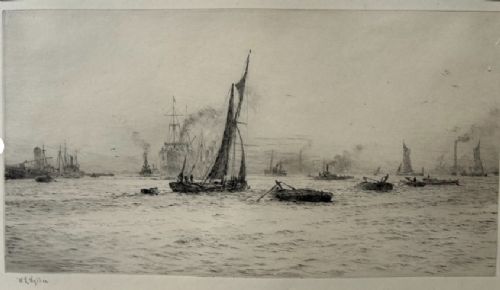
- A printmaking method where lines are bitten into a metal plate with acid before ink is applied and pressed onto paper. Artists utilised this process for detailed depictions of shipping rigging.
- Board
- A rigid flat substrate, often wood or heavy card, used instead of stretched canvas for oil paintings. It provides a firm foundation for plein air coastal scenes.
- Trade sign
- A painted or carved board commissioned to advertise a specific shop, auction, or business. These functional objects display lettering or symbols relevant to maritime commerce.
Vintage Maritime Sign: Frequently Asked Questions
What is a vintage maritime sign?
A vintage maritime sign is a painted or carved board or artwork reflecting coastal trade, harbours, and shipping. These pieces document maritime history through trade notices, auctions, and seaside scenes.
They serve as decorative wall art that brings a nautical aesthetic into domestic or commercial interiors.
How do I care for these works?
Keep painted boards, canvases, and works on paper away from direct sunlight and damp conditions to prevent fading and warping. Maintaining stable room temperatures preserves the integrity of the wood, paper, and pigments.
Display watercolours behind glass and dust carved wooden signs gently with a dry cloth.
How are different periods told apart?
Nineteenth-century works typically employ traditional romantic or documentary painting styles with detailed rigging and coastal architecture. Mid-twentieth-century pieces lean towards bolder brushwork, impasto, and simplified forms.
Materials also offer clues, as early twentieth-century pieces frequently utilise specific card supports or distinct framing methods.
Where were these pieces displayed?
Trade signs hung outside shops, fish auctions, and dockyards to communicate services to sailors and merchants. Fine art paintings and watercolours were created for domestic display in homes and offices.
Many capture specific British and European ports, reflecting active maritime communities of the past.