






Vintage Marble Urn
These vintage marble urn pieces combine classical form with rich stone, bringing gravitas and refined presence to any interior scheme.
Vintage Marble Urn
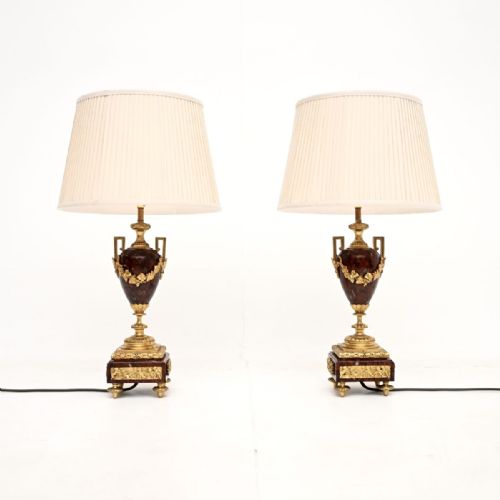
A vintage marble urn functions as a decorative vessel, lamp base, or garniture, drawing on neoclassical forms and Grand Tour traditions. These items span the nineteenth century through the early decades of the twentieth century, reflecting enduring classical tastes.
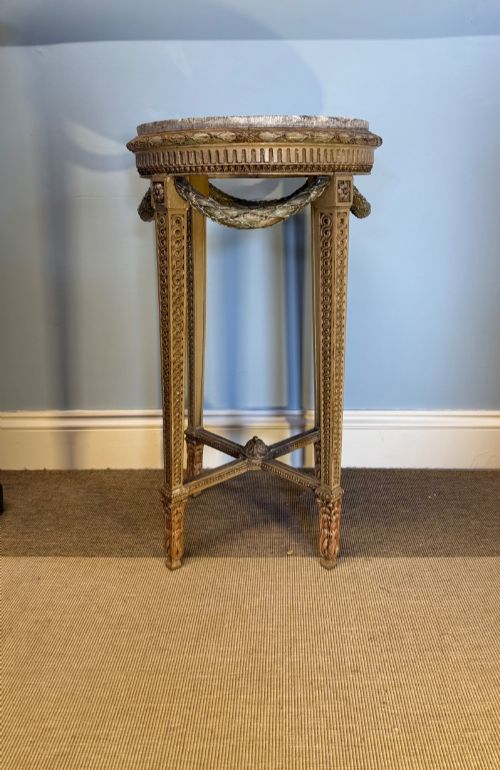
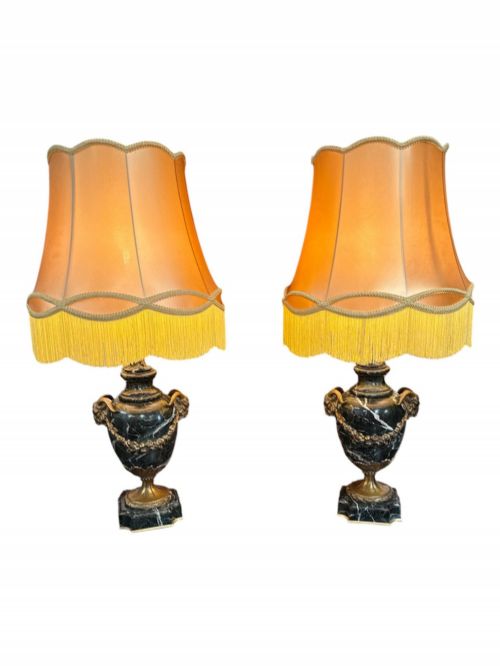
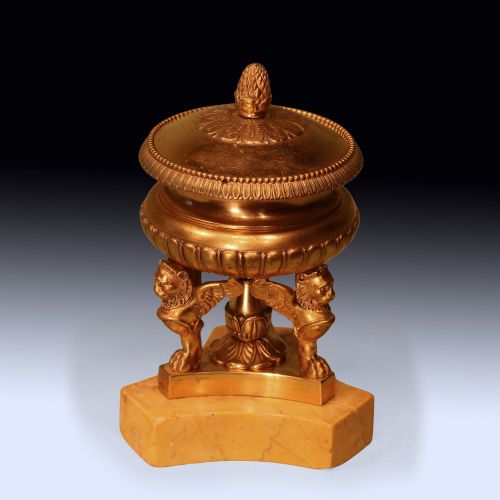
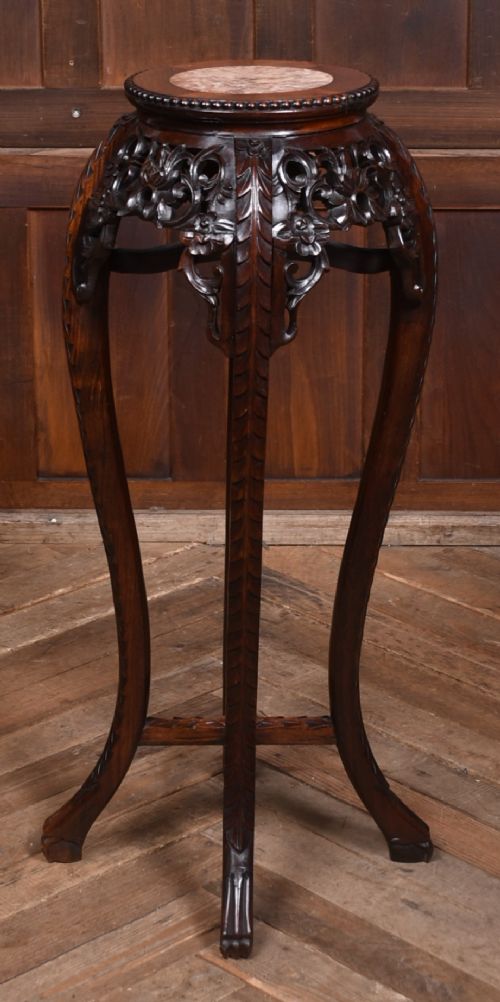
Buyers will most frequently encounter French ormolu-mounted lamps, Italian souvenir tazze, and occasional plant stands incorporating stone sections. The selection ranges from compact desk inkwells to substantial pedestals and columns carved from variegated or rouge marble.
How they were made
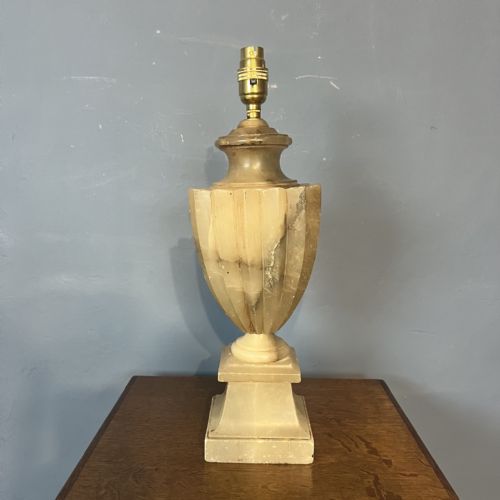
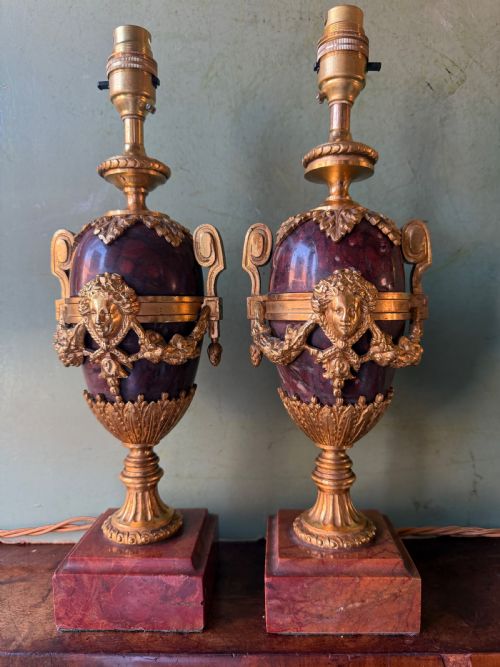
Craftsmen shaped solid blocks of marble, alabaster, and onyx on lathes or by hand, often pairing the natural stone with cast ormolu, gilt bronze, and brass mounts. Artisans utilised contrasting materials, such as dark patinated metal against rouge or green marble, to highlight the veining and polish of the stone.
Many examples incorporate precision turning alongside hand-chiselled detailing, particularly on mounts designed in Louis XVI or neoclassical styles. Inlaid decorative pieces also feature pietra dura techniques, embedding fine mineral stones into the primary marble surface.
Vintage Marble Urn Retail Price Guide 2026
Typical asking prices for vintage marble urn among the pieces listed under this phrase on Sellingantiques today, from the lower quarter to the upper quarter. They describe what is for sale here now, not the wider market.
What varies in quality
Quality rests primarily in the depth and natural figuring of the stone, alongside the crispness of any cast bronze or ormolu mounts. Finer examples display meticulous symmetry in the turning and seamless integration between metal collars and the stone body.
The weight and density of the alabaster or marble dictate the presence of the piece, while secondary materials like hardwood frames or brass paw feet show varying degrees of hand-carving and finishing skill.
The Vintage Marble Urn Glossary
- Ormolu
- Gilded bronze mounts applied to furniture, clocks, and stone vessels during the eighteenth and nineteenth centuries. This technique provides a bright, metallic contrast against dark or rouge marble surfaces.
- Alabaster
- A fine-grained, translucent stone frequently utilised for carved lamps and classical tazze. It allows soft light to diffuse gently when incorporated into lighting fixtures.
- Tazza
- A shallow saucer-like vessel or cup raised on a stem and foot, commonly produced as Italian Grand Tour souvenirs. These items often stand on black marble block bases.
- Pietra dura
- An artistic technique involving the inlay of cut and fitted polished coloured stones to create pictorial designs. It appears on select nineteenth-century marble vases and table surfaces.
- Cassolette
- A decorative vessel shaped like an urn, often featuring a reversible lid that converts the piece between a vase and a burner. French nineteenth-century examples frequently combine this form with gilt bronze mounts.
Vintage Marble Urn: Frequently Asked Questions
How do I identify a Grand Tour urn?
Grand Tour pieces originate from nineteenth-century European travel, where visitors collected miniature or full-scale stone souvenirs. They typically feature high-grade alabaster or figured marble imitating classical antiquities.
Look for refined hand-carving and polished finishes mounted on stepped block bases, which mark these items out from later mass-produced decorative objects.
What is the difference between marble and alabaster?
Marble is a metamorphic rock with distinct crystalline structure and varied veining, whereas alabaster is a softer, gypsum-based mineral known for its translucency. Alabaster transmits light more readily when used in lamp construction.
Both materials require gentle cleaning with dry or barely damp cloths to protect their historical surfaces.
Where should I place a heavy stone urn?
These dense stone objects demand sturdy placement on low side tables, dedicated pedestals, or robust mantels. Their considerable weight provides natural stability on horizontal surfaces.
Ensure the furniture beneath is rated to support concentrated stone loads, particularly when pairing urns with heavy brass or bronze mounts.
How do I date a nineteenth-century stone piece?
Dating relies on the style of the metal mounts, the turning precision of the stone, and any accompanying maker marks or registration details. French Louis XVI revival pieces from the late nineteenth century often display precise ormolu casting.
Earlier nineteenth-century examples tend to show hand-finished tooling marks inside the bore and more subtle variations in the marble veining.