

Vintage Marble Topped Commode
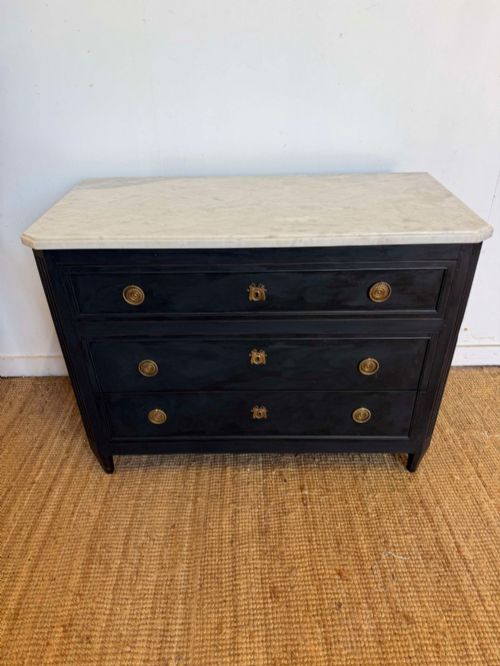
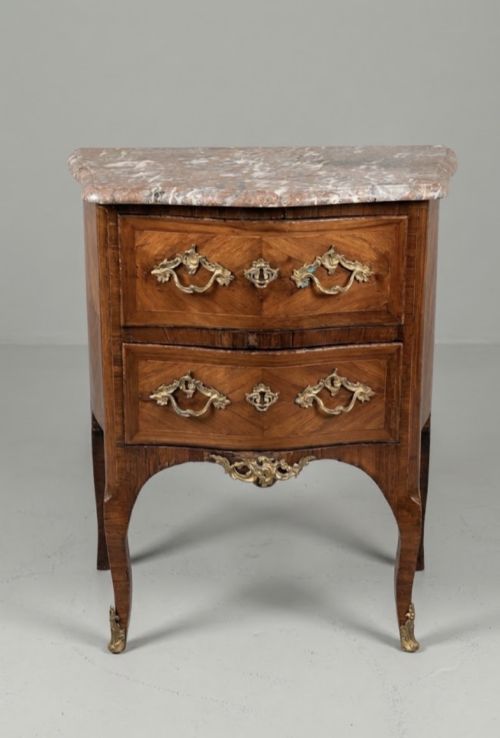
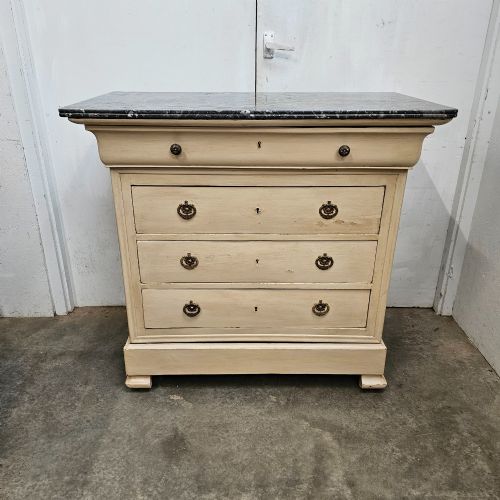
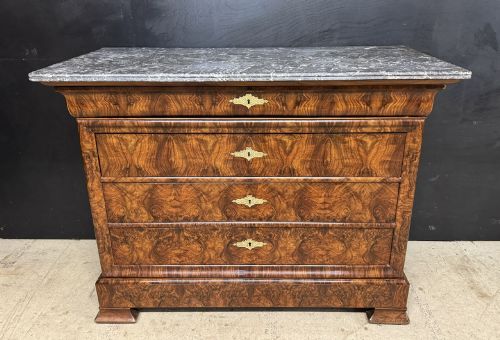
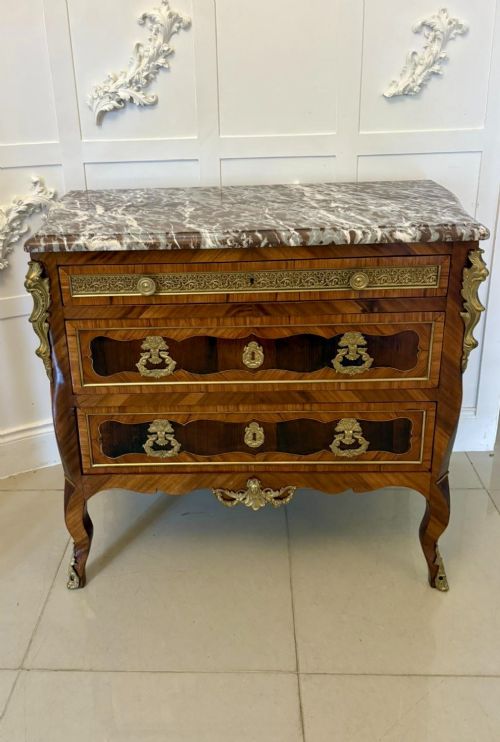
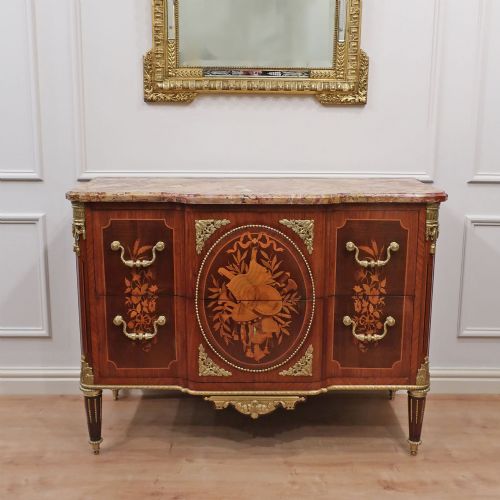
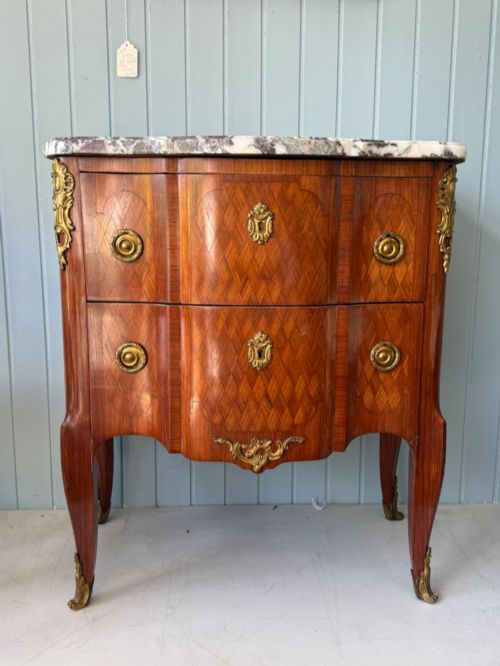
A vintage marble topped commode brings solid stone and warm timber together in a practical storage piece that anchors a room.
Vintage Marble Topped Commode
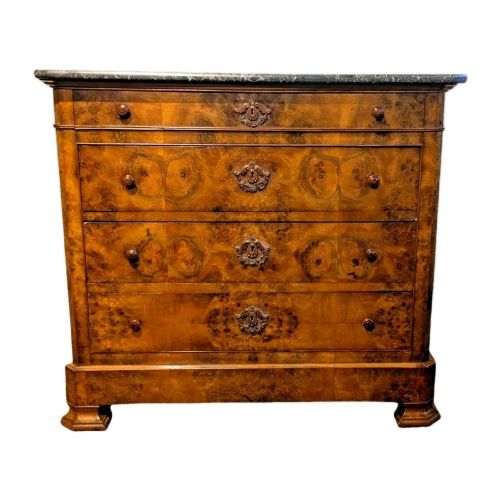
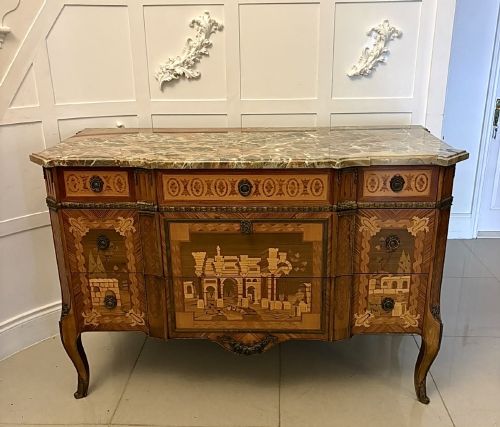
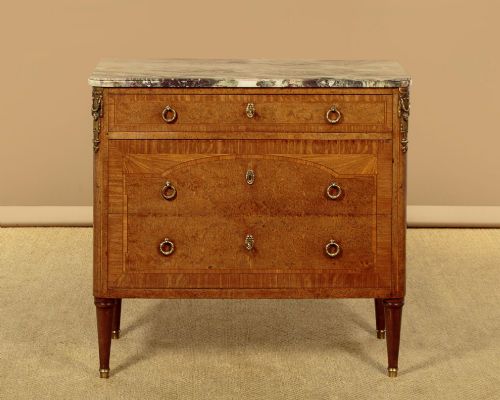
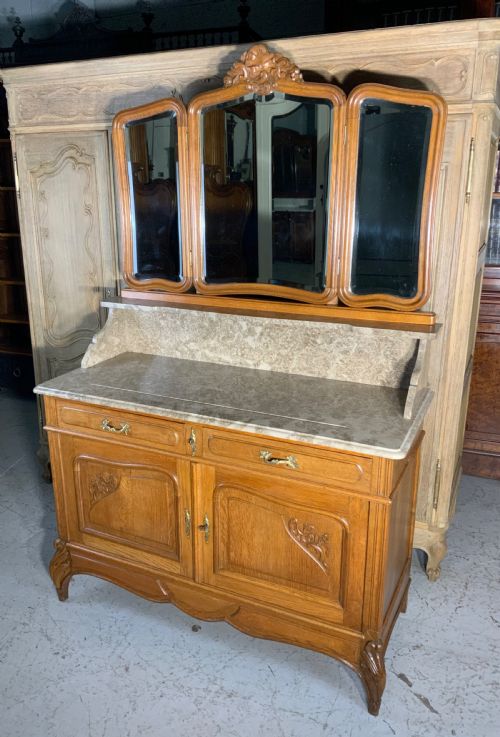
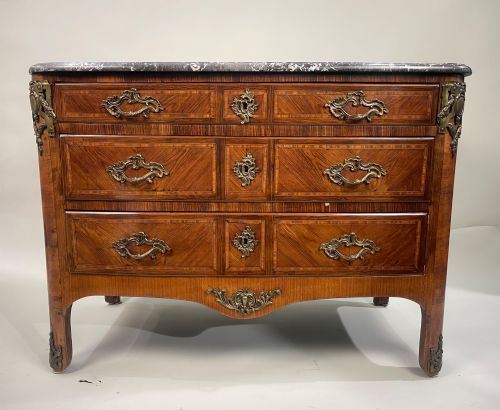
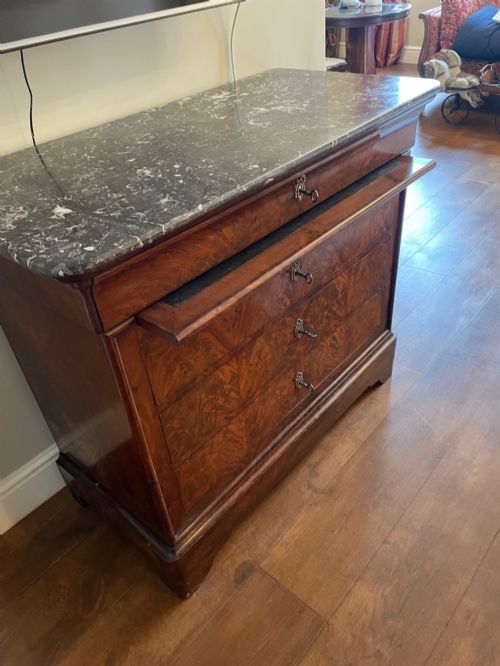
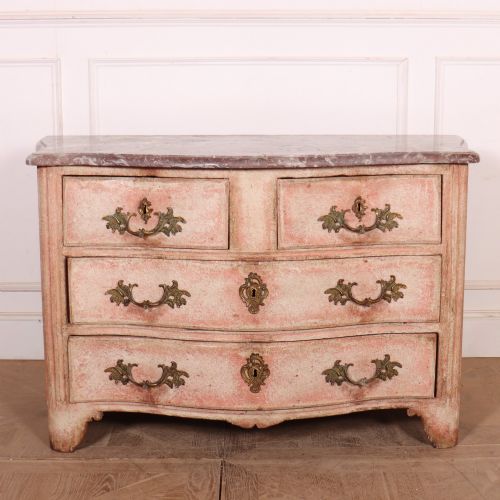
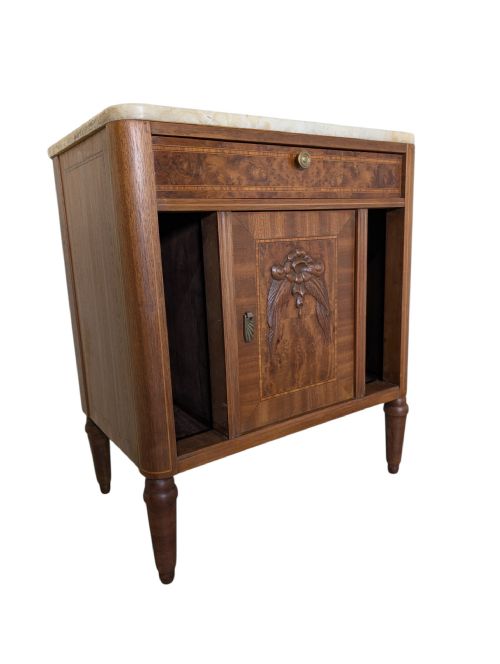
When you search for a vintage marble topped commode, you encounter a selection of chest of drawers, bedside cabinets, and washstands primarily originating from France across the eighteenth, nineteenth, and early twentieth centuries. These pieces combine substantial timber carcases with fitted stone surfaces designed originally for daily domestic use.
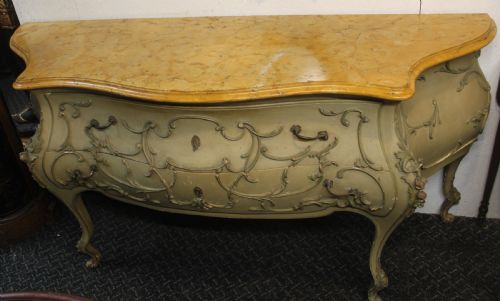
The format ranges from large five-drawer chests and serpentine commodes to smaller bedside cabinets and side cupboards. Styles span from Louis Philippe and Louis XV to Empire and Art Deco, reflecting shifting continental tastes in joinery and ornamentation.
How they were made
Cabinet makers constructed the carcases using timbers such as mahogany, walnut, kingwood, rosewood, oak, and burr walnut, often applying intricate marquetry or plain veneers over secondary woods. Slabs of marble, including rouge varieties, were cut and polished to fit precisely onto the top surface as a durable counter.
Metal elements such as brass and ormolu mounts, handles, and escutcheons were cast and fitted to drawer fronts and corners. Joinery relied on traditional hand-cut dovetails for drawers and framed panels for carcase stability.
Vintage Marble Topped Commode Retail Price Guide 2026
Typical asking prices for vintage marble topped commode among the pieces listed under this phrase on Sellingantiques today, from the lower quarter to the upper quarter. They describe what is for sale here now, not the wider market.
Listings feature pieces spanning from the eighteenth century through the nineteenth century and into the 1920s and 1930s.
What varies in quality
Quality rests in the precision of the timber matching, the intricacy of the marquetry inlay, and the weight and selection of the marble slab. Superior examples display seamless veneer work, finely chased ormolu mounts, and robust drawer construction that operates smoothly within the frame.
Proportion and decorative restraint also set pieces apart, where balanced serpentine fronts and harmonious grain patterns indicate a higher tier of workshop production rather than mass commercial output.
Jacques Bircklé
The Vintage Marble Topped Commode Glossary
- Commode
- A low chest of drawers or cabinet, typically with multiple drawers or doors, originating in French furniture design. It functions as both a decorative surface and storage unit.
- Ormolu
- Gilded bronze mounts applied to furniture for decorative effect. It adds metallic contrast to wood surfaces.
- Marquetry
- The art of applying pieces of veneer to a structure to form decorative patterns and pictures. Craftsmen utilise various coloured woods to achieve tonal depth.
- Serpentine
- A furniture front or top shaped with a curving contour, convex in the centre and concave at the sides. This technique requires advanced woodworking skill.
- Vernis Martin
- A type of simulated Japanese lacquer developed in France during the eighteenth century. It creates a lustrous, painted finish on cabinet work.
Vintage Marble Topped Commode: Frequently Asked Questions
What rooms suit a marble topped commode?
These pieces function well as bedside tables, hallway storage, or living room accent cabinets. Their stone tops offer a moisture-resistant surface that handles daily items easily.
The height and depth dictate placement, with smaller bedside cabinets fitting compact spaces while larger multi-drawer chests anchor larger rooms.
How do I care for the marble top?
Clean the stone surface with a soft damp cloth and neutral soap, avoiding acidic liquids that etch polished stone. Regular dusting keeps the finish intact.
Protect the surface from heavy impacts and prolonged moisture exposure to preserve the natural polish.
How do I identify French regional styles?
Look at the leg shape, drawer configuration, and decorative mounts to determine the stylistic period. Louis XV pieces often feature cabriole legs and asymmetrical ormolu, while Louis XVI examples favour straight tapered legs and neoclassical symmetry.
Timber choice also aids identification, with kingwood and marquetry common in eighteenth-century works and simpler mahogany or walnut appearing in later nineteenth-century pieces.
Can I use a commode as a washstand?
Original washstands were built to hold basins and ewers, featuring stone surfaces suited to water use. Many commodes share this practical layout and accommodate modern placement in bathrooms or dressing rooms.
Verify the interior depth and drawer clearance if you plan to adapt the storage for contemporary utility.