

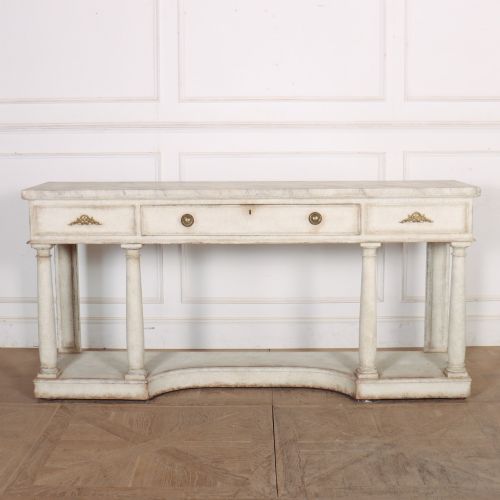


Vintage Marble Server
A vintage marble server combines a stone surface with a practical wooden base, offering a sturdy and striking piece for food preparation or display.
Vintage Marble Server
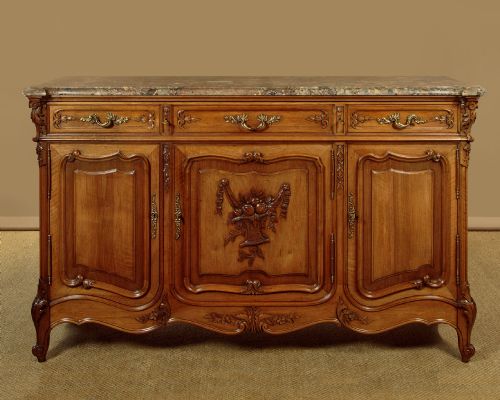
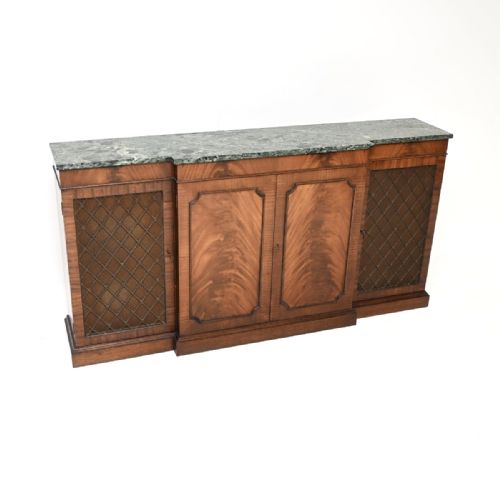
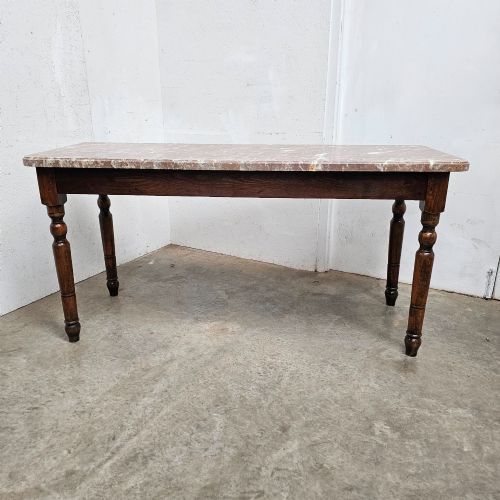
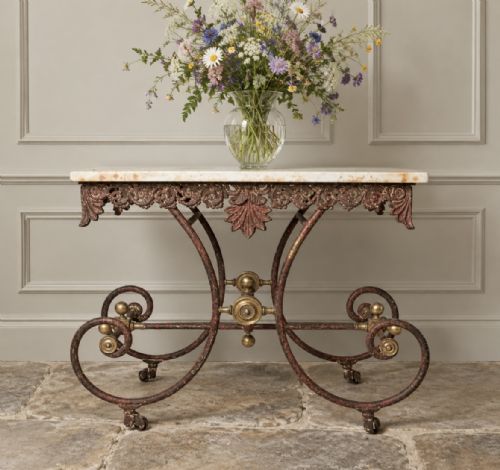
When searching for a vintage marble server, buyers encounter various forms including sideboards, console tables, washstands, and buffets spanning the eighteenth, nineteenth, and early twentieth centuries. These pieces originate from distinct periods such as the Victorian, Edwardian, and Regency eras, reflecting diverse regional aesthetics from English painted woodwork to French provincial design.
The most common iterations on this page feature robust wooden frames paired with fitted stone tops, serving multiple functions from dining room storage to specialised display tables. Woods like walnut, mahogany, pine, and rosewood form the foundational structures, often incorporating brass or ormolu mounts alongside glass components.
Makers adapted these forms across different decades, transitioning from ornate nineteenth-century carvings to streamlined twentieth-century lines. Whether taking the shape of a chiffonier, a butchers table, or a serving table, each piece merges utilitarian storage or work space with the cool, smooth utility of stone.
How they were made
Makers constructed the primary frameworks using solid and veneered timbers such as mahogany, walnut, and pine, employing traditional joinery to support heavy stone. Sideboards, dressers, and washstands required robust internal framing to bear the substantial weight of marble tops without sagging or warping over time.
Stone slabs were precisely cut and polished to fit snugly within wooden surrounds on consoles, buffets, and serving tables. Artisans integrated decorative elements including brass handles, ormolu mounts, grill fronts, and painted finishes to elevate the visual appeal of the timber.
Vintage Marble Server Retail Price Guide 2026
Typical asking prices for vintage marble server among the pieces listed under this phrase on Sellingantiques today, from the lower quarter to the upper quarter. They describe what is for sale here now, not the wider market.
Listings feature pieces spanning the eighteenth to the twentieth centuries, utilising marble, brass, walnut, mahogany, glass, pine, painted wood, and ormolu.
What varies in quality
The calibre of timber selection and the precision of cabinetmaking separate standard utilitarian furniture from exceptional examples. Dense, finely figured woods like mahogany and walnut, paired with well-integrated ormolu or brass details, indicate superior craftsmanship.
The thickness, grain, and finish of the marble top significantly influence the overall standard of the piece. Seamless integration between the stone slab and the wooden base demonstrates high-level construction, ensuring both aesthetic harmony and lasting structural integrity.
The Vintage Marble Server Glossary
- Console table
- A table designed to be fixed against a wall, frequently featuring a marble top and supported by scroll legs or straight pillars.
- Buffet
- A sideboard or cabinet used for storing and serving food, often topped with marble for durability during service.
- Washstand
- A piece of bedroom furniture equipped with a marble top to hold water basins, protecting the surrounding wood from moisture.
- Chiffonier
- A small sideboard or tall cabinet with doors and drawers, popular during the nineteenth century for parlour storage.
- Ormolu
- Gilded bronze or brass mounts applied to furniture for decorative enrichment, common on French period pieces.
Vintage Marble Server: Frequently Asked Questions
What is a vintage marble server used for?
These pieces function primarily as sideboards, console tables, or serving surfaces in dining rooms, hallways, and kitchens. The stone top provides a durable, heat-resistant area for food preparation, plating, or displaying decorative objects.
Beneath the stone, wooden cabinets, drawers, and shelves offer practical storage for tableware, linens, or household items. Their dual nature combines utilitarian workspace with decorative presence.
How do I care for a marble top?
Marble requires gentle cleaning with warm water and mild, pH-neutral soap to preserve its polish and prevent staining. Avoid acidic substances like citrus or vinegar, which can etch the stone surface over time.
Using coasters and placemats helps protect the stone from scratches and spills during daily use. Periodic sealing can also guard against moisture absorption and staining.
How do I identify different periods?
Period identification relies on observing construction techniques, wood types, and stylistic motifs present in the framework. Victorian and Edwardian pieces often display heavier mahogany or walnut carving, whereas earlier Georgian or Regency items show cleaner neoclassical lines.
French pieces frequently exhibit provincial traits, directoire styles, or specific ormolu mounts characteristic of the nineteenth century. Examining the joinery and hardware inside drawers provides further clues to the exact era of manufacture.
Are these pieces suitable for kitchens?
Many of these forms, such as butchers tables, patisserie display tables, and washstands, were originally designed for heavy daily utility. Their robust wooden frames and cool stone tops make them ideal for modern kitchen environments.
The marble surface offers an excellent workspace for pastry preparation and baking, while the lower shelves or cupboards provide convenient storage for cookware.