
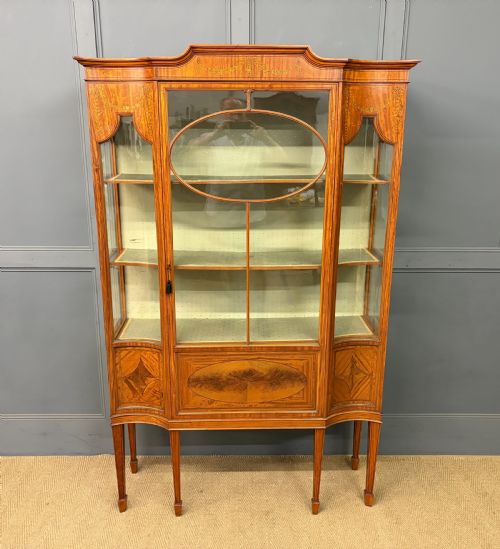


Vintage Maple and Co Furniture
Vintage maple and co furniture offers masterwork London craftsmanship from the Victorian and Edwardian eras, combining robust utility with refined period styling.
Vintage Maple and Co Furniture
Vintage maple and co furniture encompasses substantial domestic pieces produced by the renowned London firm across the nineteenth and twentieth centuries. When you search for vintage maple and co furniture, you encounter practical items designed for domestic elegance, from desks and writing tables to wardrobes and display cabinets.
The pieces appearing on this page span several distinct periods, including Victorian, Edwardian, and the 1930s. Buyers most frequently meet Edwardian examples alongside Victorian items, reflecting the firm's prolific output during those decades.
Object types vary widely across these listings, featuring dining chairs, beds, gentleman's chests, and bedside cabinets alongside sophisticated writing furniture. Each form demonstrates the firm's capacity to supply complete interior furnishings to high-status homes.
How these pieces were made
Makers utilised a rich palette of primary timbers including mahogany, walnut, burr walnut, satinwood, oak, and light birch, paired with brass hardware, glass panels, cast iron, and leather inserts. These materials formed the structural and decorative foundation for desks, cabinets, and beds alike.
Construction techniques relied heavily on fine cabinetmaking traditions, incorporating wood inlays, tooled leather writing surfaces, and integrated brass fittings. Decorative revivals such as Queen Anne, Sheraton, Hepplewhite, and Chinoiserie guided the aesthetic execution of the woodwork.
Object types range from dining chairs and wardrobes to revolving bookcases and kneehole desks.
What varies in quality
Quality differences emerge through the selection of timber veneers and the intricacy of decorative treatments, such as elaborate satinwood inlays or ornate Chinoiserie finishes. Pieces featuring burr walnut or figured mahogany sit higher in the range than simpler utility items.
The refinement of period revival detailing distinguishes finer productions from standard workshop output. Superior desks and cabinets exhibit meticulous attention to hardware, leather surfaces, and proportion, reflecting the prestige of the London establishment.
Maple and Co·Maples of London·Maples of London and Paris
The Vintage Maple and Co Furniture Glossary
- Kneehole desk
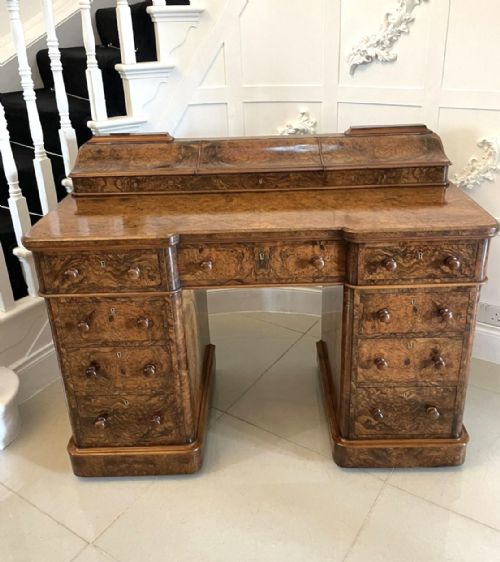
- A writing table featuring a central recess for the legs, flanked by pedestals of drawers. This form provides substantial storage while maintaining a compact footprint.
- Gentleman's chest
- A tall storage piece combining drawers and a cupboard section, traditionally used for men's garments. These items often showcase fine walnut or mahogany construction.
- Display cabinet
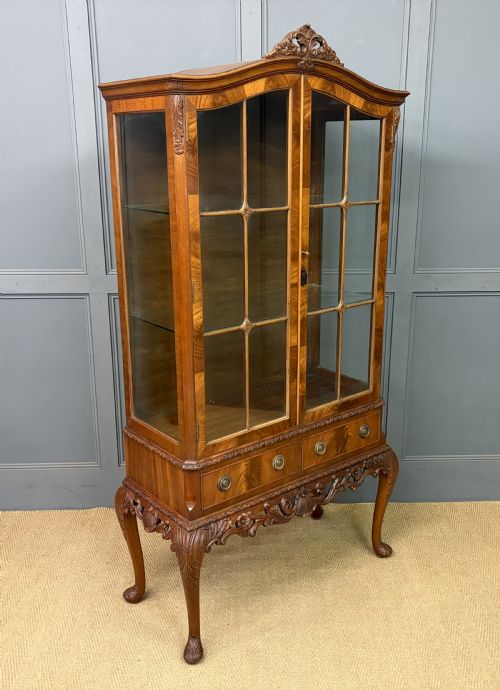
- A glazed piece designed to showcase porcelain, glass, or collectables. They frequently incorporate inlaid woodwork and period revival styling.
- Shield back
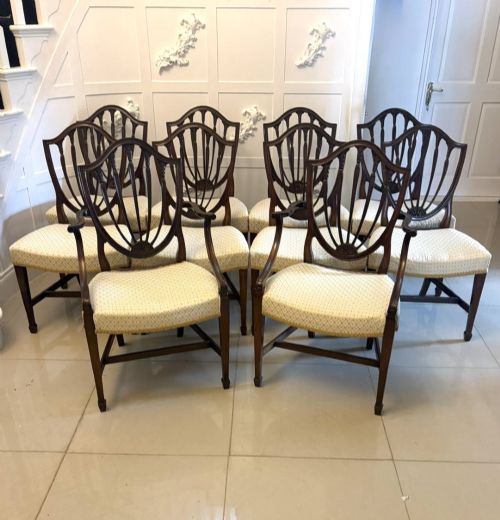
- A chair back shaped like a heraldic shield, commonly associated with Hepplewhite designs. The evidence shows this form executed in mahogany for dining sets.
- Revolving bookcase
- A freestanding book table built to turn on a central axis for easy volume selection. Pairs of these appear in inlaid mahogany.
Vintage Maple and Co Furniture: Frequently Asked Questions
What periods do these pieces cover?
The listings span from the mid-nineteenth century through the Edwardian era into the 1930s. Victorian and Edwardian items appear most frequently.
Production also touches the late nineteenth century, reflecting the long trading history of the firm in London and Paris.
What woods were used in construction?
Craftsmen utilised mahogany, walnut, burr walnut, satinwood, oak, and light birch. Finer pieces often feature figured veneers and intricate inlays.
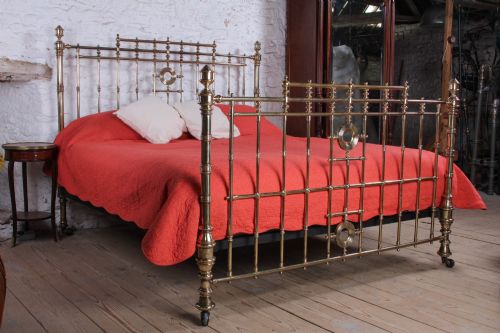
Secondary materials include brass for handles and beds, glass for display cabinets, cast iron, and tooled leather for writing surfaces.
How do I identify a piece by this maker?
Many items carry stamps, labels, or maker's marks associated with the London and Paris showrooms. The build quality and period revival styling provide additional clues.
Look for refined proportions and high-grade timber selection characteristic of large metropolitan cabinetmakers.
What types of desks are available?
Selection includes twin pedestal writing desks with leather inserts, kneehole desks in oak or walnut, and roll-top desks. Satinwood writing tables also feature.
Many incorporate multiple drawers and specialised compartments intended for correspondence and administrative tasks.
How do I care for inlaid wooden surfaces?
Keep wooden furniture away from direct sunlight and sudden temperature shifts to protect the veneer and inlay work. Gentle dusting preserves the finish.
Condition leather writing surfaces by avoiding excessive moisture and applying appropriate maintenance treatments sparingly.