



Vintage Mahogany Tub Seating
Vintage mahogany tub seating brings curved comfort and classic timber grain to a study or parlour, offering solid construction built to endure.
Vintage Mahogany Tub Seating
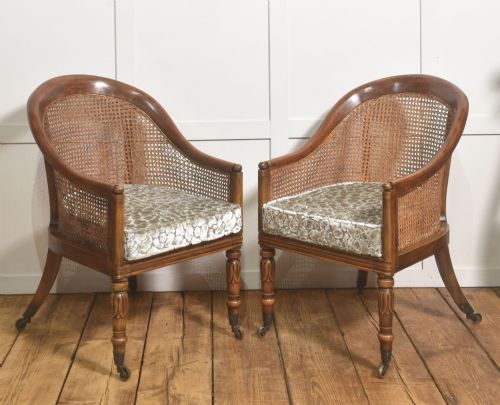
Vintage mahogany tub seating encompasses a range of curved armchairs, desk chairs, and library seats defined by their enveloping backs. These pieces emerge predominantly from the Edwardian period and the nineteenth century, reflecting Regency styles as well as Victorian designs.
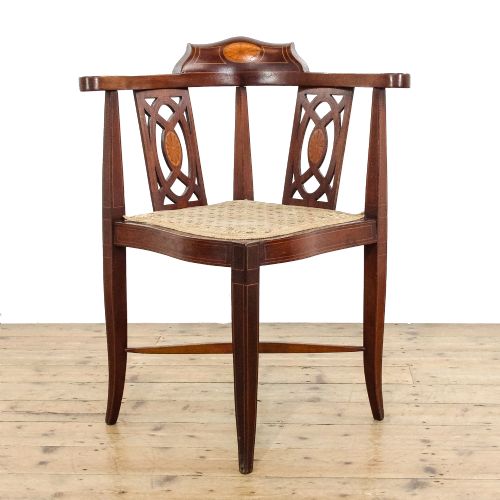
Makers adapted the tub form for various rooms, producing child highchairs, corner armchairs, and matching pairs. The overarching aesthetic relies on the warm reddish-brown tones of mahogany shaped into welcoming, rounded profiles.
Materials and construction methods
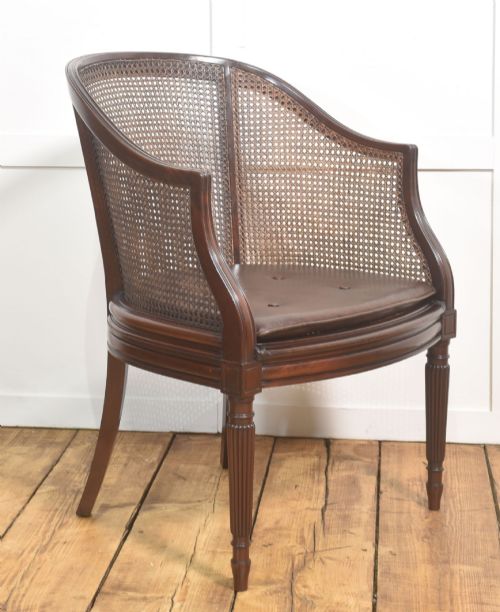
Makers utilised solid mahogany for the main frames, often incorporating wood inlay, satinwood detailing, or brass fittings to accent the dark timber. Caned panels and woven elements appear frequently on the curved backs and seats.
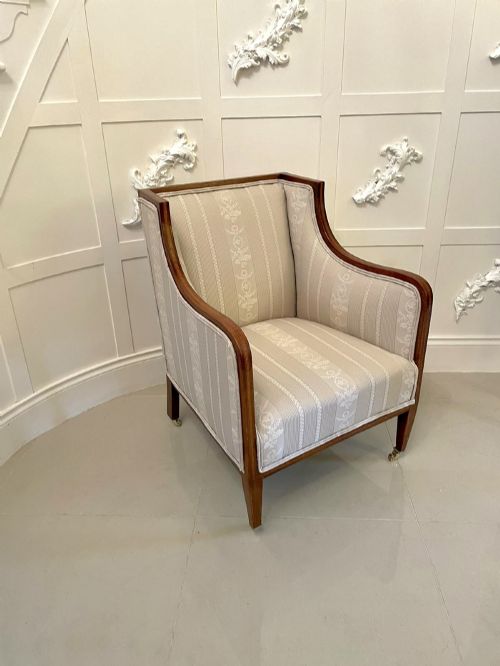
Upholstery forms another core component, with workshops employing fabric, textile, leather, and button-back padding. Structural support relies on sturdy wooden framing, sometimes featuring swivel mechanisms or spindleback designs for office use.
Vintage Mahogany Tub Seating Retail Price Guide 2026
Typical asking prices for vintage mahogany tub seating among the pieces listed under this phrase on Sellingantiques today, from the lower quarter to the upper quarter. They describe what is for sale here now, not the wider market.
Even the children managed to sit in style, courtesy of nineteenth-century caned mahogany highchairs.
What separates examples across the range
Quality rests in the precision of the timber shaping and the refinement of any inlaid decoration. Pieces exhibiting crisp carving and well-matched wood grain stand apart from simpler iterations.
The integrity of the structural joinery and the original finishing materials dictate the overall standard. Superior examples maintain firm cane work, well-fitted swivel mechanisms, and high-grade leather or textile upholstery.
Hampton and Sons
The Vintage Mahogany Tub Seating Glossary
- Bergère
- An enclosed armchair with an upholstered seat and cane panels on the back and sides. This French-inspired design adds lightness to heavy timber frames.
- Tub chair
- An armchair featuring a continuous curved back and arms that form a single enclosed shape. The design wraps around the sitter for added support.
- Corner chair
- A seat designed to fit into the corner of a room, typically featuring a square seat set diagonally and a curved back rail supported by turned columns.
- Satinwood
- A durable, hard timber with a golden-yellow sheen used primarily for contrasting inlay work on darker mahogany surfaces. It provides delicate decorative highlights.
- Spindleback
- A chair back constructed from a series of thin, turned wooden rods arranged vertically. This technique lightens the visual weight of the seating.
Vintage Mahogany Tub Seating: Frequently Asked Questions
How do I identify an Edwardian tub chair?
Edwardian examples often display lighter proportions, delicate wood inlay, and cane or upholstered barrel backs.
These pieces typically date from around nineteen hundred to nineteen ten, reflecting revival styles with a refined domestic sensibility.
Can I use these chairs at a modern desk?
Many nineteenth-century and Edwardian models function well as desk chairs, particularly swivel variants and compact library seats.
Check the seat height and clearance carefully against your desk dimensions before placing the chair into daily use.
What is the difference between a tub chair and a club chair?
Tub chairs feature a distinct rounded, enclosing backrest that forms the arms in one continuous curve. Club chairs generally offer a deeper, broader, fully upholstered profile covered in leather or heavy fabric.
Both styles prioritize comfort, but the tub shape remains more compact and structured.
How do I care for leather and mahogany?
Keep mahogany furniture away from direct heat sources and strong sunlight to prevent the timber from drying out or fading. Feed leather upholstery periodically with appropriate conditioning balms to maintain flexibility and prevent cracking.
Are cane panels fragile?
Cane seating requires gentle treatment to avoid punctures or snapping of the dried plant fibres. Regular dusting and occasional light moisture help keep the material supple.