
Vintage Mahogany Shelf Unit
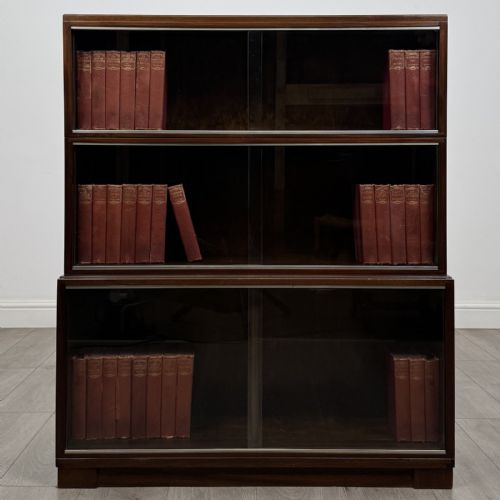
A vintage mahogany shelf unit brings warmth and architectural order to a room, offering practical storage through open tiers or glazed cabinets.
Vintage Mahogany Shelf Unit
When searching for a vintage mahogany shelf unit, you encounter pieces designed to hold books, display collections, or organise household objects across multiple tiers.
The selections span distinct periods including the Georgian, Regency, Victorian, and Edwardian eras, alongside early twentieth-century interpretations.
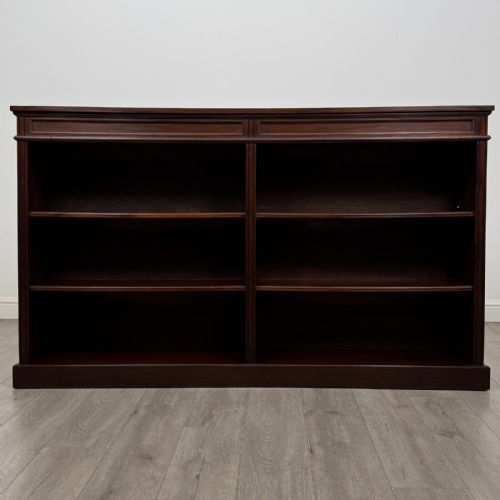
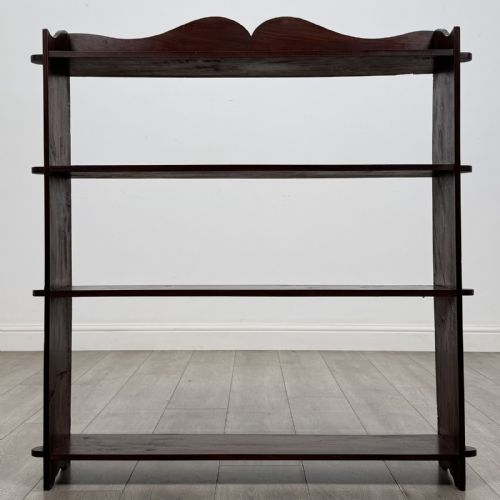
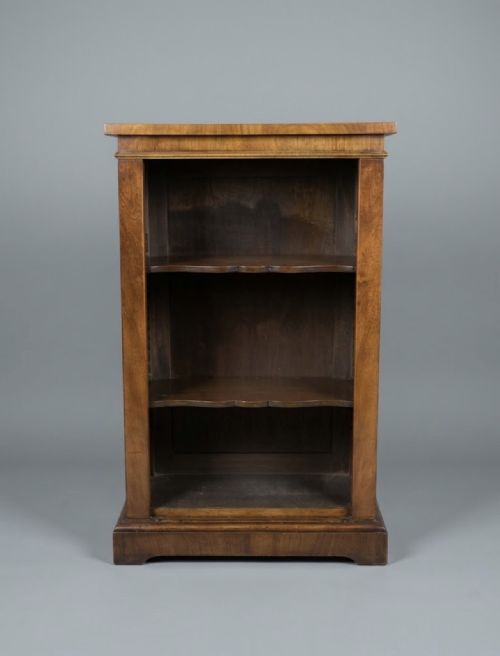
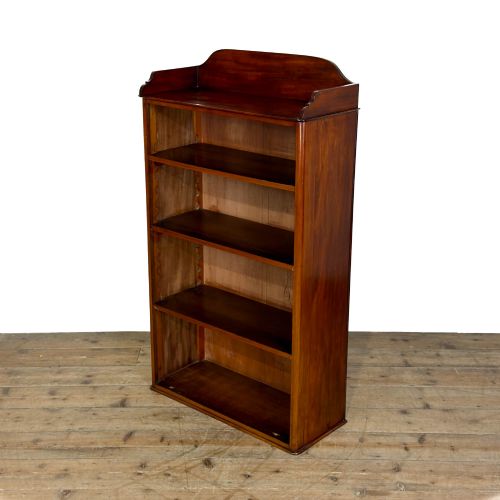
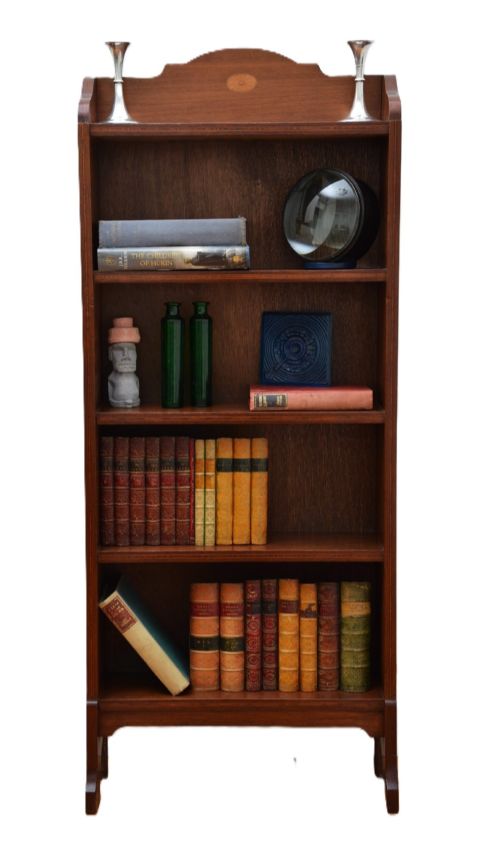
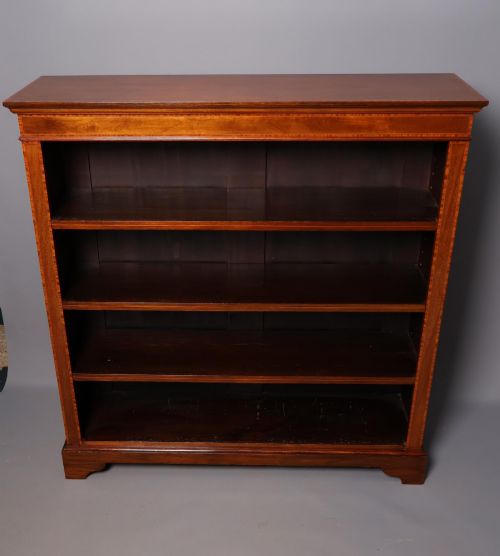
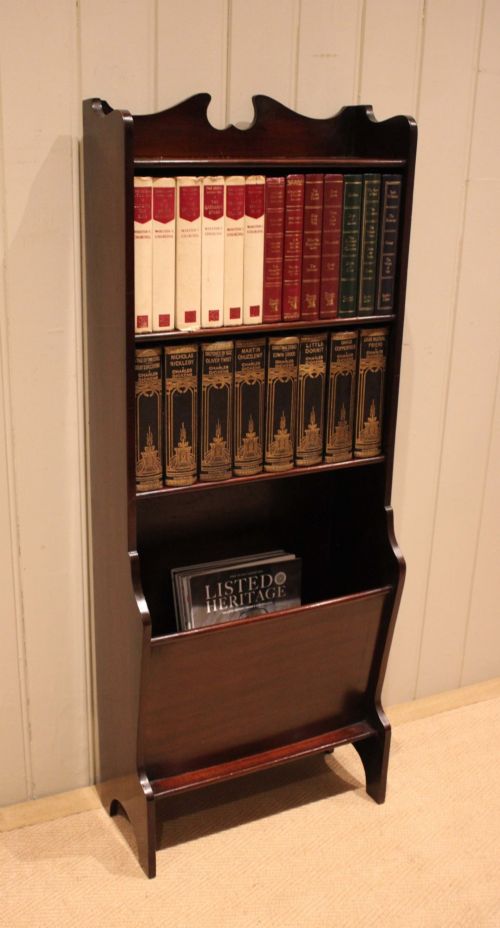
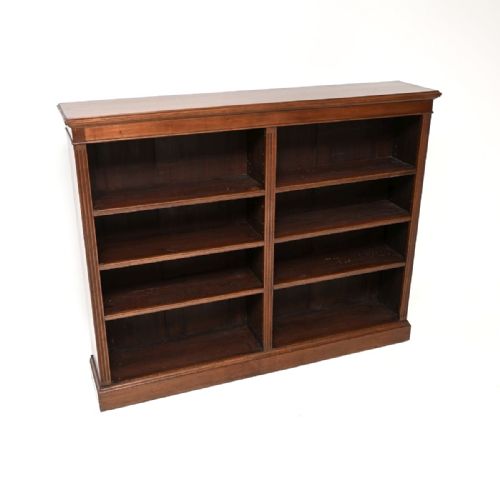
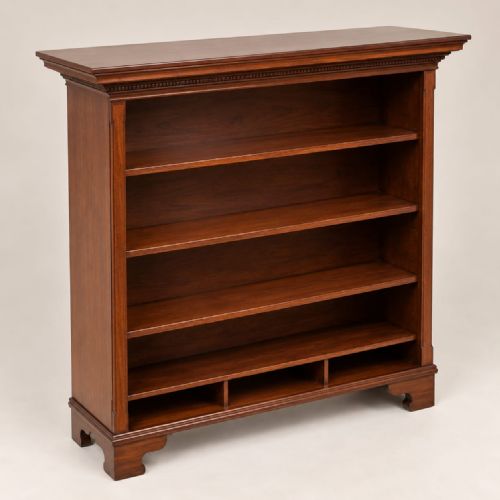
The most common formats on this page are open bookcases, hanging shelves, whatnots, and tiered etageres constructed from rich timber.
How they were made
Cabinetmakers utilised solid timber alongside flame mahogany veneer to create striking grain patterns across the main surfaces and shelves.
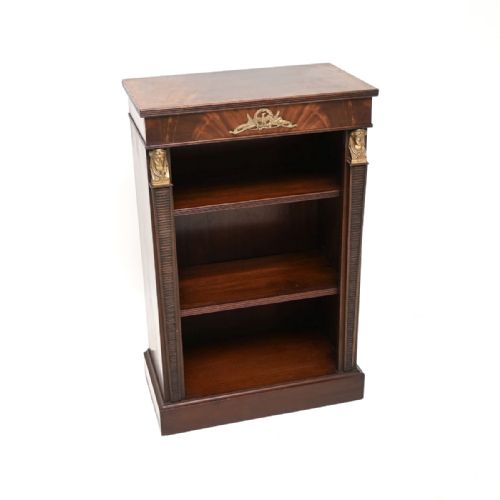
Detailing frequently incorporates contrasting satinwood inlay, glass panels, and turned brass fittings or barley twist supports.
Secondary structural elements often employ pine or oak to provide internal support and secure backing for the shelving structures.
Materials appearing across these pieces include solid mahogany, flame mahogany veneer, satinwood, glass, brass, pine, and oak.
What varies in quality
The standard of timber selection and the precision of the cabinet work define the upper tier of these pieces, separating standard utility furniture from finer commissions.
Subtleties in proportion, the finesse of inlaid stringing, and the integrity of the structural joints dictate the overall distinction of a unit.
Waring And Gillows
The Vintage Mahogany Shelf Unit Glossary
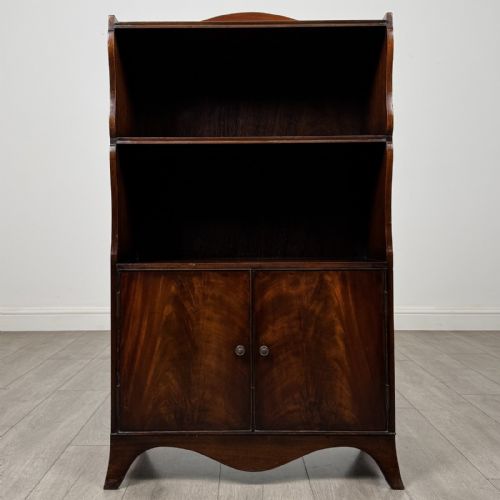
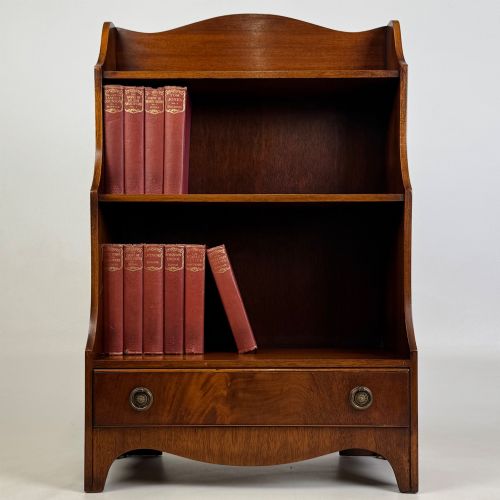
- Waterfall bookcase
- A tiered shelving unit where each successive shelf steps back from the one below, creating a cascading profile.
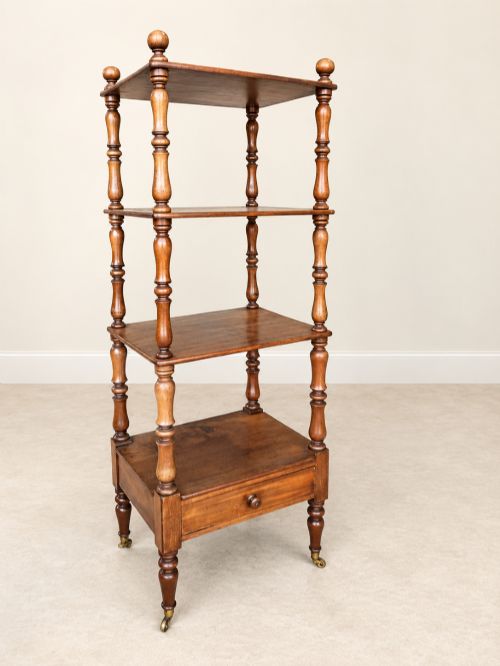
- Whatnot
- A multi-tiered piece of freestanding furniture designed for displaying ornaments or books, popular throughout the nineteenth century.
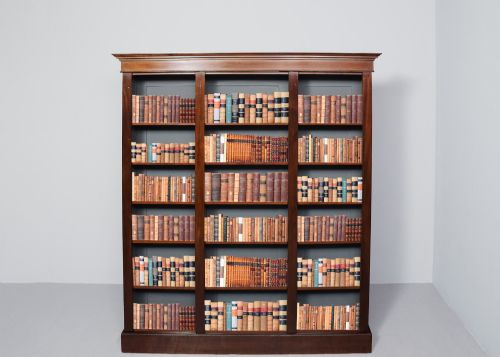
- Open bookcase
- A shelving unit without doors, providing direct access to books and designed primarily for domestic libraries or parlours.
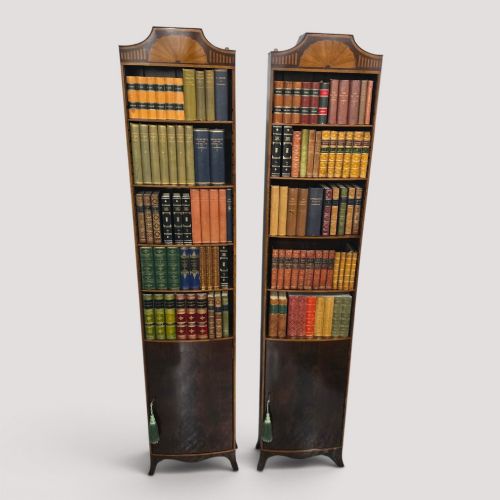
- Inlay
- A decorative technique where contrasting woods such as satinwood are inserted into the primary mahogany surface to form geometric patterns.
Vintage Mahogany Shelf Unit: Frequently Asked Questions
How do I identify a Regency shelf unit?
Regency pieces often display classical proportions, architectural waterfall tiers, and clean lines influenced by ancient Greek and Roman design.
They frequently utilise rich flame mahogany veneers and minimal brass detailing rather than heavy carved ornamentation.
Where should I place a mahogany whatnot?
A whatnot suits corners or smaller wall spaces in sitting rooms where display surface is needed without heavy visual bulk.
Their multiple tiers accommodate small collections, ceramics, and books while maintaining an open feel in the room.
What is the difference between Victorian and Edwardian bookcases?
Victorian examples tend to be darker, heavier, and feature robust elements like barley twist columns or deeper mouldings.
Edwardian pieces often display lighter proportions, delicate satinwood inlay, and a more restrained decorative vocabulary.
Can hanging shelves support heavy books?
Hanging shelves are primarily designed for lighter volumes, decorative objects, and display rather than dense sets of heavy reference books.
Their structural capacity depends entirely on the strength of the wall fixings and the integrity of the suspension points.