

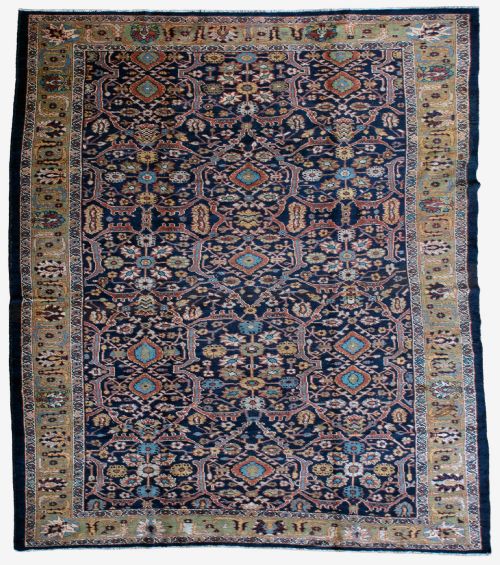
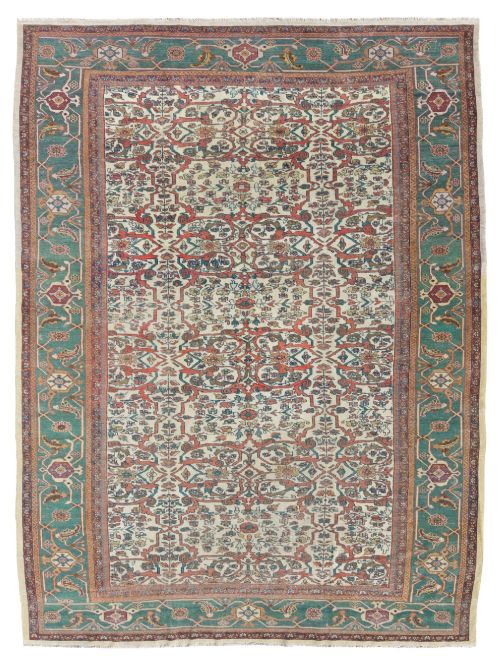
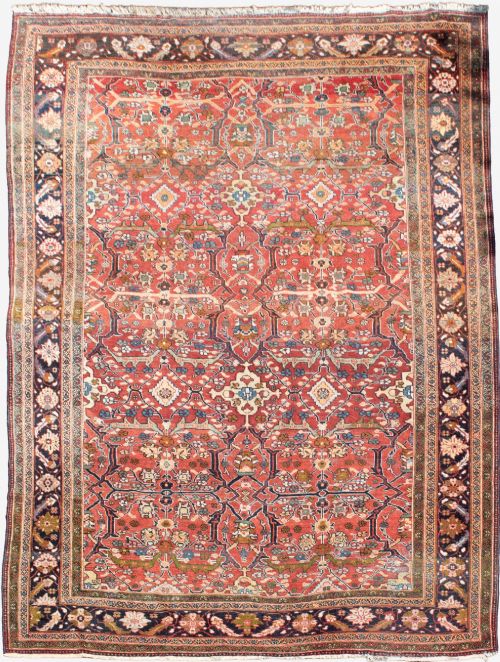


Vintage Mahal Floor Carpet
A vintage mahal floor carpet brings durable wool and cotton craftsmanship into large rooms, offering traditional Persian patterns suited for heavy foot traffic.
Vintage Mahal Floor Carpet
A vintage mahal floor carpet is a large textile woven in western Persia, frequently appearing in room sizes and runners featuring traditional designs. Buyers searching for this phrase encounter pieces dating from the late nineteenth century through the early decades of the twentieth century. These floor coverings originate from the Chahar Mahal region and include related styles such as Sultanabad and Ziegler.
The most common formats on this page are substantial room-size carpets and corridor carpets intended for grand spaces. These woven works display all-over shrub motifs, terracotta grounds, and distinctive blue or green fields. Tribal influences from Bakhtiari and Kurdish village weavers also appear among the selections.
Makers and workshops produced these floor coverings using sturdy foundations to withstand daily use in country houses and formal reception rooms. The designs balance repetitive floral elements with robust formatting that anchors a room's colour scheme. Every piece reflects the utilitarian yet decorative demands of Persian provincial weaving.
What varies in quality
Quality in these carpets rests on the density of the knotting and the fineness of the wool used in the pile. Tighter construction yields crisper pattern definition in the traditional motifs and greater resilience across large surfaces.
The sophistication of the colour palette and the clarity of provincial designs also separate standard room-size examples from finer or scarcer weaving variants. Superior pieces maintain structural integrity while displaying harmonious integration of field and border patterns.
Regional variants include Bakhtiari tribal rugs and corridor runners originating from the Chahar Mahal valley region of western Persia.
The Vintage Mahal Floor Carpet Glossary
- Mahal
- A style of Persian carpet originating from the Chahar Mahal region, known for large-scale traditional patterns and room-sized formats. These textiles were often produced for Western export markets.
- Ziegler
- A commercial nineteenth-century classification often associated with large decorative carpets featuring subdued palettes and oversized Persian designs. They share stylistic ties with Mahal and Sultanabad productions.
- Sultanabad
- A nineteenth-century Persian carpet type produced in the same region as Mahals, typically characterised by bold, sprawling floral patterns. They provide durable floor coverings for expansive interiors.
- Bakhtiari
- A style of tribal weaving from western Persia involving geometric and garden-panel motifs produced by village and nomadic communities. These rugs utilise sturdy wool structures.
- Runner
- A long, narrow carpet format designed specifically for corridors, hallways, and staircases. They direct movement through large homes while protecting wooden floors.
Vintage Mahal Floor Carpet: Frequently Asked Questions
Where were vintage mahal carpets made?
These carpets were woven in the Chahar Mahal region of western Persia, encompassing various village workshops and tribal communities. Production largely served both local domestic needs and international export markets.
Towns and nomadic groups alike contributed to the distinct styles found across these large floor coverings.
How do I clean a wool carpet?
Regular gentle vacuuming without a beater bar removes loose dirt from the wool pile without damaging the cotton foundation. Professional specialist cleaning is required for deeper maintenance to protect natural dyes.
Avoiding excessive moisture and direct sunlight preserves the structural integrity and colour richness of the textile.
Can I use these in high traffic areas?
The robust wool pile and strong cotton warps make these large carpets well suited for hallways, living rooms, and dining spaces. Their original purpose included heavy use in grand country houses.
Using a quality underlay prevents slipping and cushions the textile against hard subfloors.
How do I identify a Ziegler style?
Ziegler carpets typically display more open, muted interpretations of traditional Persian designs tailored for Western Victorian tastes. They often feature large-scale motifs set against softer terracotta or neutral grounds.
These pieces represent a commercial evolution of standard Mahal and Sultanabad weaving traditions.