

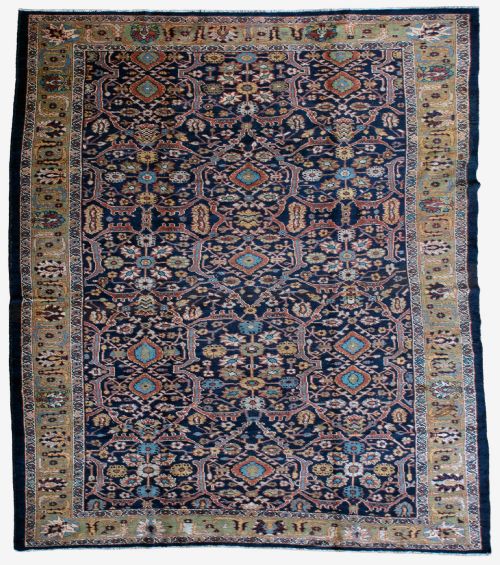
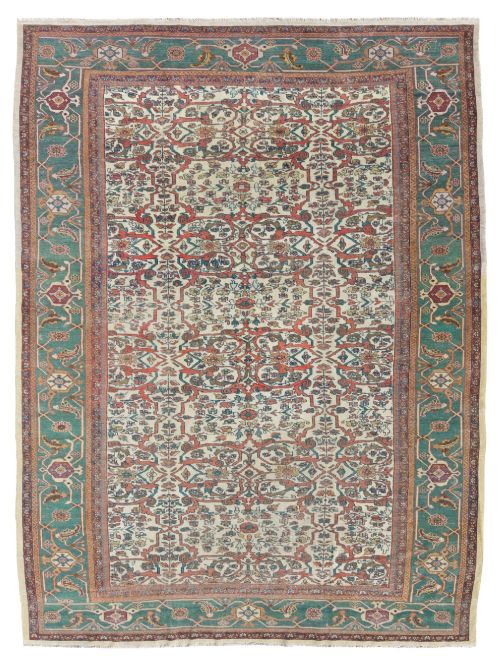
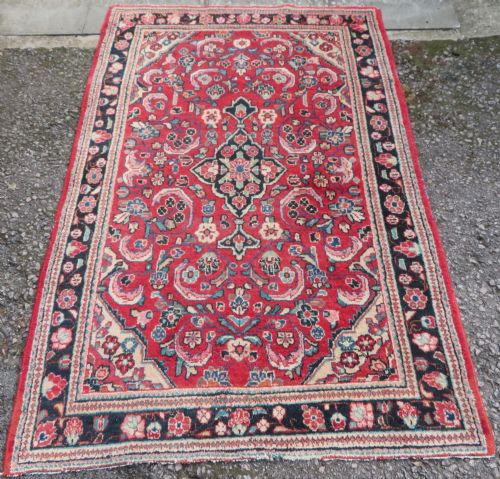
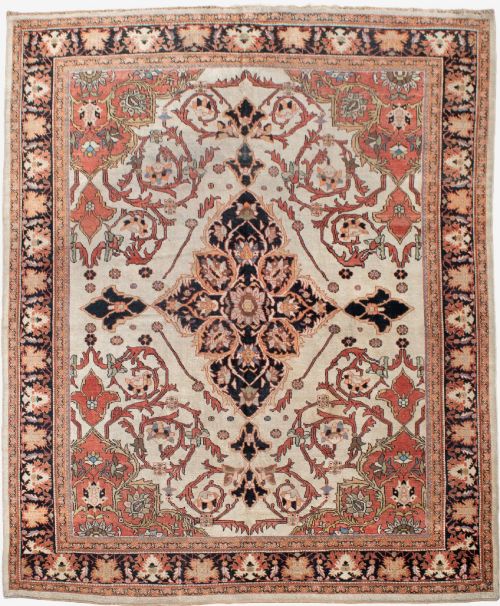
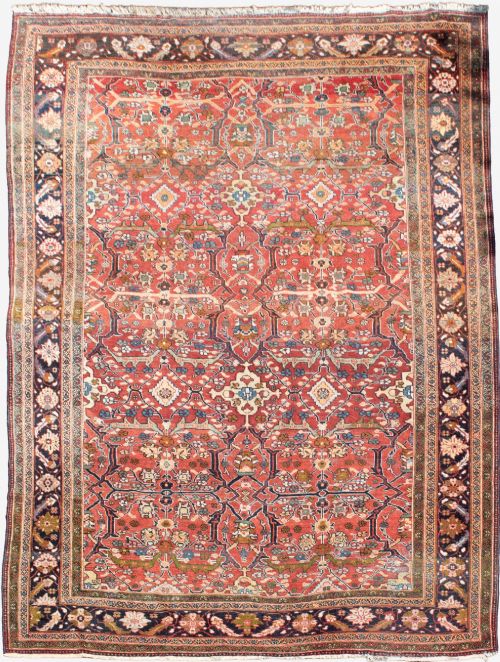


Vintage Mahal Area Rug
A vintage mahal area rug brings monumental Persian design and muted earthy tones straight into a substantial room.
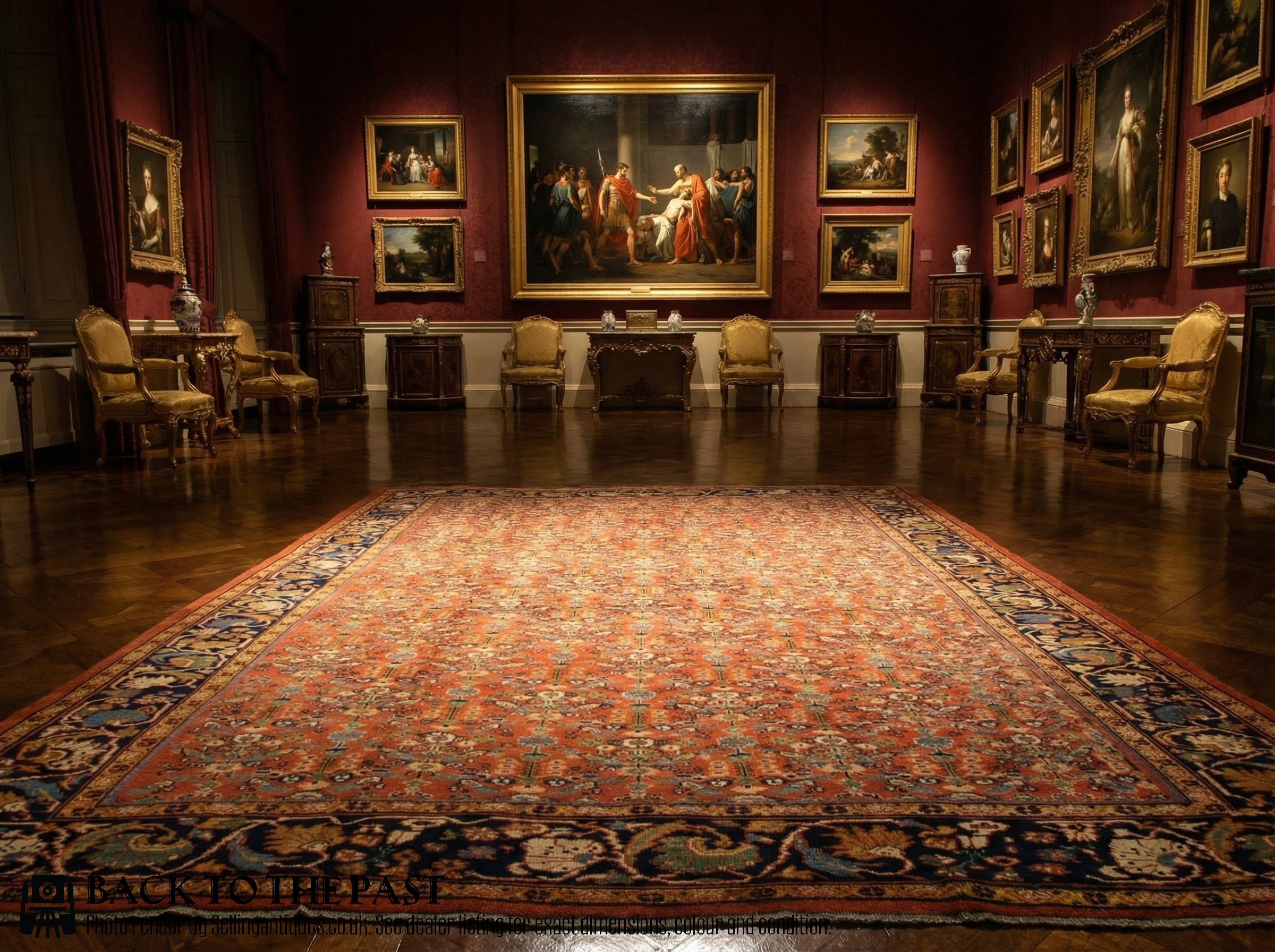
Vintage Mahal Area Rug
When you search for a vintage mahal area rug, you enter a field defined by nineteenth and early twentieth century Persian weaving. The pieces appearing here span from the eighteen seventies through the nineteen thirties, encompassing grand room sizes and village formats alike.
Most examples you encounter carry the characteristic large scale floral motifs and softened palettes associated with West Persia. These floor coverings range from expansive carpets exceeding five metres to village rugs woven with distinctive regional character.
The tradition encompasses several closely related Persian styles, including Sultanabad, Ziegler, and Saroukh variants alongside traditional Mahal designs. Buyers seek them for their ability to anchor a large interior with weathered elegance and robust construction.
How they were made
These floor coverings rely on natural materials, utilising sturdy wool pile knotted onto foundational cotton warps and wefts. The quality of the fleece determines the resilience of the surface under heavy foot traffic.
Dyers employed traditional botanical and mineral colourants to achieve the terracotta grounds, ivory fields, and subdued secondary tones characteristic of the period. Over decades of light and use, these dyes mellow into gentle patinas.
Many of these grand carpets spent a century quietly warming country house floors before finding their way onto the modern market.
What varies in quality
The distinction between standard village pieces and premier workshop productions lies in the execution of the drawing and the fineness of the knotting. Master weavers achieved greater curvilinear fluidity and intricate botanical detail.
Preservation of the original pile depth and side cord bindings dictates the structural integrity of an old carpet. Examples retaining their full outer borders and uncompromised foundations command greater attention from collectors.
The Vintage Mahal Area Rug Glossary
- Mahal
- A style of Persian carpet originating from the district surrounding Sultanabad, known for bold, oversized floral patterns.
- Ziegler
- A nineteenth century commercial designation for Persian carpets produced to Western aesthetic tastes using softer colour palettes.
- Sultanabad
- An early designation for carpets woven in the same region as Mahals, often featuring dense, all-over botanical patterns.
- Saroukh
- A village and workshop production centre in West Persia associated with tightly woven, durable carpets and rugs.
- Bakhtiari
- A regional attribution encompassing rugs woven by tribal groups in the mountains and valleys of West Persia.
Vintage Mahal Area Rug: Frequently Asked Questions
How do I clean an old carpet?
Gentle surface brushing and professional specialist washing preserve the natural wool fibres without disturbing the historic foundation. Avoid harsh chemical treatments and excessive moisture.
Regular rotation ensures even wear across high traffic areas while minimising localised sun exposure on delicate botanical dyes.
Where were these rugs made?
Production centred on the Markazi province of West Persia, specifically around the town of Sultanabad and surrounding valley villages. Local workshops employed traditional knotting techniques passed down through generations.
Weavers utilised regionally sourced wool and natural dyestuffs to create the durable floor coverings traded internationally through nineteenth century merchant houses.
What size do these carpets come in?
Formats range from compact village rugs measuring around two metres in length to monumental palace carpets exceeding five metres. Room size formats between three and four metres appear frequently.
Dimensions reflect the domestic and export demands of the period, accommodating both intimate parlours and expansive country house reception rooms.
How do I date a Persian carpet?
Examination of the knot density, palette composition, and wool quality provides reliable indicators of age. Early examples from the eighteen seventies and eighties often display distinct vegetable dye variations.
Structural traits such as cotton foundation warps and the handling of secondary borders help differentiate nineteenth century pieces from later twentieth century productions.