
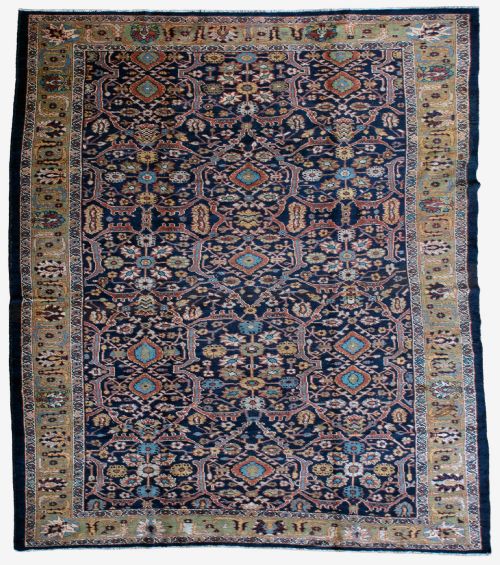


Nineteenth Century Mahal Carpet
A nineteenth century mahal carpet brings traditional Persian floor art into a room with large scale patterns and rich wool pile.
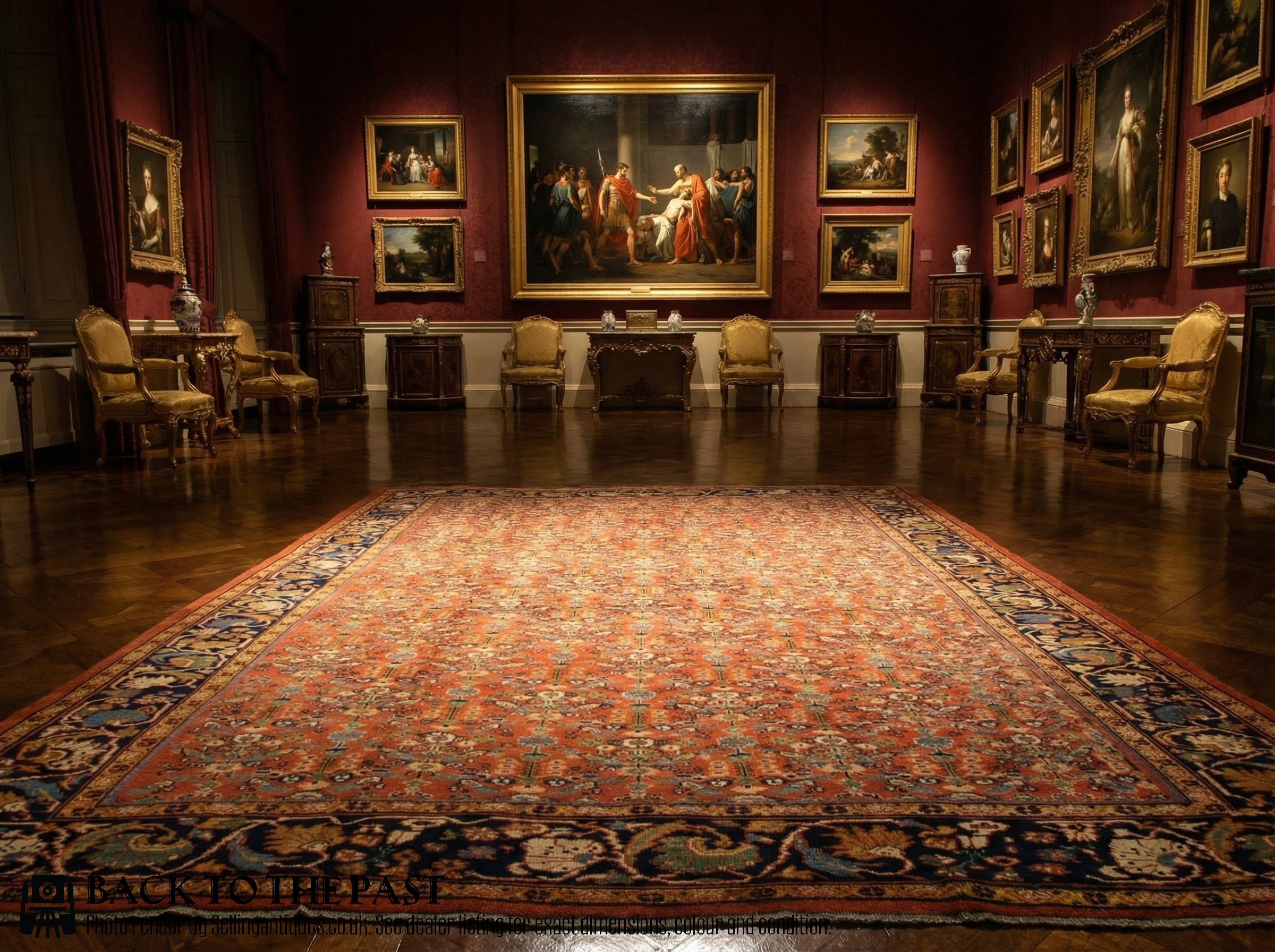
Nineteenth Century Mahal Carpet
When you search for a nineteenth century mahal carpet, you look at large floor coverings originating from Persia during the 19th century and the early decades of the 20th century. These pieces function as substantial area rugs or carpets designed for major rooms, often arriving in palace sizes exceeding five metres in length.
The versions you meet most frequently on this page carry traditional Persian designs executed in durable wool. Makers constructed these floor coverings to handle heavy foot traffic while retaining distinct regional motifs across varying dimensions.
How they were made
Weavers utilised natural wool for the soft pile and foundation yarns, pairing it with cotton for structural warp and weft threads. This combination provided the necessary strength and flexibility for large format carpets.
Craftspeople knotted the wool by hand onto the cotton foundation, creating dense surfaces that held elaborate Persian traditional designs. Natural dye stuffs coloured the yarn, producing terracotta and other earthy tones that remain stable across decades of use.
Listings feature items spanning the 1870s through to 1920, constructed entirely from wool and cotton in Persian traditional and Ziegler styles.
What varies in quality
The grade of a nineteenth century mahal carpet depends on the precision of the hand knotting and the density of the wool pile across large dimensions. Finer knot counts allow for sharper execution of traditional Persian motifs and greater longevity under daily wear.
Scale and proportion also define the higher tiers of these carpets, particularly in palace sizes where maintaining symmetrical borders requires master weaver oversight. The integrity of the cotton foundation and the uniformity of the wool pile determine how well the piece holds its structure over time.
The Nineteenth Century Mahal Carpet Glossary
- Mahal carpet
- A large Persian floor covering originating from the Mahal district known for bold traditional designs. These pieces often feature room scale floral or medallion motifs.
- Ziegler
- A specific style or trade designation associated with nineteenth century Persian carpets featuring muted palettes and expansive field patterns. European firms commissioned these variations for Western markets.
- Terracotta
- A warm reddish brown earth tone frequently utilised as a primary background colour in antique floor coverings. This pigment comes from fired clay and natural mineral sources.
- Palace size
- An exceptionally large format designation reserved for carpets exceeding standard room dimensions. Such pieces suit grand spaces and require significant floor area to display the full pattern.
- Wool
- The primary animal fibre spun for the soft pile of traditional carpets. It offers natural resilience and takes dye securely.
Nineteenth Century Mahal Carpet: Frequently Asked Questions
Where do nineteenth century mahal carpets come from?
These carpets originate from Persia, specifically workshops associated with the Mahal district and surrounding weaving centres.
Production dates span the nineteenth century and extend into the early decades of the twentieth century.
How do I place a large carpet in a room?
A palace size carpet requires an open floor space where the entire field and border can remain visible without heavy furniture obscuring the main motifs.
Positioning the rug centrally allows the terracotta and wool textures to anchor the room.
What materials make up these carpets?
Makers constructed these textiles using wool for the soft pile and cotton for the underlying structural foundation.
This material pairing ensured durability across large formats while maintaining flexibility.
How do Ziegler carpets differ from standard ones?
Ziegler carpets represent a specific stylistic subset influenced by European commercial commissions in nineteenth century Persia.
They typically display more open fields and subdued palettes compared to standard traditional rugs.